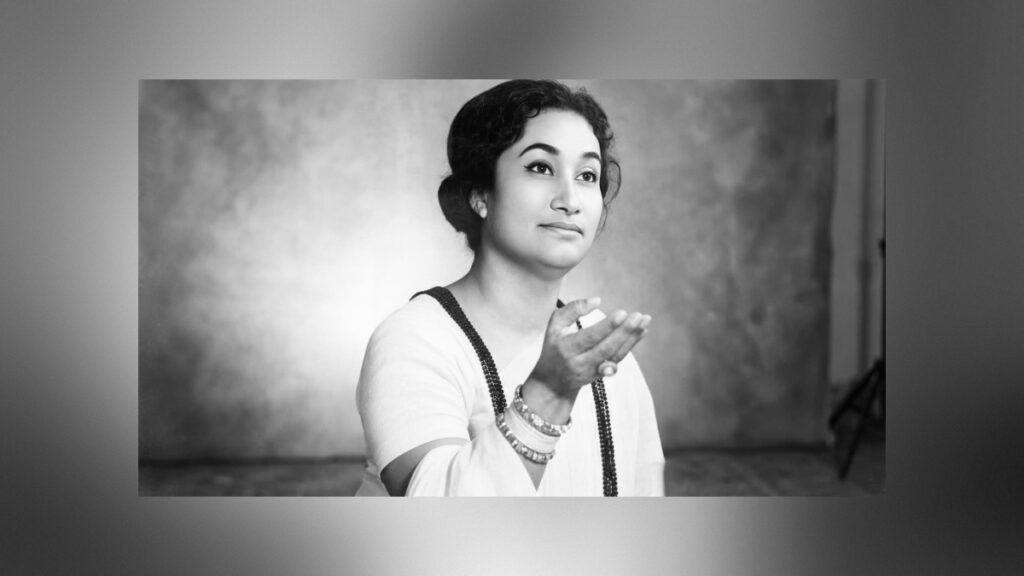

The birth anniversary of the distinguished vocalist, lyricist, and music director Satinath Mukhopadhyay has been observed across the cultural landscape. Regarded as a pioneering maestro of the golden age of modern Bengali music (Adhunik Gaan), his extensive contributions to classical, semi-classical, and modern melodies continue to command profound respect decades after his passing.
Lineage and Formative Musical Training
Satinath Mukhopadhyay was born on 7 June 1923 in Lucknow, Uttar Pradesh, where his father, Tarakdas Mukhopadhyay, was employed at the time. Whilst his birth took place in northern India, his family relocated during his early childhood to Chinsurah, located within the Hooghly district of West Bengal. The rich heritage and intellectual atmosphere of Hooghly served as the testing ground for his academic growth and early musical aspirations.
Musical aptitude was an inherent trait within the Mukhopadhyay household:
Grandfather: Ramachandra Mukhopadhyay, a proficient violinist.
Father: Tarakdas Mukhopadhyay, a trained vocalist.
Nurtured within this creative domestic environment, Mukhopadhyay developed a natural inclination towards Indian classical music from his youth. He immersed himself in the systematic study of traditional classical vocal forms, demonstrating exceptional mastery over difficult disciplines such as Dhrupad, Dhamar, and Tappa.
Although he eventually moved to Kolkata with the intention of pursuing higher academic credentials, his passion for the musical arts ultimately took precedence over formal textbooks. He entered into formal discipleship under the illustrious classical maestro Pandit Chinmoy Lahiri, refining the technical skills that would later establish his distinct identity. Throughout his professional life, Mukhopadhyay balanced his creative pursuits with a corporate post at the Accountant General’s Office (AG Bengal) in Kolkata, though his life remained fundamentally defined by his devotion to melody.
Key Musical Contributions
Satinath Mukhopadhyay left an indelible mark on modern Bengali songs, Nazrul Sangeet, and Bengali ghazals. His vocal performances were characterized by a rare combination of exceptional softness, technical precision, and emotional depth.
His extensive portfolio includes an array of historic musical compositions:
“Ajgoto Elo Na Se”
“Akash Eto Meghla”
“Jibone Jodi Deep Jwalate Nahi Paro”
“Moromiya Tumi Chole Gele”
“Pashaner Buke Likho Na Amar Nam”
“O Akash Pradip Jwelo Na”
“Jani Ekdin”
“Tumi Sundar Tai Cheye Thaki”
“Koto Na Hazar Phul”
“Hay Borosha”
In 1968, Mukhopadhyay united in matrimony with the highly acclaimed female playback singer Utpala Sen. This marital union resulted in a revered artistic partnership, with the duo becoming a celebrated exemplary couple within the annals of the Bengali music fraternity.
Biographical Overview
The following table provides a factual summary of the life, training, and professional milestones of Satinath Mukhopadhyay:
| Biographical Category | Documented Record |
| Date of Birth | 7 June 1923 |
| Place of Birth | Lucknow, Uttar Pradesh, British India |
| Ancestral Growth Centre | Chinsurah, Hooghly, West Bengal |
| Paternal Mentorship | Guided by Tarakdas Mukhopadhyay and Ramachandra Mukhopadhyay |
| Advanced Classical Mentor | Pandit Chinmoy Lahiri |
| Official Employment | Accountant General’s Office (AG Bengal), Kolkata |
| Core Specialisations | Playback Singing, Musical Composition, Lyric Writing |
| Spouse | Utpala Sen (Married 1968) |
| Date of Demise | 13 December 1992 |
Satinath Mukhopadhyay passed away on 13 December 1992. On the anniversary of his birth, cultural institutions and generations of listeners continue to pay solemn tribute to his memory, ensuring that his immaculate voice remains permanently integrated into the cultural heritage of Bengal.