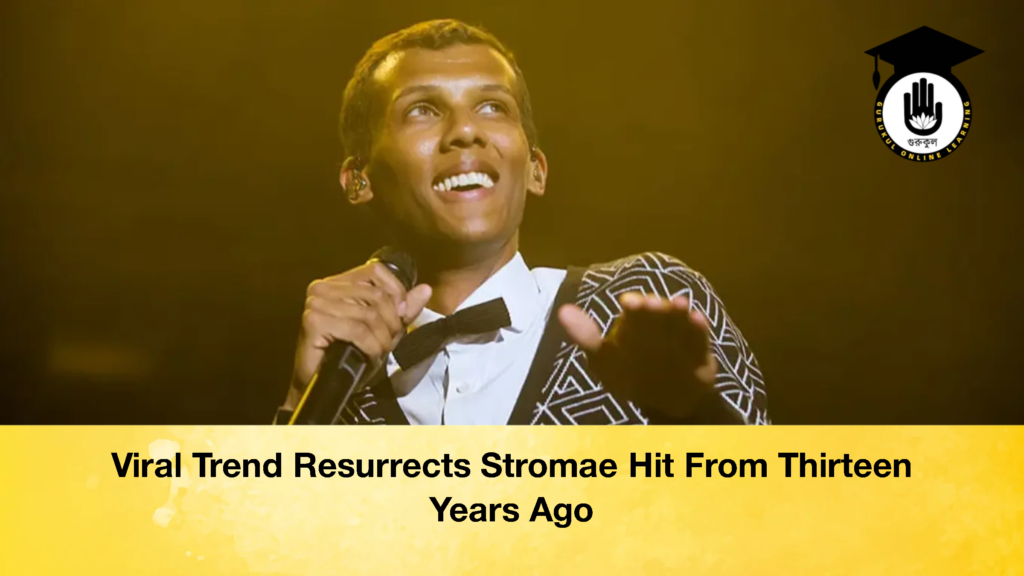
The digital landscape has witnessed a significant resurgence of the Belgian artist Stromae’s globally acclaimed track, “Papaoutai”, which has once again ascended the viral charts across various social media platforms. Although originally released in 2013, the Belgian hip-hop and electronic composition has ignited a fresh wave of engagement amongst netizens in 2026. While the rhythmic tempo of the track has made it a popular choice for short-form video content and “reels”, the lyrical foundations of the song are rooted in profound historical tragedy and personal bereavement.
Table of Contents
The Linguistic and Thematic Origins
The title “Papaoutai” is a deliberate contraction of the French phrase “Papa où t’es?”, which translates directly into English as “Dad, where are you?” Through its evocative lyrics and distinctive melody, the song explores the existential anguish of paternal absence. The narrative of the track is inextricably linked to the 1994 Rwandan Genocide, a period of extreme systemic violence during which hundreds of thousands of people were killed.
Stromae, born Paul Van Haver, is a Belgian singer, songwriter, and producer of Rwandan and Flemish heritage. He was forced to confront the harsh reality of his father’s fate at the tender age of nine. His father, a Rwandan architect, was murdered during the genocide whilst visiting family in his home country. It was this enduring sense of loss and the void left by his father’s permanent absence that prompted the creation of the song for his second studio album, “Racine Carrée”.
A Personal History of Invisible Presence
In various interviews, Stromae has articulated that his father was largely a transient figure in his life even prior to the tragedy. Due to professional obligations, his father frequently travelled between Belgium and Rwanda, resulting in extremely limited contact. The artist revealed that he had only encountered his father approximately twenty times in total throughout his life.
Stromae famously reflected on the emotional detachment caused by this absence, stating that his father was “invisible” to him long before his death. He remarked that when the news of the assassination eventually reached him, he found himself unable to weep, as a paternal connection had never been firmly established during his formative years. The song serves as a poignant critique of the impossibility of reclaiming a parent who remained absent throughout a child’s upbringing.
Symbolic Visuals and Artistic Execution
The music video for “Papaoutai” remains one of the most analysed pieces of contemporary European art. In the visuals, Stromae portrays a stiff, mannequin-like figure dressed in vibrant, geometrically patterned attire. He stands motionless and unresponsive while a young boy attempts to engage him in play and dance. Around them, indigenous drummers perform with high energy.
The artistic choice to remain “lifeless” represents the emotional vacuum created by a father who is physically present in memory but emotionally unreachable. It highlights the dichotomy between the existence of a father figure in a social context and his specific absence within a family unit. The juxtaposition of the upbeat, danceable production against the mournful, introspective lyrics is a hallmark of Stromae’s “formidable” artistic style.
Career Trajectory and Global Impact
Prior to the success of “Papaoutai”, Stromae achieved significant international recognition in 2009 with the single “Alors on danse”, which reached the number-one position on the music charts in seventeen countries. Following this success, his debut studio album, “Cheese”, was released in 2010.
The current revival of “Papaoutai” on social media has introduced a new generation of listeners to the emotional complexities of the track. While many users engage with the song due to its infectious electronic beat, the widespread sharing of its backstory has fostered a deeper appreciation for the historical context of the Rwandan Genocide and the personal resilience of the artist. The track continues to stand as a testament to how popular music can serve as a medium for profound cultural and historical commentary, bridging the gap between a club anthem and a historical archive.