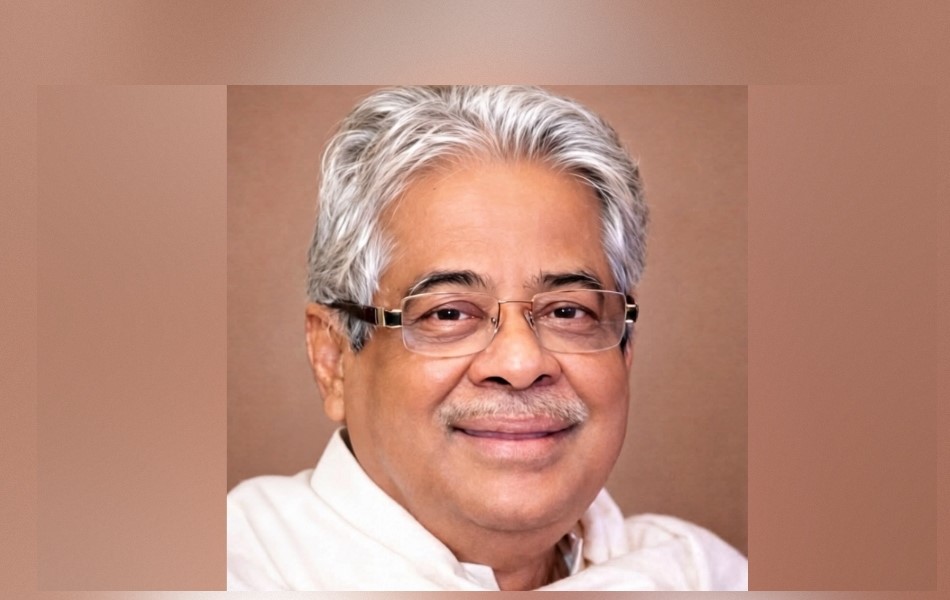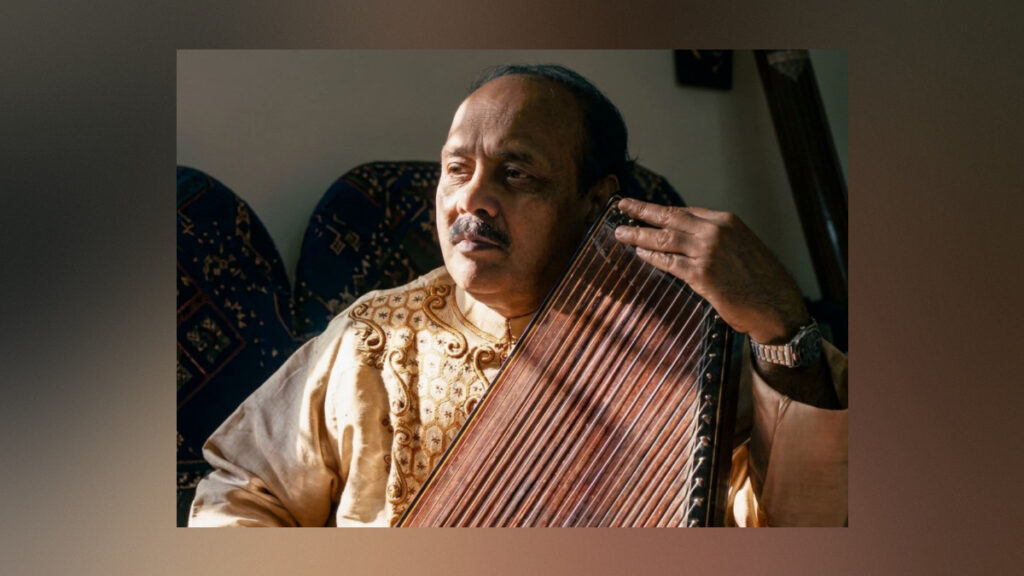

Some voices do more than carry a melody. They become part of a nation’s collective memory, accompanying generations through moments of love, loss, celebration, struggle and patriotism. Sabina Yasmin is one such voice. For more than six decades, the legendary Bangladeshi singer has remained a defining presence in Bengali music, particularly through her vast contribution to film songs and patriotic music.
Sabina Yasmin was born on 4 September 1954, and marks her 72nd birthday today. Her ancestral home is in Satkhira. She grew up in a family closely connected with music, with her mother, Begum Mouluda Khatun, also involved in music. Four of the five sisters in the family—Farida Yasmin, Fauzia Yasmin, Nilufar Yasmin and Sabina Yasmin—were associated with music.
Her introduction to music came at an exceptionally early age. When her elder sister Farida Yasmin studied under Ustad Durgaprasad Roy, young Sabina would sit nearby, listen carefully and reproduce the melodies in her own voice. At just six, she won first prize in the All-Pakistan School Music Competition. A year later, she appeared on stage as a singer.
Her formal musical education continued under the renowned maestro Ustad P. C. Gomes, from whom she received training for 13 years. As a member of Khelaghar, she also performed regularly on radio and television during her childhood. These early experiences helped establish the foundation for a career that would eventually become one of the most distinguished in Bangladesh’s music industry.
Sabina Yasmin’s formal association with film music began in 1967 with the song ‘Madhu Jochhona Dipali’ from the film Agun Niye Khela. She had already gained some experience as a child performer before that. Her major breakthrough came in 1970, when she sang ‘Eki Sonar Aloy Jibon Bhoriye Dile’ for Jibon Theke Neya, with music composed by Khan Ataur Rahman.
The song became widely popular and helped establish Sabina Yasmin as one of the most recognisable voices of her generation. Her career subsequently expanded across a remarkable range of musical forms, including modern Bengali songs, patriotic music, folk songs, Rabindra Sangeet, Nazrul Sangeet, ghazals and classical music.
Several of her performances have acquired enduring status among Bengali-speaking audiences. Songs such as ‘Shob K’ta Janala Khule Dao Na’, ‘Majhi Nao Chhariya De’, ‘Shundor Shuborno’, ‘Swadhinata Tumi’, ‘Ekti Bangladesh Tumi Jagrata Janatar’ and ‘Jonmo Amar Dhonno Holo Ma Go’ remain closely associated with the country’s cultural and musical heritage.
Her patriotic repertoire has been particularly significant. During a period when music became an important vehicle for expressing national identity and the aspirations associated with Bangladesh’s liberation, songs performed by Sabina Yasmin reached a wide audience. Her voice subsequently became closely linked with a number of songs that continue to be heard at national and cultural occasions.
Over a career spanning more than six decades, Sabina Yasmin has reportedly recorded around 16,000 songs, a substantial proportion of them for films. Her extensive body of work reflects both the scale and diversity of her career. Rather than being confined to one particular genre, she has moved comfortably between different musical traditions and performance styles.
Her contribution to Bangladeshi cinema has received exceptional recognition. Sabina Yasmin has won the National Film Award for Best Female Playback Singer a record 15 times, placing her among the most decorated playback singers in the country’s history.
Her list of national honours extends beyond cinema. She received the Ekushey Padak in 1984 and the Independence Award, Bangladesh’s highest civilian state honour, in 1996. In 1983, the World Development Parliament in India honoured her with the title ‘Sangsad Ratna’. She also received an honorary doctorate in 1985.
Her music has travelled well beyond Bangladesh. She has performed in countries including England, Sweden, Norway, Hong Kong, the United States and Bahrain, while also appearing in musical programmes in India and Pakistan. Her work has therefore reached audiences across a wider South Asian and international cultural landscape.
Sabina Yasmin has also worked with several celebrated names from the subcontinent’s music industry. She had the opportunity to sing under the direction of legendary Indian composer R. D. Burman and performed alongside renowned singers including Kishore Kumar, Manna Dey, Asha Bhosle, Shyamal Mitra and Kumar Sanu.
Her artistic career was not limited entirely to singing. She appeared in the film Ulka, directed by Gazi Mazharul Anwar. In 2010, she also served as a judge on Channel i’s Shera Kantho singing competition, taking on a role in assessing and encouraging a new generation of performers.
Khan Ataur Rahman also played an important part in her musical journey. A celebrated filmmaker, actor, lyricist and composer, he was Sabina Yasmin’s brother-in-law and worked closely with her during important stages of her career. His musical direction and encouragement contributed to the development of a number of memorable works associated with her voice.
What distinguishes Sabina Yasmin’s career is not simply its length, but its breadth. Her voice has carried romantic songs and songs of separation, folk melodies and classical compositions, as well as music reflecting Bangladesh’s history and national identity. Through changing generations, musical tastes and technologies, many of her recordings have retained their place in the public imagination.
Her career also mirrors important chapters in the development of Bangladesh’s modern music and film industries. From the early days of radio and television to the golden era of film music and later generations of televised music competitions, Sabina Yasmin has remained a familiar and influential figure.
For many listeners, however, her significance is deeply personal. Songs heard in childhood can remain connected with particular people, places and memories long after the circumstances in which they were first heard have disappeared. Sabina Yasmin’s extensive repertoire has achieved precisely that kind of lasting cultural presence.
As she celebrates her 72nd birthday, Sabina Yasmin stands as one of the most accomplished and enduring voices in Bengali music. Her career represents decades of training, performance and artistic contribution, while her recordings continue to connect generations of listeners with the language, culture and musical traditions of Bangladesh.
On her birthday, the legendary singer is being remembered for a body of work that has left a lasting mark on the country’s cultural landscape. Her voice, shaped by rigorous musical training and decades of experience, remains one of the defining sounds of Bengali popular and film music.
Happy 72nd birthday to Sabina Yasmin—the celebrated voice whose songs have accompanied generations and whose contribution remains an enduring part of Bangladesh’s musical heritage.