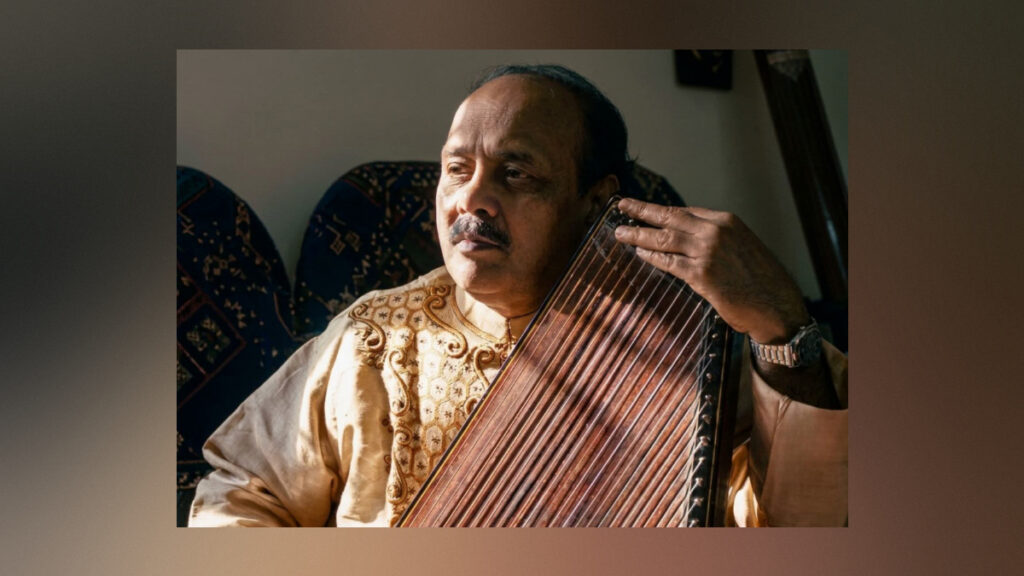
Rain can be nature’s lament, or a gentle knock on the door of memory. Each raindrop may bring back a familiar voice, a moment from the past or emotions long held in the heart. On his birthday, the evocative strains of Aj Ei Brishtir Kanna Dekhe Mone Porelo Tomay bring to mind one of Bangladesh’s distinctive musical figures, Ustad Niaz Mohammad Chowdhury, whose dedication to classical music has earned him a special place in the country’s musical landscape.
On 25 October, admirers remember the singer with respect, affection and warm wishes, celebrating a life shaped by musical discipline, artistic commitment and a deep appreciation of melody.
Table of Contents
A devoted practitioner of classical music
Music encompasses a wide range of traditions, styles and forms of expression. Among them, classical music demands particular discipline. Beyond a melodious voice, it requires a thorough understanding of ragas, precise control of rhythm and tempo, sensitivity to tonal nuances and years of dedicated practice. In this tradition, artistic depth and commitment often matter more than immediate popularity.
Ustad Niaz Mohammad Chowdhury is among the musicians associated with the pursuit of classical music in Bangladesh. His musical identity brings together the depth of classical traditions, the expressive qualities of raga-based compositions and the emotional appeal of Bengali songs.
For him, music represents more than a route to public recognition. The discipline of practice, respect for musical traditions and attention to the finer details of a performance are central to the life of a serious musician. His career reflects a sustained engagement with these principles.
Classical music also offers performers considerable scope for interpretation. Even within the structure of a particular raga, a musician can express individual understanding and emotion through subtle variations in phrasing, tonal emphasis and melodic development. Such qualities distinguish a thoughtful performance from one concerned merely with technical display.
Training in the Patiala gharana
An important influence on Chowdhury’s musical development was his training under Ustad Amanat Ali Khan and Ustad Fateh Ali Khan, two celebrated exponents of the Patiala gharana, a significant tradition within the classical music of the Indian subcontinent.
Learning from accomplished practitioners of a musical tradition provides more than technical instruction. It introduces students to established approaches to performance, the discipline of regular practice and the principles that have been passed down through successive generations of musicians.
Chowdhury’s training helped develop his engagement with different forms of classical and semi-classical music, including khayal, thumri and ghazal. Each has its own character. Khayal allows considerable scope for melodic elaboration and improvisation, while thumri places particular emphasis on emotional expression. Ghazal, meanwhile, brings together poetic language and melody to convey themes such as love, longing and separation.
These forms require different expressive approaches, even when they share an underlying commitment to musical refinement. Chowdhury’s association with them forms an important part of his artistic identity.
From Narsingdi to Dhaka: His early life and education
Niaz Mohammad Chowdhury was born on 25 October 1952 in Khainkut village, in Shibpur upazila of Narsingdi district. Although he spent part of his childhood in the village, Dhaka became the principal setting for his upbringing and education.
He completed his secondary education at Nawab Kumar Institution in Bakshibazar, Dhaka, in 1967. In 1969, he completed his higher secondary education at Dhaka College before graduating from the University of Dhaka in 1971.
Alongside his formal studies, his interest in music continued to grow. Over time, musical practice became a central part of his life and shaped his professional direction. He also taught for a short period at a university in London, adding an academic experience to a life otherwise closely associated with music.
His journey illustrates how formal education and artistic development can proceed alongside one another. While academic qualifications provided one dimension of his background, his commitment to music became the defining feature of his professional identity.
International performances and television debut
Chowdhury’s international musical journey began before his first television appearance in Bangladesh. In 1979, he travelled to Malaysia and Singapore to perform, marking an important early stage in his career beyond the country’s borders.
Performing abroad offers musicians an opportunity to introduce their repertoire to audiences from different cultural backgrounds. For artists who sing in Bengali or work within South Asian classical traditions, such performances can also help familiarise international listeners with the region’s musical heritage.
Chowdhury subsequently performed in several countries, presenting Bengali songs and aspects of Bangladesh’s musical traditions to audiences beyond his homeland. His international appearances formed part of a broader career that connected his musical practice with listeners in different settings.
His first television performance in Bangladesh came in 1985, when he appeared on Bangladesh Television’s programme Amar Joto Gaan. The programme was presented by Dr Abu Hena Mostafa Kamal, a prominent academic, poet and lyricist.
Television provided an important platform for singers to reach audiences beyond concert halls and live performances. For Chowdhury, the appearance marked a significant moment in his public musical career, bringing his voice to viewers across the country.
Maintaining an individual path amid changing musical tastes
The 1980s and 1990s were important decades for the development of Bangladesh’s recorded music industry. Cassette recordings helped songs reach households across the country, while new singers, arrangements and styles expanded the range of music available to listeners.
Popular music was changing rapidly during this period. Singers could gain recognition through commercially successful releases, and the growing recording industry created new opportunities for performers and composers.
Chowdhury’s artistic identity, however, remained closely associated with classical music and the discipline required to sustain it. His contribution cannot be assessed solely by counting popular songs or measuring commercial success. His importance also lies in his continued engagement with a tradition that depends on long-term training, careful listening and sustained practice.
Popularity can introduce an artist to a wide audience, but a lasting relationship with music often requires a different kind of commitment. Classical traditions are built through years of learning and performance, with each generation drawing on the experience of those who came before.
Chowdhury’s musical journey offers a reminder of the value of this continuity. His work represents an approach in which the refinement of musical expression remains central, even as popular tastes and the wider industry evolve.
The emotional resonance of a memorable song
Among Chowdhury’s best-known songs is Aj Ei Brishtir Kanna Dekhe Mone Porelo Tomay, a title that evokes rain, remembrance and the return of emotions associated with someone dear.
Rain has long served as a powerful image in poetry and music. It can suggest sadness, separation, nostalgia or the desire to recover something that has been lost. In Bengali musical expression, such imagery often provides a natural bridge between the outside world and the inner life of the listener.
The song’s enduring appeal lies in this emotional familiarity. A rainy afternoon can bring back memories of a person, a place or a period of life, transforming an ordinary change in the weather into a deeply personal experience. Music gives such feelings a form that can be shared, even when each listener connects with the song in a different way.
Certain songs become part of people’s lives because they are linked to particular experiences and memories. Their significance may extend beyond the lyrics or melody, becoming associated with relationships, moments of separation or periods of reflection.
Chowdhury’s familiar song has found a place in this emotional landscape for many listeners. Its title alone captures a feeling that is readily understood: the way rain can awaken memories that seemed distant until a familiar sound or image brings them back.
That connection makes the song especially fitting on the singer’s birthday. The changing seasons, passing years and shifting musical trends do not necessarily diminish the personal meaning that a song acquires over time.
A quieter relationship with fame
Chowdhury is described as a relatively private figure who has preferred to concentrate on music rather than continually seek public attention. This aspect of his personality offers a contrast with a contemporary entertainment environment in which an artist’s visibility can depend heavily on media appearances, publicity and social media engagement.
Public recognition remains important to many performers, helping them reach audiences and sustain their careers. Yet visibility is not the only measure of artistic value. The depth of an artist’s engagement with a musical tradition, the care taken in performance and the impression left on listeners are also important considerations.
Classical music, in particular, depends on sustained learning and practice. Its techniques cannot be mastered through brief exposure alone, and the nuances of a raga or a particular performance style often require patient listening to appreciate fully.
The experiences of established musicians such as Chowdhury can therefore be valuable to younger performers. Recording their performances, documenting their musical journeys and making their work accessible to new audiences would help preserve knowledge that might otherwise remain confined to individual experience or live performance.
Broadcasting and digital platforms can play a role in this process, provided that the material is presented with care and appropriate context. Such efforts could help younger listeners discover classical and semi-classical traditions alongside contemporary musical forms.
Music within the family
Music also has a place in Chowdhury’s family life. His wife, Sabra Niaz, comes from a musical family, while his father-in-law, Syed Zakir Hossain, was associated with classical music as a composer and teacher.
This family background provided another setting in which music and its traditions could be appreciated and sustained. Musical influence within a family does not necessarily mean that every member will pursue a professional career, but it can foster an understanding of performance, discipline and artistic expression.
Their son, Faiyaz Mohammad Chowdhury, and daughter, Mehnaz Chowdhury Barkha, also sing, although neither is a professional musician.
The presence of music within a family can extend beyond the act of singing. It may shape listening habits, aesthetic preferences and an appreciation of cultural traditions. In that sense, a musical household can help preserve an interest in the art across generations, even when family members follow different professional paths.
Preserving Bangladesh’s classical music heritage
A country’s cultural identity is shaped by more than its most commercially successful songs, films or performers. Classical music, folk traditions and other forms of artistic practice also contribute to the cultural memory passed from one generation to the next.
Classical music presents particular challenges because it requires sustained training and opportunities for regular performance. Supporting this tradition involves making music education accessible, providing platforms for experienced performers and encouraging younger musicians to study established forms alongside newer styles.
The work of artists such as Chowdhury highlights the importance of maintaining this balance. Popular music can attract large audiences, while classical traditions preserve distinctive approaches to melody, rhythm and interpretation that have developed over generations.
Preservation also requires more than occasional tributes. Audio and video archives, reliable biographical records and access to performances can help future listeners and students understand the work of established musicians. Documenting their training, influences and artistic experiences can provide valuable material for music education and research.
For Bangladesh, recognising the contributions of classical musicians is part of a wider effort to understand and preserve the country’s diverse musical landscape. Their work provides a link between established traditions and future generations of performers and listeners.
Birthday wishes for a life devoted to music
As Chowdhury marks another birthday, admirers have an opportunity to reflect on his musical journey, his training in the Patiala gharana and his continued association with classical and semi-classical forms. His career also brings renewed attention to the role of dedicated practitioners in sustaining musical traditions that demand patience and discipline.
Fame can fluctuate, and musical tastes change with each generation. Yet songs that become woven into people’s memories can retain their emotional force long after their first release. A familiar melody may return with the rain, evoke a particular moment or remind a listener of someone they have not seen for years.
That is the feeling captured by Aj Ei Brishtir Kanna Dekhe Mone Porelo Tomay. On this rain-tinged birthday, the song offers a fitting way to remember the singer behind it and the emotions his music continues to evoke.
Happy birthday, Ustad Niaz Mohammad Chowdhury.
May your dedication to music continue to inspire listeners and younger performers. May your voice remain a cherished part of Bangladesh’s musical landscape, and may the traditions to which you have devoted your life receive the recognition and care they deserve.
Wishing you good health, happiness and many more years of musical fulfilment. May the depth of classical ragas, the tenderness of ghazals and the enduring emotional appeal of Bengali songs continue to find expression through your art.
With respect, affection and warmest wishes on your birthday, may the music live on, the practice continue and the legacy of Ustad Niaz Mohammad Chowdhury remain close to the hearts of music lovers.
Author: A B M Zakirul Hoque Titon