
A Noble Vision Met with Controversy
The enduring legacy of legendary Bangladeshi rock icon Ayub Bachchu recently inspired a special musical initiative titled Uttoradhikar, designed to introduce his timeless work to a fresh generation of listeners. Featuring twenty of his most beloved tracks re-arranged and performed by contemporary artists and bands, the project carried a noble objective: all financial proceeds generated from the album are designated to fund the construction of an Ayub Bachchu museum. Beyond simply reinterpreting classic songs, the project was envisioned as a comprehensive effort to preserve the late rocker’s life, music, and artistic memory.
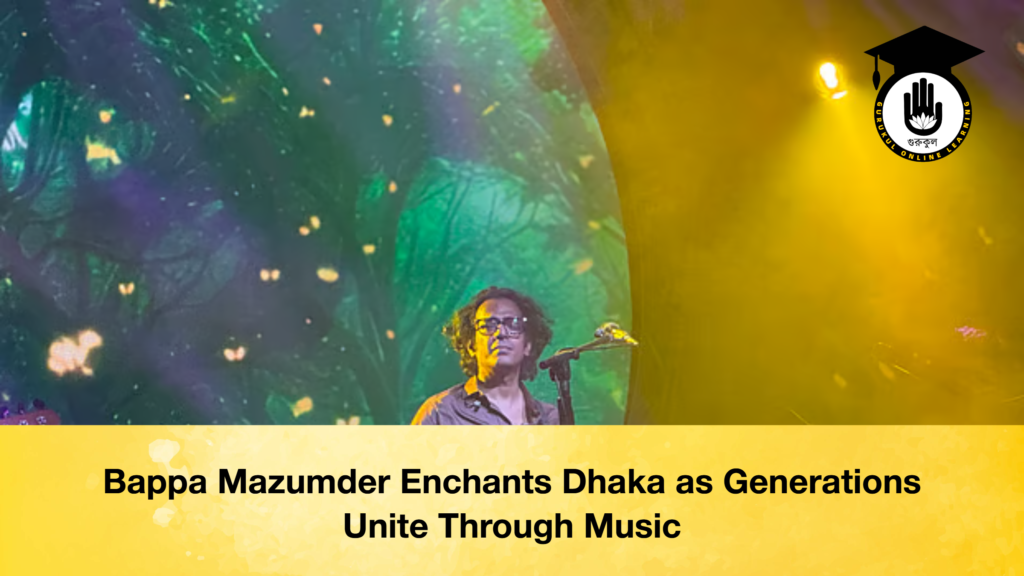
However, the rollout has encountered immediate turbulence. Released around the late artist’s birth anniversary on August 16—beginning with the classic Rupali Guitar performed by Bappa Mazumder—the project initially drew widespread anticipation. Yet, as successive tracks dropped on YouTube, public reception shifted dramatically, sparking intense debates across social media platforms regarding the boundaries of artistic reinterpretation.
The Storm Surrounding ‘Ghumonto Shohore’
The primary lightning rod for criticism has been the rendition of Ghumonto Shohore, interpreted and vocally delivered by Adit Rahman. While contemporary covers inherently involve fresh musical arrangements, Rahman’s vocal styling and structural modifications drew immediate ire from purists and dedicated followers of the late singer.
Fans took to social media in droves, arguing that the changes stripped the song of its core emotional resonance and signature melancholy. Many voiced deep frustration online, characterising the altered rendition as a misrepresentation of Bachchu’s artistic identity. Calls to remove the track from public viewing quickly escalated, with several disgruntled listeners and community members issuing warnings of potential legal action if the song is not taken down, though official legal filings remain unconfirmed.
Public commentary reflected widespread discontent, with listeners noting that the new version lacked the soul and authenticity of the original. Not all reviews were negative, however; performances by other artists within the broader musical community, such as Molla Babu’s rendition of Kosto Kake Bole, received warm praise from fans for preserving the emotional core of the original work. Reflecting on the project, Molla Babu noted that while he admired much of the initiative, listening to Ghumonto Shohore failed to evoke the familiar magic of Bachchu’s definitive version.
Foundation Distances Itself from the Project
As the controversy gathered momentum, attention turned to Abdullah Al Masud, a longtime guitarist and collaborator of Ayub Bachchu in the band LRB, who also serves as the general secretary of the Ayub Bachchu Foundation. Amid rising confusion among fans who associated him with archival preservation projects, Masud issued a definitive statement distancing himself and the foundation from the new tribute album.
Writing to clear the air regarding the growing unrest, Masud stated that he had no involvement in the conceptualisation, decision-making, or execution of the Uttoradhikar project from its inception. This clarification added a new dimension to the public discourse, bringing the question of endorsement and institutional approval to the forefront.
Ayub Bachchu’s contributions to Bangladeshi rock music remain foundational, shaping generations of listeners through his unmatched vocals, guitar mastery, and songwriting. Consequently, any endeavor to reinterpret his catalogue inevitably invites intense scrutiny. The ongoing debate over Uttoradhikar extends far beyond a single track, touching upon broader questions of how classic compositions should be handled, the limits of creative freedom, and the enduring responsibility of safeguarding a legendary artist’s heritage.