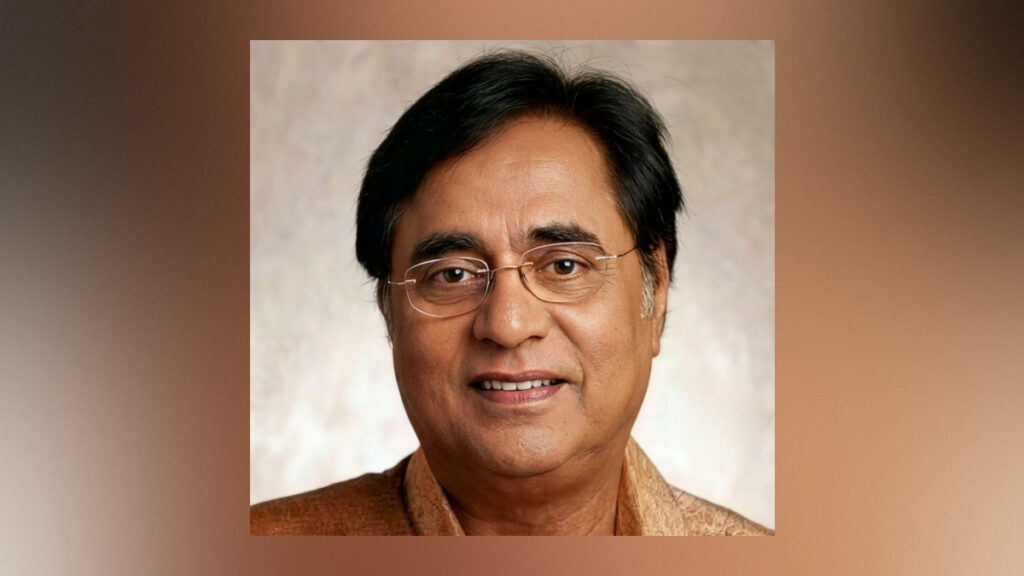
Some voices do more than sing; they reach into the deepest corners of the human heart. Some melodies linger long after the music has stopped, becoming companions through love, loss, loneliness and memories that refuse to fade. Jagjit Singh, the legendary ghazal singer of the Indian subcontinent, possessed one such rare voice. Through his gentle delivery, restrained musical style and profound emotional sensitivity, he transformed ghazal into a language that ordinary listeners could understand and make their own.
Songs such as Tum Itna Jo Muskura Rahe Ho, Jhuki Jhuki Si Nazar, Hothon Se Chhoo Lo Tum and Chitthi Na Koi Sandesh continue to resonate with audiences across generations. Their enduring appeal lies not only in their melodies but also in the intimacy of Singh’s performances. He seemed to sing directly to the listener, giving voice to feelings that often remain unspoken.
Singh helped take ghazal beyond the confines of traditional musical gatherings and bring it into homes across India and beyond. By preserving the poetry and emotional depth of the form while introducing accessible arrangements and a contemporary sound, he became one of the most influential figures in modern ghazal music.
Table of Contents
Early Life and Musical Training
Jagjit Singh was born on 8 February 1941 in Sri Ganganagar, in present-day Rajasthan, India, during British rule. His father, Sardar Amar Singh Dhiman, worked in government service and hoped that his son would pursue a conventional profession, possibly engineering, offering financial security and stability.
Singh, however, developed a deep passion for music at an early age. Alongside his formal education, he studied Indian classical music under accomplished teachers, including Pandit Chaganlal Sharma and Ustad Jamal Khan. Their guidance helped shape his understanding of melody, vocal technique and musical expression, laying the foundations for the distinctive style that would later define his career.
He attended DAV College in Jalandhar, but music remained his central ambition. While his family hoped he would follow a more conventional path, Singh increasingly felt drawn towards a life devoted to singing. His decision to pursue that ambition required determination, particularly at a time when establishing oneself as a professional musician was far from straightforward.
His early training also taught him an important lesson that would remain central to his work: a song’s emotional power depends not simply on vocal ability, but on the singer’s understanding of its words, melody and underlying sentiment.
From All India Radio to Mumbai
Singh began building his professional reputation through performances at All India Radio’s Jalandhar station. Radio offered him an opportunity to reach a wider audience, while stage appearances helped him develop his confidence and refine his performance style.
His ambitions eventually took him to Mumbai, one of India’s principal centres for film and commercial music. Establishing himself there was difficult. The city offered opportunities, but competition was intense, and success was far from guaranteed. Singh took on advertising jingles and other available work while continuing to develop his musical identity.
These early years demanded patience and perseverance. Rather than relying solely on his natural vocal talent, he worked towards a distinctive approach that would allow him to stand apart from other singers. He sought a balance between the classical foundations of ghazal and a style that could appeal to listeners unfamiliar with its traditional conventions.
That search became central to his artistic identity. Singh understood that music could retain its depth without becoming inaccessible, and his later success demonstrated how effectively he could bridge that gap.
Bringing Ghazal into a New Era
One of Singh’s greatest contributions was his role in making ghazal more accessible to contemporary audiences. Traditionally associated with poetic sophistication, nuanced expression and refined musical settings, the genre could sometimes appear distant from everyday popular music. Singh helped change that perception without abandoning its essential character.
His singing was marked by restraint rather than vocal extravagance. He gave priority to the meaning of the lyrics, the natural movement of the melody and the emotions contained within each line. His arrangements incorporated instruments such as the harmonium, tabla and guitar, alongside modern recording techniques, creating a sound that felt intimate and contemporary.
The result was a style that preserved the poetic qualities of ghazal while making it appealing to a broader audience. His recordings demonstrated that the genre did not need elaborate musical ornamentation to convey powerful emotions.
In Jhuki Jhuki Si Nazar, he captured the shyness and uncertainty of romantic attraction. Hothon Se Chhoo Lo Tum expressed affection with remarkable tenderness, while Tum Itna Jo Muskura Rahe Ho explored the possibility that a smile might conceal sadness. In each performance, Singh showed how a quiet voice could communicate feelings that a more forceful delivery might obscure.
His ghazals consequently became companions for people experiencing many different stages of life. Listeners turned to them not only for romantic memories but also for comfort during separation, loneliness and periods of reflection. The songs offered a sense of recognition: the feeling that someone had found words and music for emotions they themselves struggled to express.
Chitra Singh: A Partnership in Life and Music
Jagjit Singh’s life and career were closely intertwined with those of his wife, Chitra Singh, herself a gifted ghazal singer. The two met through advertising-jingle recording work around the mid-1960s and later married, building a partnership that became an important part of the history of modern ghazal music.
Their relationship extended beyond marriage. They shared a commitment to music and developed a musical partnership distinguished by complementary voices and a natural understanding of one another’s performances.
Their 1976 album, The Unforgettables, became a significant milestone in their careers. Its popularity demonstrated that ghazal recordings could achieve considerable commercial success outside the film industry. At a time when film songs occupied a prominent place in India’s popular music culture, the album helped establish a wider market for non-film ghazals.
The success of The Unforgettables also reflected a broader change in listening habits. Recorded music allowed audiences to experience ghazal beyond concert halls and traditional gatherings, bringing the genre into everyday life. Singh’s approach helped make that transition possible, while Chitra’s contribution gave their joint performances a distinctive identity.
Together, they became a much-loved musical partnership. Yet their lives were later marked by a devastating personal tragedy that profoundly affected both their family and their relationship with music.
The Devastating Loss of Their Son
In 1990, the couple’s only son, Vivek Singh, died in a road accident. The sudden loss brought profound grief into their lives and cast a long shadow over their musical careers.
For a family in which music had been a source of companionship and fulfilment, the tragedy created a silence that was difficult to overcome. Both Singh and Chitra withdrew from public musical life for a period, while Chitra remained away from singing for many years.
The experience also offered listeners a different perspective on the emotional intensity of Singh’s performances. His songs had long conveyed sorrow, longing and the pain of separation, but the knowledge of his personal tragedy led many admirers to listen to them with renewed sensitivity.
His artistic achievement, however, cannot be explained solely through personal suffering. Singh’s ability to communicate sadness arose from a wider understanding of human emotion. His music gave expression to love, memory, uncertainty and loss in ways that allowed listeners to connect their own experiences with his songs.
He rarely relied on dramatic vocal gestures. Instead, his measured delivery gave sorrow room to breathe, allowing the lyrics and melody to carry their own weight. That restraint became one of the defining characteristics of his work.
Naya Disha and Samvedna: Poetry Set to Music
Singh’s musical interests extended well beyond romance and melancholy. He also helped bring poetry and reflective writing to audiences through musical arrangements that gave literary works a wider reach.
In 1999, he played an important role in the musical arrangements for Naya Disha, an album based on the poetry of former Indian Prime Minister Atal Bihari Vajpayee. The project revealed another dimension of Singh’s artistic ability, demonstrating how his sensitivity to language and melody could be applied to poetry beyond the conventional ghazal repertoire.
His work on Samvedna, released in 2002, further illustrated this interest. The album featured poetry presented in the voices of well-known figures, including Amitabh Bachchan and Shah Rukh Khan. By bringing together literary expression, spoken performance and musical composition, the project explored the relationship between poetry and sound.
Such work reflected Singh’s broader understanding of music. For him, it was not merely a form of entertainment but also a means of communicating ideas, preserving the emotional force of poetry and bringing listeners closer to words they might otherwise encounter only on the page.
An Enduring Presence in Film Music
Although he is remembered primarily as a ghazal singer, Singh also left a lasting mark on Indian film music. His songs for the 1982 film Arth, directed by Mahesh Bhatt, remain among his best-known recordings.
Tum Itna Jo Muskura Rahe Ho is particularly memorable for the question at the heart of its lyrics: does a smile always reflect happiness, or can it conceal pain? Singh’s restrained delivery gave the song a psychological depth that helped it connect with listeners beyond the film itself.
Another song from Arth, Jhuki Jhuki Si Nazar, became widely admired for its delicate expression of romantic feeling. Meanwhile, Hothon Se Chhoo Lo Tum continued to find an audience as a tender and enduring love song.
Chitthi Na Koi Sandesh became closely associated with separation and the emptiness left by an absent loved one. Its emotional force comes from the way longing, waiting and loss are conveyed through the lyrics and Singh’s understated voice.
Across these recordings, his greatest strength remained his ability to communicate without excess. He did not need to raise his voice or overwhelm the arrangement to make a song moving. Clear diction, careful phrasing and a natural sense of melody allowed the emotion to emerge gradually.
That quality helped his songs survive changing musical fashions. Their appeal rests not on a particular period or production style, but on feelings that remain recognisable to listeners of different ages and backgrounds.
Recognition and the Padma Bhushan
Singh’s contribution to Indian music received recognition beyond the affection of his audience. In 2003, the Government of India awarded him the Padma Bhushan, one of the country’s major civilian honours. The award acknowledged his long career and his contribution to the development and wider appreciation of ghazal music.
Yet formal recognition tells only part of the story. His influence can also be measured by the place his recordings occupy in people’s lives. Some listeners return to his songs to revisit memories of love; others find comfort in them during periods of loneliness or grief. For many, his voice became a familiar presence in moments when words alone seemed insufficient.
The ways in which people listen to music have changed considerably since Singh’s early career. Cassette tapes and compact discs have given way to digital platforms, allowing recordings to reach new audiences across geographical boundaries. His music has continued to find listeners because its emotional substance is not tied to a particular technology or generation.
Singh’s legacy also lies in the possibilities he opened for ghazal. He demonstrated that a genre rooted in poetry and classical musical traditions could flourish in a modern recording environment without losing its identity. His work helped broaden the audience for ghazal and encouraged listeners to appreciate the power of subtle expression.
A Voice That Lives Beyond His Lifetime
Jagjit Singh died in Mumbai on 10 October 2011, aged 70. His death marked the loss of one of the Indian subcontinent’s most distinctive musical voices. Yet his recordings remain a powerful reminder of his artistic vision and the emotional connection he established with listeners.
When Tum Itna Jo Muskura Rahe Ho plays on a quiet afternoon, its central question still feels relevant: how much can remain hidden behind a smile? When listeners hear Chitthi Na Koi Sandesh, the pain of absence becomes something shared rather than entirely private. His songs turn individual emotions into experiences that many people can recognise.
That ability was the foundation of his lasting influence. Singh showed that the power of a singer does not depend solely on vocal range or technical display. It also lies in the ability to understand a song, respect its words and communicate its meaning with honesty.
Remembering him means celebrating more than a collection of beloved recordings. It means recognising the years of dedication that shaped his career, the partnership he shared with Chitra Singh, the personal tragedy he endured and his commitment to a musical form that he helped bring to a wider public.
His songs continue to accompany listeners through moments of happiness, reflection and sorrow. They remind us that music can give shape to feelings that are difficult to explain and offer companionship when silence becomes overwhelming.
Jagjit Singh’s voice may have fallen silent, but the intimacy, warmth and melancholy of his ghazals remain. His contribution to the musical heritage of the Indian subcontinent endures, carried forward each time a listener discovers one of his songs and finds a reflection of their own heart within it.
A humble tribute to Jagjit Singh, whose voice gave timeless expression to love, longing and the many shades of human emotion.