Within the vast realm of Hindustani classical music, Raga Mian ki Todi (often referred to simply as Todi) is far more than a specific permutation of notes; it represents profound spiritual contemplation, deep introspection, and the quiet yearning of early morning. In musical treatises, it is regarded as the quintessential primary raga of the Todi anga. The serene stillness, pathos (Karuna Rasa), and introspective spirituality of dawn attain a sublime, almost mystical expression through the solemn note structures of Todi.

Historical Background and the Contribution of Mian Tansen

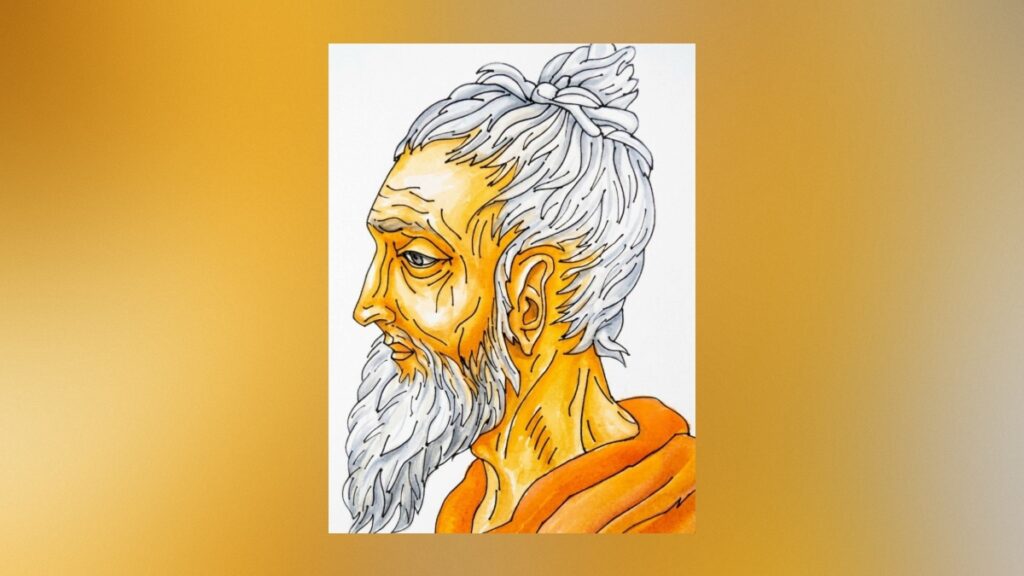
According to musical tradition, Mian Tansen—the legendary court musician to the Mughal Emperor Akbar in the sixteenth century—created this raga by refining the scalar dynamics of the ancient Todi scale. It was named Mian ki Todi (literally, ‘Mian Tansen’s Todi’) in honour of its creator.

Legend has it that Tansen sought to capture the profound silence of nature as night fades into the first rays of dawn, echoing creation’s earnest prayer to the Divine. Consequently, the raga embodies a poignant blend of deep pathos (viraha), profound tranquility, and total spiritual surrender.

Classical Profile and Framework of Raga Mian ki Todi

According to musical treatises, it is the parent (janaka) raga of the Todi thaat. Its scalar structure is exceedingly delicate, requiring immense precision to prevent it from veering into adjacent ragas.
  • Thaat: Todi
  • Jati (Class): Sampurna–Sampurna (Septatonic in ascent and descent; alternatively Shadav–Sampurna if Pancham is omitted or weakened in ascent)
  • Vadi (Primary Note): Dhaivat (d)
  • Samvadi (Secondary Note): Gandhar (g)
  • Nature / Mood: Deeply solemn, poignant, detached, devotional, and introspective
  • Performance Time: Second quarter of the day (9:00 AM – 12:00 PM)
  • Dominant Anga: Poorvanga-pradhan and Todi Anga
  • Notes (Swaras) Used: Ultra-flat Rishabh (r), ultra-flat Gandhar (g), sharp/intense Madhyam (M/tivra M), ultra-flat Dhaivat (d), and Shuddha/Komal Nishad

Arohana, Avrohana, and Pakad

  • Arohana (Ascent): S r g, M P, d N Ś (or: ṇ S r g, M d n Ś)
  • Avrohana (Descent): Ś N d P, M g, r g r S
  • Pakad (Key Phrase): ḍ ṇ S, g r S; M g, r g r S; d ṇ S

Microtonal Nuances: Ultra-Flat Notes, Shruti, and Oscillations

1. Employment of Ultra-Flat (Ati-Komal) Notes

In Todi, the notes Rishabh (r), Gandhar (g), and Dhaivat (d) are rendered at microtonally lower frequencies (shrutis) than standard flat notes, making them ultra-flat (ati-komal). This subtle microtonal lowering greatly intensifies the emotional pathos (Karuna Rasa) of the raga.

2. Slow Oscillation (Andolan) on Gandhar and Dhaivat

A crucial hallmark of Todi is the application of a slow, deliberate oscillation (andolan) on Komal Gandhar (g) and Komal Dhaivat (d). In particular, the smooth glides (meend) moving from Gandhar to Rishabh and sliding down to Shadja within phrases like ‘M g r S’ or ‘g r S’ encapsulate the soul of the raga.

3. Strategic Treatment of Pancham (P)

The note Pancham (P) is treated with delicate restraint in Todi. In ascent, it is often bypassed obliquely (Vakra movement), jumping straight from Tivra Madhyam to Dhaivat (‘M d’) or touching Pancham fleetingly (‘M P d’). Although Pancham is slightly more evident in descent, the main weight of the raga rests firmly on Dhaivat, Gandhar, and Rishabh.

Classification and Allied Variants of the Todi Family

Music treatises list numerous ragas bearing the name ‘Todi’, though not all share the precise aesthetic or structural framework of core Todi.
  • Core Todi-Anga Ragas: Mian ki Todi, Shuddha Todi, Darbari Todi, and Gurjari Todi (which omits Pancham altogether). These ragas retain the essential Tivra Madhyam and ultra-flat microtonal notes of pure Todi.
  • Ragas Bearing the Todi Name but Belonging to Other Lineages: Bilaskhani Todi, Asavari Todi, Jaunpuri Todi, Deshi Todi, Bahaduri Todi, and Lachari Todi. Analytical study shows that most of these reflect stronger influences from the Asavari or Kafi thaats and do not employ the characteristic sharp Tivra Madhyam of Todi.

Bengali Khayal and the Landmark Contribution of Ustad Azad Rahman

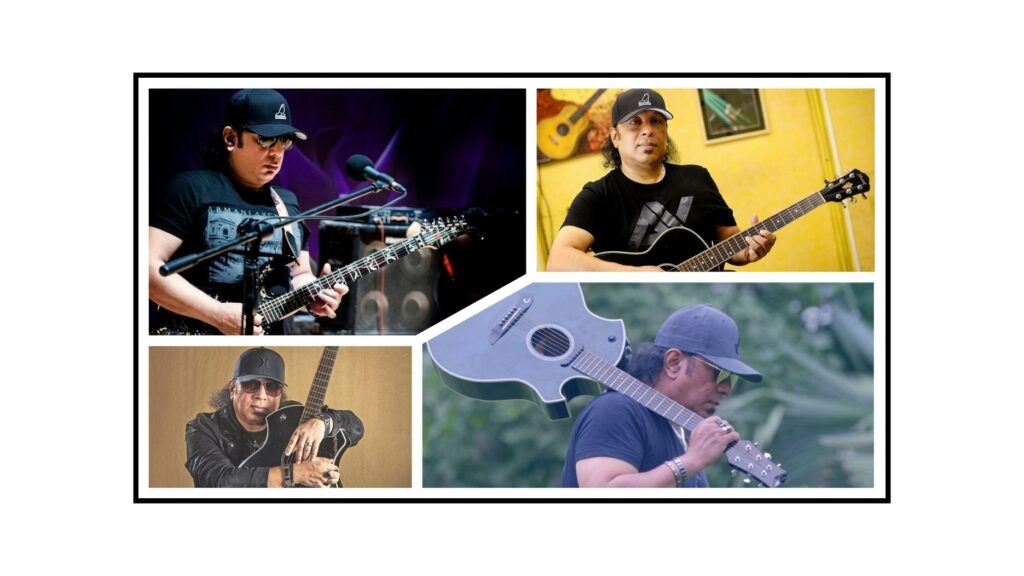
In the history of Bengali classical music, Ustad Azad Rahman played a pioneering role by composing Khayal bandishes in Bengali while scrupulously preserving the purity of Hindustani ragas. Traditionally, Khayal compositions were restricted to Hindi or Urdu texts. Ustad Azad Rahman broke new ground by composing Bengali Khayals set to Raga Mian ki Todi that maintained its uncompromising classical rigor and majestic aura.

Lyrics and Rhythmic Framework of Bengali Khayals Composed by Ustad Azad Rahman

Vilambit Khayal (Taal: Ektal)
Composed by Ustad Azad Rahman
Asthayi:
In Your name I begin, O Lord of this universe,
By Your grace I open my eyes, and my soul finds peace.
Antara:
You are the Beginning and the Eternal, I bow at Your feet,
Through Your mercy alone I speak these words and sing this song.
Drut Khayal (Taal: Teental)
Composed by Ustad Azad Rahman
Asthayi:
The golden sun has risen in the eastern sky,
Smiling gently with its golden rays.
Antara:
The auspicious glow of a pure and beautiful morning
Washes away all dark blemishes in sacred light,
As a fragrant breeze of joy blows from the south.

Grammar of Akarmatrik Notation Used in Bengali Khayal

In Bengali classical music practice, the standardized rules of the Akarmatrik notation system—developed by Pandit Jyotirindranath Tagore and refined by subsequent musicologists—are as follows:

1. Octave Identifiers

  • Middle octave (Madhya Saptak) notes carry no special marks (e.g., S R G).
  • Lower octave (Mandra Saptak / bass) notes feature a subscript sign or sub-dot below the note (e.g., ṇ, ḍ, p).
  • Higher octave (Tara Saptak / treble) notes feature a superscript sign or over-dot above the note (e.g., Ś, R̄, Ḡ).

2. Altered Notes (Vikrit Swaras)

  • Flat Rishabh (Komal Rishabh) = r
  • Flat Gandhar (Komal Gandhar) = g
  • Sharp Madhyam (Tivra/Kari Madhyam) = M
  • Flat Dhaivat (Komal Dhaivat) = d
  • Flat Nishad (Komal Nishad) = n

3. Beat Division Symbols

  • Single beat (Ekmantra) = ||
  • Half beat = :
  • Quarter beat = 0
  • Two half beats = Sr
  • Four quarter beats = Srgm
  • Two quarter beats = Sr:
  • One-and-a-half beats plus half beat = R: G:

4. Grace Notes (Kan Swaras)

A momentary grace note touched prior to the main note is written as a small character to the left of the main note (r-G), while a fleeting touch after the main note is placed to the right (R-s).

5. Rest / Pause Markers

A brief silence in the melody is termed a rest (biram). Rest symbols use the same notation as beat markers. When isolated and detached from note characters, the dash indicates a silent beat.

6. Rhythm and Measure (Taal, Sam, and Khali) Markers

  • Vertical bars (|) denote measure divisions (vibhag).
  • The start of a measure cycle (Sam) is marked with ‘1’ or a superscript mark, while empty/unaccented beats (Khali) are designated by zero (‘0’).

7. Repetition and Glides (Meend)

  • Repetitions are indicated using brackets or repeat signs (ৎ:).
  • A smooth glide from one note to another (Meend) is denoted by a curved slur symbol (V) beneath the notes (e.g., N V P).
  • When a note is sustained across syllables, hyphens (-) indicate the continuation of the pitch.
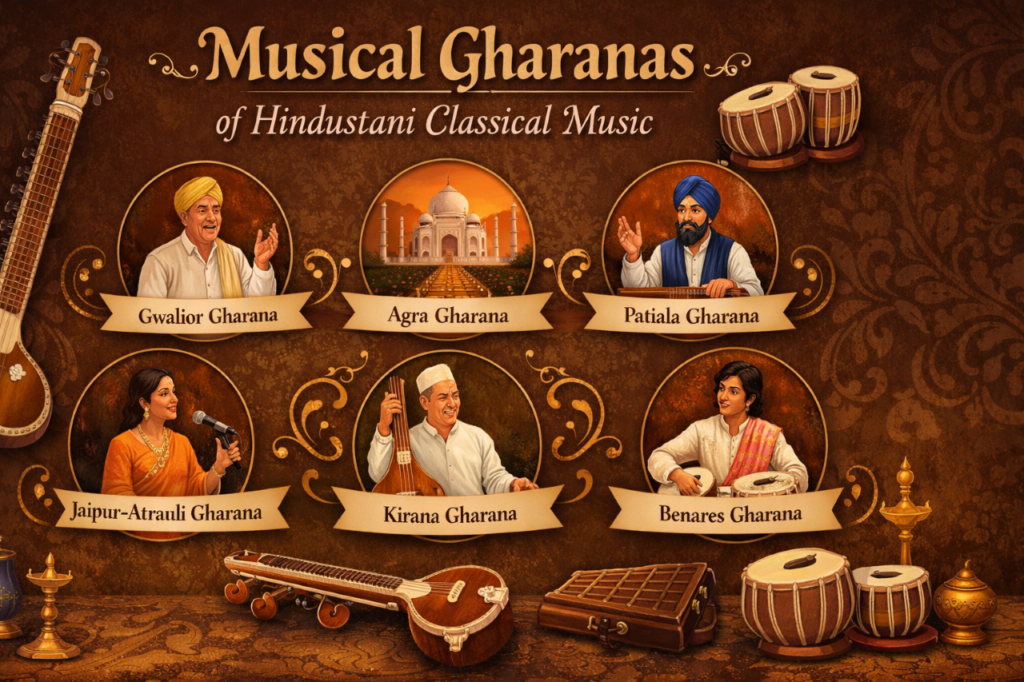
Raga Mian ki Todi remains a timeless melodic discipline passed down through centuries via the sacred guru-shishya tradition. As the golden morning light touches the earth, the solemn and devotional contours of this raga awaken within the listener a renewed sense of cosmic majesty and profound spiritual serenity.
Tags :

Leave a Reply

Your email address will not be published. Required fields are marked *

Recent Post

Editor & Publisher: Sufi Faruq Ibne Abubakar

About Us

MusicGOLN is an online music and entertainment platform featuring the latest music news, song releases, artist updates, lyrics, reviews, and more. Our goal is to connect music lovers with the latest happenings in the world of music.

Email Us:

Press Release: pr@musicgoln.com
Complaint: complaint@musicgoln.com

Commercial Contact: commercial@gurukulonlinelearningnetwork.com

Contact: +8801775895618