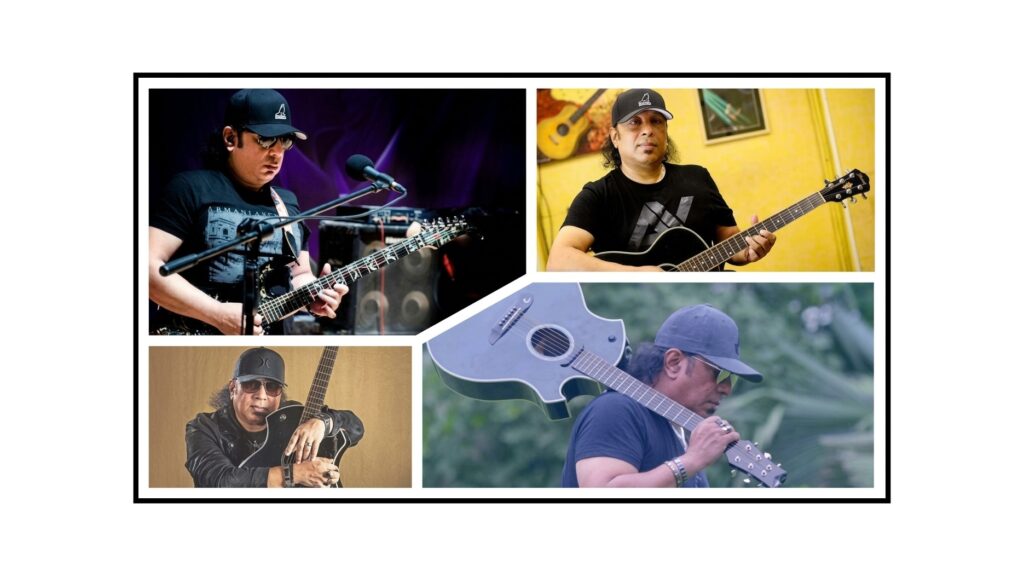
A tribute to the legendary Bangladeshi musician whose songs and guitar playing transformed Bengali rock music.
“One day, I will leave this silver guitar behind and go far, far away…”
There is a poignant irony in these words. Ayub Bachchu, the legendary Bangladeshi singer, guitarist, composer and lyricist who gave voice to this sentiment through one of his most memorable songs, eventually left the world behind, leaving his beloved silver guitar, a remarkable musical legacy and countless songs that continue to resonate with generations of listeners.
Bachchu was one of the most influential figures in the history of Bangladeshi band music. His distinctive voice, extraordinary guitar skills and deeply expressive compositions helped establish Bengali rock as a powerful musical genre in its own right. For millions of fans, he was more than a performer. He was the voice behind their love, heartbreak, longing, memories and youthful dreams.
Born in Chattogram on 16 August 1962, Bachchu developed a passion for music at an early age. His fascination with the guitar gradually grew into a lifelong commitment to musical excellence. Through years of practice, experimentation and performance, he developed a distinctive style that combined emotional depth with the energy and technical precision of rock music.
His musical journey gathered momentum through his association with established bands, including Feelings and Souls. These early experiences helped him refine his musical identity and establish himself as a talented guitarist and vocalist. However, it was the formation of his own band, LRB (Love Runs Blind), in 1991 that marked a defining chapter in his career.
Under Bachchu’s leadership, LRB became one of the most celebrated bands in Bangladesh. The group helped expand the creative possibilities of Bengali rock, combining powerful guitar arrangements with memorable melodies and lyrics that spoke directly to the experiences of ordinary people. Bachchu’s commanding stage presence and distinctive musical expression made him a major attraction at concerts, while his recordings reached audiences far beyond the country’s borders.
He was not simply a singer who performed songs written by others. As a guitarist, composer and lyricist, he was deeply involved in shaping the music he presented. Every guitar passage seemed to carry a story of its own, expressing emotions that words alone could not always convey. His ability to balance technical brilliance with genuine feeling became one of the defining characteristics of his artistry.
Among his best-known songs are Cholo Bodle Jai, Shei Tumi, Rupali Guitar, Hashte Dekho, Gaite Dekho, Ghum Bhanga Shohore and Madhobi. Each occupies a special place in the memories of Bengali music lovers. While some celebrate the intensity of romantic love, others explore separation, loneliness, nostalgia and the uncertainties of life. His songs often captured emotions that listeners found difficult to express themselves, allowing his music to become closely intertwined with their personal experiences.
Shei Tumi, in particular, remains one of the enduring favourites among his admirers. Its evocative melody and emotional delivery have helped it retain its appeal across generations. Cholo Bodle Jai, meanwhile, carries a spirit of transformation and renewal, while Rupali Guitar has become inseparable from Bachchu’s own musical identity. The image of the silver guitar represents not only his extraordinary musicianship but also the lasting bond he established with his audience.
Bachchu’s influence extended well beyond his own discography. At a time when band music was helping to reshape the country’s popular musical landscape, he demonstrated that Bengali-language rock could be commercially successful without sacrificing artistic individuality. His work encouraged young musicians to explore electric guitars, experiment with arrangements and develop their own voices rather than simply imitate established performers.
For countless aspiring guitarists, he became a source of inspiration. His playing demonstrated that the instrument could communicate tenderness and melancholy as effectively as power and aggression. He could move from delicate melodic passages to electrifying solos while maintaining the emotional character of a song. That combination of versatility and expression distinguished him from many of his contemporaries.
His contribution also helped bring greater recognition to Bangladeshi band music at home and abroad. Through recordings, concerts and his work with LRB, he helped introduce audiences to a musical tradition that was increasingly confident in its own identity. His popularity as a solo artist further demonstrated his ability to connect with listeners across different musical tastes.
Bachchu’s career spanned more than four decades, during which he remained closely associated with the evolution of modern Bengali popular music. His enduring appeal rested not only on his technical ability but also on his willingness to explore different musical ideas. He continually sought new ways to express familiar emotions, ensuring that his music retained a personal character even as musical tastes changed.
Yet his remarkable journey came to an unexpectedly early end.
On 16 October 2018, Bachchu performed at a concert at Rangpur Zilla School ground. His appearance that evening would later be remembered as his final concert performance. As he sang before the audience and played the guitar for which he was so widely admired, there was little reason for those present to imagine that they were witnessing the last live performance of his life.
Just two days later, on 18 October 2018, Bachchu died in Dhaka following a cardiac arrest. He was only 56.
News of his death sent shockwaves through Bangladesh’s music industry. Fellow musicians, cultural figures and fans expressed their grief at the loss of an artist whose work had shaped their musical memories. His passing was especially painful because he had remained such a familiar and active presence in the country’s musical life.
For his admirers, the loss was not simply that of a celebrated musician. It was the departure of a voice that had accompanied them through different stages of life. His songs had been played at gatherings, shared between friends, remembered after relationships ended and revisited during moments of solitude. His music had become part of the emotional landscape of an entire generation.
His death also highlighted the lasting significance of artists who help shape a nation’s cultural identity. Bachchu belonged to a generation of musicians who expanded the boundaries of Bengali popular music and demonstrated the creative potential of locally rooted rock. His achievements continue to provide a point of reference for younger performers seeking to understand the history and possibilities of the genre.
But can an artist of his stature truly disappear?
Bachchu’s physical presence may be gone, yet his music continues to bring him back into the lives of his listeners. Whenever the opening notes of Shei Tumi emerge from a speaker, whenever someone quietly sings Cholo Bodle Jai, or whenever the familiar strains of Rupali Guitar stir memories of another time, his presence feels remarkably close.
His songs have survived the passage of time because they are rooted in emotions that remain universal. Love, regret, separation, hope and the desire for change are experiences that cross generations. Younger listeners can discover his music without having witnessed his concerts, while those who grew up with his songs can return to them and recover memories that might otherwise have faded.
That is the enduring power of a genuine musical legacy. It does not depend solely on awards, popularity or the number of records sold. It survives through the connection between an artist’s work and the lives of those who hear it. By that measure, Bachchu’s place in Bengali music remains secure.
His silver guitar has become a powerful symbol of this legacy. It recalls the musician who transformed strings and melodies into expressions of love and loss, as well as the performer whose distinctive sound helped define an era of Bangladeshi rock. The instrument may represent a farewell, but the music associated with it continues to speak across time.
The words he once sang about leaving for a distant place now carry a deeper poignancy. He did leave, far beyond the reach of those who loved him. Yet his songs have not followed him into silence. They continue to find new listeners, inspire musicians and preserve the emotions that made his work so memorable.
Ayub Bachchu remains an enduring name in the history of Bangladeshi music: a gifted guitarist, a distinctive vocalist, a creative composer and an artist whose influence cannot be measured by his years alone. His contribution to Bengali rock music will continue to be remembered by those who witnessed his rise and by generations yet to discover his work.
Today, we remember this extraordinary musician with profound respect, affection and gratitude. His life was a testament to the power of dedication, creativity and an unwavering love of music. Although his journey ended too soon, the songs he left behind continue to offer comfort, inspiration and companionship to millions.
Tribute to Ayub Bachchu, the beloved maestro of Bengali rock.
You may have gone far, far away, but your music will never leave our hearts. The melodies of your silver guitar will continue to echo through the memories of your listeners, the dreams of aspiring musicians and the rich musical heritage of Bangladesh.
Your voice may have fallen silent, but your songs will continue to sing.