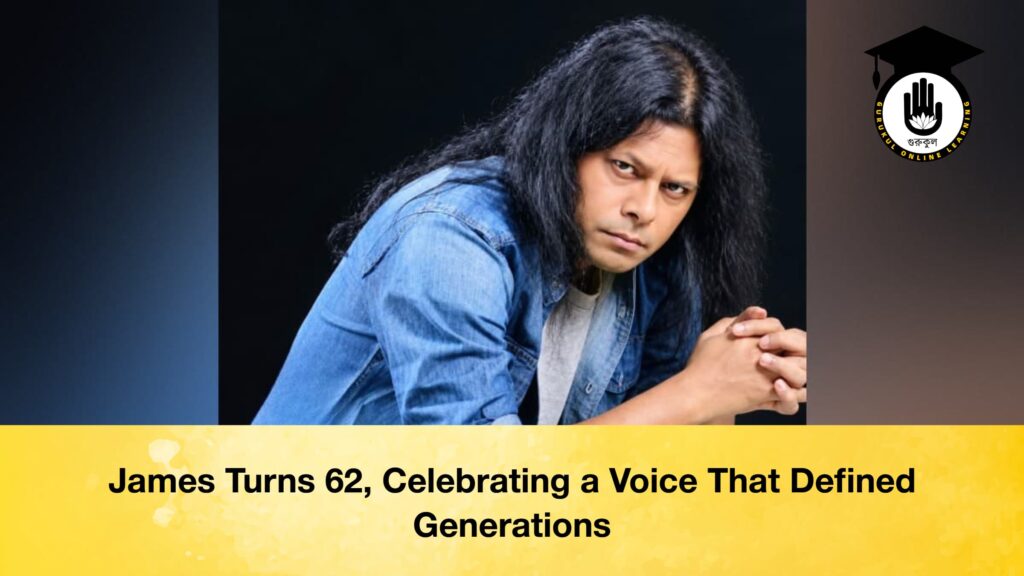

The use of artificial intelligence in the music video for ‘Juddho’, the first released track from Shironamhin’s ninth studio album, has sparked widespread discussion and confusion across social media platforms. The debate intensified after YouTube automatically flagged the video as AI-generated content, leading many viewers to mistakenly assume that artificial intelligence had been used not only in the visuals but also in the song’s composition, lyrics, and musical arrangement.
Addressing the issue, the band’s founder and lead vocalist, Ziaur Rahman Zia, firmly clarified that the musical elements of the track are entirely human-created. He emphasised that the composition, lyrics, and arrangement were all produced through the band’s own long-standing creative process, without any involvement of artificial intelligence tools. Having worked in the Bangladeshi music scene for nearly three decades, Shironamhin, he noted, has consistently relied on original musical craftsmanship, making the use of AI in music creation unnecessary and irrelevant to their artistic philosophy.
Zia further explained that artificial intelligence was used solely in the visual production of the music video. According to him, the intention was to modernise the visual storytelling process while reducing both production time and financial pressure. He described the approach as a practical response to the evolving demands of contemporary content creation, where advanced technologies can support rather than replace human creativity.
He also pointed out a key limitation of automated content detection systems used by platforms such as YouTube. These systems, he argued, often rely heavily on visual cues and metadata, which can result in entire works being incorrectly labelled as AI-generated even when only partial elements involve such tools. This, he suggested, contributes to unnecessary misunderstanding among audiences.
Providing further context, Zia compared the current production approach with earlier projects. In previous album cycles, music videos often required international shoots in countries such as Thailand and India, involving extensive planning, large production teams, significant travel, and high expenditure. These traditional methods, while artistically rewarding, were both time-consuming and resource-intensive.
By contrast, the integration of AI-assisted visual production has significantly streamlined the process. It has reduced costs, shortened production timelines, and enabled the band to release content more frequently. This shift, according to Zia, has created a more efficient workflow without compromising the integrity of the music itself.
A comparative overview of the two production methods is outlined below:
| Aspect | Traditional Music Video Production | AI-Assisted Visual Production |
|---|---|---|
| Time Required | Several months to years | Relatively short duration |
| Production Cost | Very high | Significantly lower |
| Team Size | Large-scale production crew | Small technical team |
| Shooting Location | Multiple countries and real-world locations | Digital or virtual environments |
| Release Cycle | Slow and extended | Fast and continuous |
Looking ahead, Shironamhin has indicated a shift in its release strategy. Instead of long gaps between full-length albums, the band plans to release individual singles more frequently. These tracks will later be compiled into album collections. This approach is intended to maintain a consistent creative output while adapting to the fast-paced nature of modern music consumption.
Overall, the band believes that the integration of new technology in visual production will enhance their creative flexibility, allowing them to deliver fresh music to audiences more regularly without altering the fundamentally human essence of their sound.