
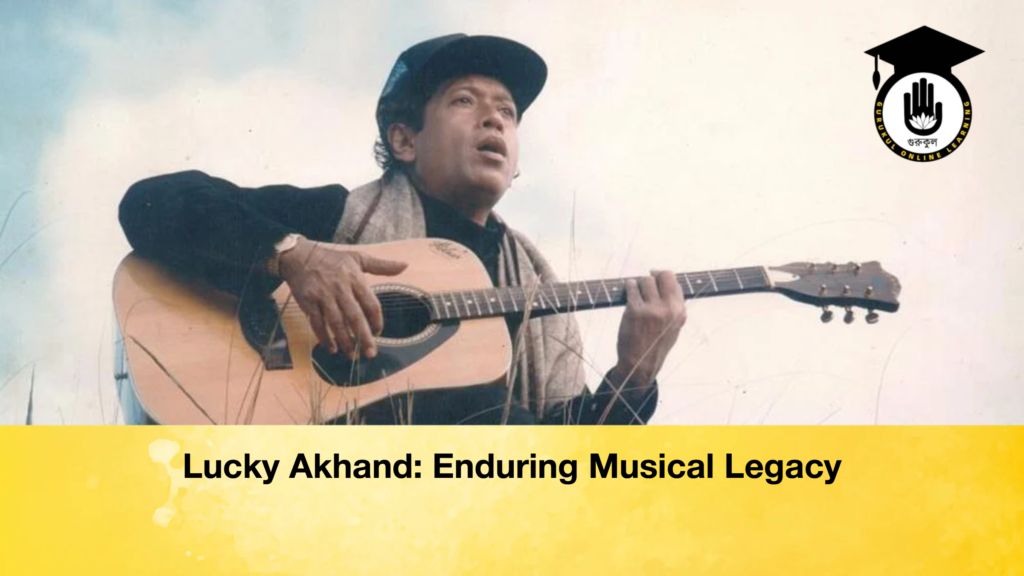
Lucky Akhand remains one of the most influential and versatile figures in the history of Bangla music. Today marks his ninth death anniversary, a solemn reminder of the passing of an artist whose creative legacy continues to resonate deeply across generations. He passed away in 2017 after a prolonged battle with cancer, yet his compositions, musical philosophy and artistic vision remain vibrantly alive in the cultural landscape of modern Bangla songs.
Born on 18 June 1956 in Dhaka, Akhand was immersed in music from an early age. His father played a pivotal role in nurturing his initial interest, introducing him to the fundamentals of music when he was only five years old. Demonstrating remarkable promise, he soon began performing in children’s programmes on radio and television, captivating audiences with his natural talent and musical sensitivity.
By his teenage years, Akhand had already stepped into the professional music world in a rare and extraordinary manner. He worked with an international recording label as a composer at a very young age, a distinction that set him apart in the regional music scene. Later, he served as a music director at the national broadcasting institution, a role that further solidified his reputation as a gifted and disciplined musician.
In 1984, he released his debut solo album, which marked a turning point in Bangla modern music. The album not only established him as a solo performer but also highlighted his dual strength as a composer and vocalist. He was also associated with a popular band that significantly influenced the youth culture of the time, contributing to the evolution of modern Bangla rock and pop music.
Beyond his own performances, Lucky Akhand’s greatest contribution lay in his compositions for other artists. Many celebrated singers performed songs composed by him, which have since become timeless classics. His music often explored themes of love, longing, melancholy and human emotion, expressed through deeply melodic and emotionally rich arrangements.
Life and Career Overview of Lucky Akhand
| Period | Milestone |
|---|---|
| 1956 | Born in Dhaka |
| Early childhood | Initial musical training under father |
| Childhood | Performances on radio and television |
| Teenage years | Worked as composer with international recording label |
| Early career | Music director at national broadcasting institution |
| 1984 | Released first solo album |
| Later years | Continued composing for leading artists and albums |
| 2017 | Passed away after battling cancer |
Akhand’s songs such as “Abar Elo Je Shondha”, “Amay Dekona”, “Age Jodi Jantam” and “Ei Neel Monihar” remain deeply embedded in the collective memory of listeners. These compositions are not merely popular tracks; they are cultural milestones that helped define the emotional vocabulary of modern Bangla music.
His influence extends far beyond his lifetime. Contemporary musicians continue to draw inspiration from his melodic structure, lyrical sensitivity and innovative approach to arrangement. Lucky Akhand’s artistry reshaped the soundscape of Bangla music, bridging tradition with modernity in a way that remains unmatched.
Even today, his music continues to inspire both established artists and emerging talents, ensuring that his legacy endures as a guiding force in the evolution of Bangla musical expression.