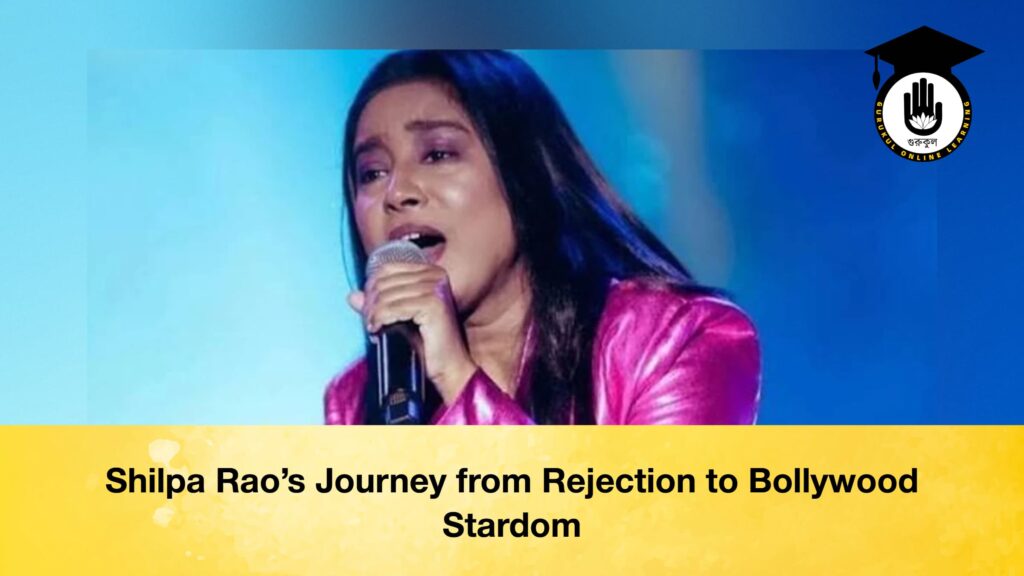
Born Apeksha Rao in Jamshedpur, she later adopted the name Shilpa Rao as she pursued a career in music. Her journey reflects the importance of persistence, professional experience and confidence in one’s artistic identity.
Rao has recently returned to the headlines following an incident at a music event in Mumbai, where her performance was reportedly interrupted after her microphone and the stage lights were switched off. The episode has prompted discussion on social media, bringing renewed attention to the singer’s career and the challenges she overcame before achieving widespread recognition.
Table of Contents
‘Chaleya’ brings major recognition
One of the defining moments in Rao’s career came with Chaleya, the romantic track from Shah Rukh Khan’s film Jawan. Her expressive vocals and smooth delivery helped make the song popular with audiences, strengthening her position in the Hindi film music industry.
She received the National Film Award for Best Female Playback Singer in 2025 for the song. The honour marked a significant milestone in a career built on versatility and consistent work across different musical styles.
Rao’s repertoire also includes Ghungroo, Besharam Rang and songs associated with films such as Ae Dil Hai Mushkil. Her work spans romantic melodies and contemporary, rhythm-driven tracks, demonstrating her ability to adapt her voice to different compositions.
That versatility has helped her develop a distinctive musical identity. In an industry where singers are often judged by their ability to suit a particular film, composer or musical trend, Rao has managed to maintain a recognisable vocal style while working across genres.
A Grammy-nominated musical project
Rao’s achievements extend beyond Bollywood. She contributed vocals to Love Letters, an album by acclaimed sitar player and composer Anoushka Shankar. The album received a Grammy nomination in 2021, bringing international attention to the project.
The nomination was for the album, rather than an individual Grammy award for Rao. Nevertheless, her involvement in the project represents an important part of her musical career, connecting her work with a broader international audience.
Collaborations across different musical traditions can also give singers opportunities to explore new arrangements and vocal approaches. For Rao, whose reputation was largely built through Hindi cinema, participating in a Grammy-nominated project demonstrated the breadth of her work beyond film soundtracks.
Performance interruption sparks controversy
Rao recently faced an uncomfortable situation while performing at the tenth anniversary celebration of the Bollywood Music Project in Mumbai, according to reports.
Her microphone was reportedly switched off while she was singing, and the stage lights were also turned off, bringing her performance to an abrupt halt. The interruption prompted a commotion and led to widespread discussion on social media.
Rao subsequently shared a post expressing her disappointment over the incident. Her husband also reacted, describing what had happened to her as deeply upsetting and embarrassing.
The circumstances surrounding the interruption have not been fully established in the information available. It remains unclear why the microphone and lighting were switched off or who was responsible for the decision. The incident should therefore be viewed in light of the reported allegations rather than as a fully explained sequence of events.
The episode has also drawn attention to the importance of coordination at live music events. Performers depend on sound engineers, lighting technicians and event organisers to ensure that a show proceeds smoothly. An unexpected interruption can disrupt both the performance and the audience’s experience, particularly when no immediate explanation is provided.
Three years of recording advertising jingles
Long before she became a familiar name in Bollywood, Rao spent around three years recording jingles for advertisements. Her voice featured in commercials for brands including Cadbury Munch, Sunsilk and Anchor Gel.
These assignments helped her gain professional experience, although they did not initially make her a widely recognised public figure. Listeners might have heard her voice in advertisements without knowing the identity of the singer behind them.
The work provided valuable practical training. Advertising jingles often require singers to deliver a melody within a short time, follow precise musical instructions and convey the intended mood with accuracy. Repeated recording sessions also help performers develop microphone technique, timing and an understanding of the demands of studio production.
For Rao, these early opportunities provided a foundation for her later work in film music. She learnt to adapt to different recording requirements and refine her vocal delivery, skills that are essential in playback singing.
Musician and composer Shankar Mahadevan also played an important role in her early musical journey. Working under his guidance allowed Rao to gain experience and develop her abilities before she established herself in the film industry.
Rather than waiting for a major opportunity, she was willing to begin with smaller assignments. She has described this early period as important to her professional development, as the experience helped strengthen her technical skills and prepare her for more demanding projects.
Turning rejection into an advantage
Rao’s early struggles reportedly included repeated rejection because of the distinctive character of her voice. In a competitive industry such as Bollywood, singers are often selected according to the specific requirements of a composition, the preferences of a music director and the style of a film.
A voice that does not fit conventional expectations may initially make it harder for a newcomer to secure opportunities. Playback singing requires not only technical skill but also the ability to interpret a song’s emotions and complement the atmosphere of a film.
Rao continued to pursue her career despite these setbacks. Over time, the qualities that had reportedly contributed to her early difficulties became part of her musical identity. Her voice developed into a recognisable feature of her performances, helping her stand apart from other singers.
Her career illustrates how perseverance and a willingness to refine one’s craft can help an artist overcome early obstacles. From advertising jingles to major film soundtracks and internationally recognised musical projects, Rao gradually built a professional reputation through experience and sustained effort.
Why Apeksha Rao became Shilpa Rao
Another notable detail in the singer’s life is her change of name. Born Apeksha Rao in Jamshedpur, she adopted the name Shilpa Rao before establishing herself as a playback singer.
Explaining the decision, she has said that the name Shilpa felt more closely connected to her artistic identity. The word shilpa is associated with art and craftsmanship, and the name gave her a sense of connection with the creative work she wanted to pursue.
The change was a personal decision, but it was her commitment to music that shaped her career. A name alone cannot account for the years of training, recording experience and persistence required to succeed in a demanding industry.
Rao’s story also highlights the less visible stages of a singer’s professional life. Advertising jingles, studio sessions and early collaborations may not attract the same attention as a hit film song, but they can provide essential preparation for a lasting career.
Today, Rao is a prominent figure in contemporary Hindi film music. Her National Film Award for Chaleya and her contribution to a Grammy-nominated album represent different milestones in a career that has expanded beyond conventional playback singing.
The recent controversy at the Mumbai event has brought her back into the spotlight, but her professional journey extends well beyond a single incident. From early rejection to widespread recognition, Rao’s experience demonstrates the value of persistence, technical preparation and confidence in one’s own artistic identity.