
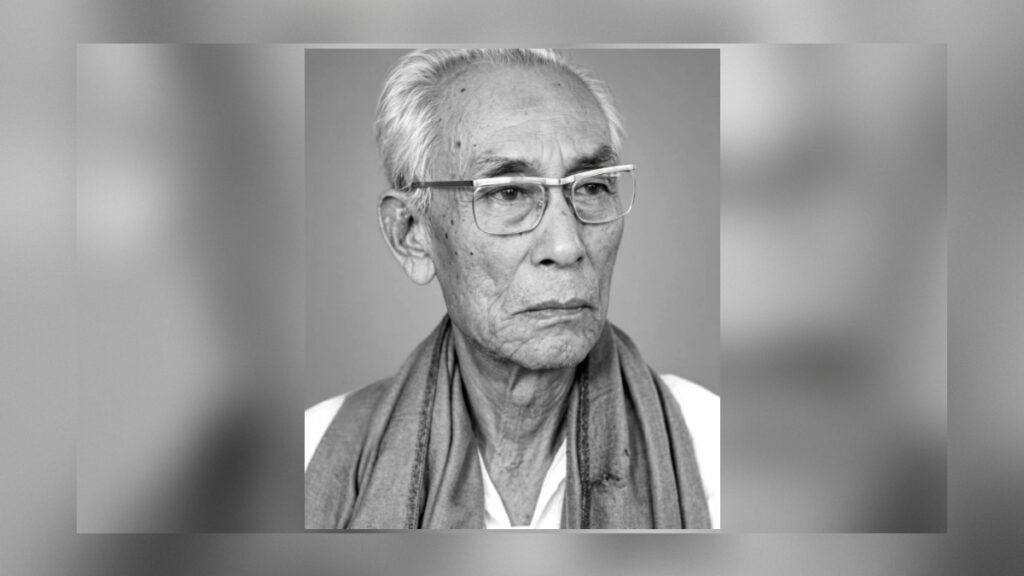
Some artists leave behind more than songs. Their voices, melodies and artistic sensibilities become part of the cultural memory of generations. Sachin Dev Burman was one such extraordinary figure. Born in Comilla, he went on to become one of the most influential composers and singers in the musical history of the Indian subcontinent.
His music carried the fragrance of Bengal. Folk traditions, classical discipline, human emotions and the simplicity of rural life all found a place in his distinctive musical language. Decades after his death, his songs continue to resonate with listeners across generations.
Among his memorable creations is ‘Shono Go Dakhina Hawa’, a song that reflects the intimate connection between his music and the natural landscape of Bengal. The song was included in a collection of his Puja songs released in 1970. Its lyrics were written by his wife, Meera Dev Burman, while Sachin Dev Burman composed and sang it himself. The gentle imagery of the southern breeze and the emotional warmth of the melody reflect the characteristic simplicity of his work.
Sachin Dev Burman was born on 1 October 1906 in Chartha, near Golapukur in Comilla, in present-day Bangladesh. His father, Nabadwip Chandra Dev Burman, belonged to the Tripura royal family and was a skilled sitar player as well as a practitioner of classical music. Sachin Dev Burman therefore grew up in an environment where music was closely woven into everyday life.
His royal lineage was part of his background, but music became the defining force of his life. He gradually earned the affectionate title ‘Sachin Karta’ in the Bengali musical world. In Bombay, musicians and colleagues often addressed him as ‘Burman Dada’, reflecting the warmth and respect he commanded among fellow artists.
His childhood in Comilla had a lasting influence on his artistic identity. The folk songs of rural Bengal, the rhythms associated with rivers and boats, and traditions such as Baul and Bhatiyali music left a deep impression on him. These influences later became an important element of his compositions. His music could evoke the countryside without losing its appeal to urban and contemporary audiences.
Sachin Dev Burman also pursued formal musical training. After receiving his early lessons from his father, he studied under the celebrated singer and musician K. C. Dey in Calcutta. He later received guidance from noted musicians including Bhishmadev Chattopadhyay, Badal Khan and Ustad Allauddin Khan. His training helped him develop a musical style that brought together the discipline of classical music and the emotional directness of folk traditions.
His career gradually moved from the musical circles of Calcutta to the rapidly expanding Hindi film industry in Bombay. There, he established himself not merely as a music director but as a composer with a distinctive artistic identity. Across Bengali and Hindi cinema, he created music for more than a hundred films, producing melodies that became deeply embedded in the popular musical culture of the subcontinent.
Some of the most celebrated voices of the era sang his compositions. Lata Mangeshkar, Asha Bhosle, Mohammed Rafi, Kishore Kumar, Geeta Dutt, Manna Dey, Hemanta Mukherjee, Mukesh and Talat Mahmood were among the renowned singers associated with his music.
His approach to composition was marked by a remarkable sense of economy. He did not need excessive complexity to make a melody memorable. Instead, he often drew strength from simple musical structures, expressive vocals and carefully chosen arrangements. His ability to identify the particular qualities of a singer’s voice also became an important part of his work.
He was equally comfortable with Bengali songs and Hindi film music. Among his Bengali creations are ‘Shono Go Dakhina Hawa’, ‘Sundari Kamala’, ‘Sajani Go’, ‘Keno Pritam’ and ‘Ore Sujan Naiya’. In Hindi cinema, his work on films such as Pyaasa, Kaagaz Ke Phool, Guide, Aradhana and Abhimaan demonstrated the breadth of his compositional talent.
His music often found a balance between melody and emotion. The sounds and images of Bengal could sit alongside sophisticated film arrangements without losing their original character. That quality helped his compositions reach audiences far beyond the cultural landscape that had first shaped him.
Sachin Dev Burman’s legacy also continued through his only son, Rahul Dev Burman, who later became a major figure in Indian film music in his own right. The two generations of the Burman family therefore became closely associated with the evolution of popular music in Indian cinema.
His contribution to music received several major recognitions, including the Sangeet Natak Akademi Award, a Filmfare Award and the Padma Shri in 1969. Yet his enduring reputation rests not only on awards or formal honours. It rests on the continued life of his music.
Sachin Dev Burman’s songs often feel closely connected to ordinary human experience. Rivers, boats, love, separation, longing, nature and rural life appear not simply as subjects but as emotional landscapes. His gift was to transform familiar feelings into melodies that could remain accessible without becoming ordinary.
On 31 October 1975, Sachin Dev Burman died in Bombay, bringing his life to an end. His musical journey, however, did not end there. His recordings continued to reach new listeners, while singers, musicians and audiences kept returning to the songs that had defined his career.
The story of Sachin Dev Burman began in Comilla, but his artistic journey extended far beyond his birthplace. He became an important figure in the musical heritage of Bengal and the wider Indian subcontinent, carrying elements of Bengali folk culture into a broader musical world.
Whenever ‘Shono Go Dakhina Hawa’ plays, the imagery of Bengal seems to return with it—the southern breeze, the quiet countryside and the emotional warmth of a familiar voice. That enduring connection is perhaps one of the clearest signs of his legacy.
Sachin Dev Burman may have passed away decades ago, but his voice and melodies remain part of the region’s musical memory. His life stands as a reminder of how deeply local traditions can influence music that eventually reaches audiences across generations and borders.
On his birth anniversary, he is remembered with respect and affection—not simply as a celebrated composer and singer, but as an artist whose music carried the spirit of Bengal into the wider world.