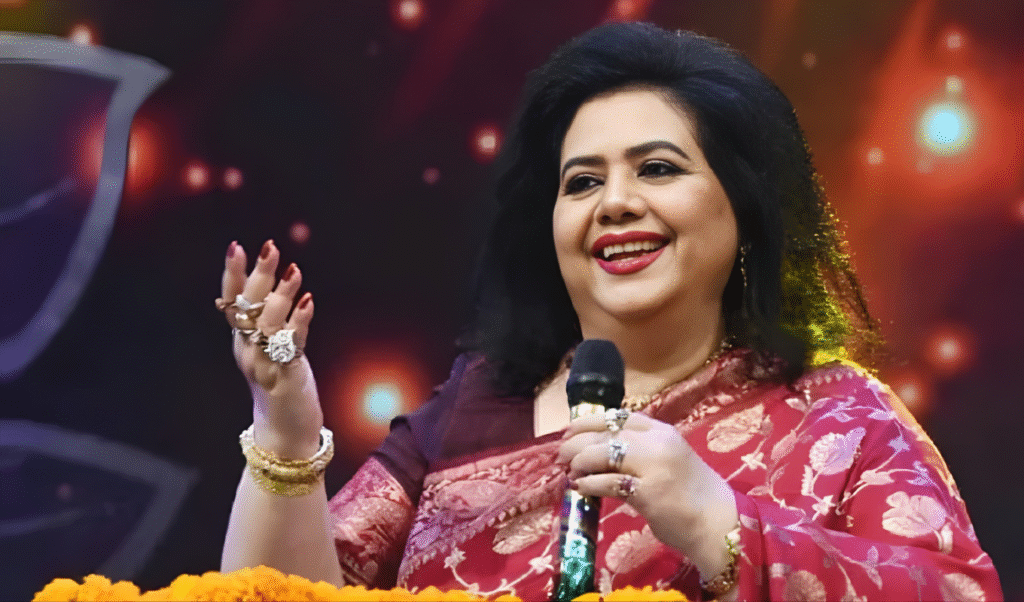
17 November marks the birth anniversary of Runa Laila—one of the brightest, most beloved and influential vocalists in the musical history of South Asia. Her unique voice, powerful delivery, and emotive expression have transcended generations, languages, and borders. Over more than five decades, she has created a cultural legacy that continues to inspire listeners today.
Born on 17 November 1952, Runa Laila developed a deep passion for music from early childhood. Though she first trained in classical music, she later mastered a wide range of genres—playback singing, ghazal, pop, modern Bengali songs, and South Asian fusion. The distinct quality of her voice, emotional depth, and flawless control over melody, rhythm and expression set her apart from many of her contemporaries.
Her popularity soon crossed national boundaries, spreading to Pakistan, India and various parts of the world. Her songs in Urdu films made her well-known throughout the subcontinent, and her contributions to Bengali music established her as a national treasure. Whether in Dhaka’s studios, Karachi’s film industry, or Mumbai’s musical circles, her voice earned admiration and affection everywhere.
From classical-inspired compositions to rhythmic modern numbers, her exceptional versatility made her a global ambassador of Bengali and South Asian music. Her voice carried a rare blend of strength and tenderness—expressing love, joy, sorrow and exuberance with natural grace.
Songs such as “Damadam Mast Qalandar,” “O Amar Jibon Sathi,” and countless film numbers remain evergreen, living on in the memories of millions. She not only transformed the musical landscape but also paved new paths for women in the performing arts—marked by dignity, confidence and artistic elegance.
Runa Laila has received numerous honours in Bangladesh, Pakistan and India. However, her truest achievement lies in the affection of the countless hearts her voice has touched. Her songs are still learned, sung, remembered and cherished by new generations.
On her birth anniversary, we honour her as—
the voice of an era,
a pioneer,
a cultural icon,
and above all—
an eternal artist whose music will never fade.
Runa Laila did not merely sing—she gave voice to the emotions of an entire nation.