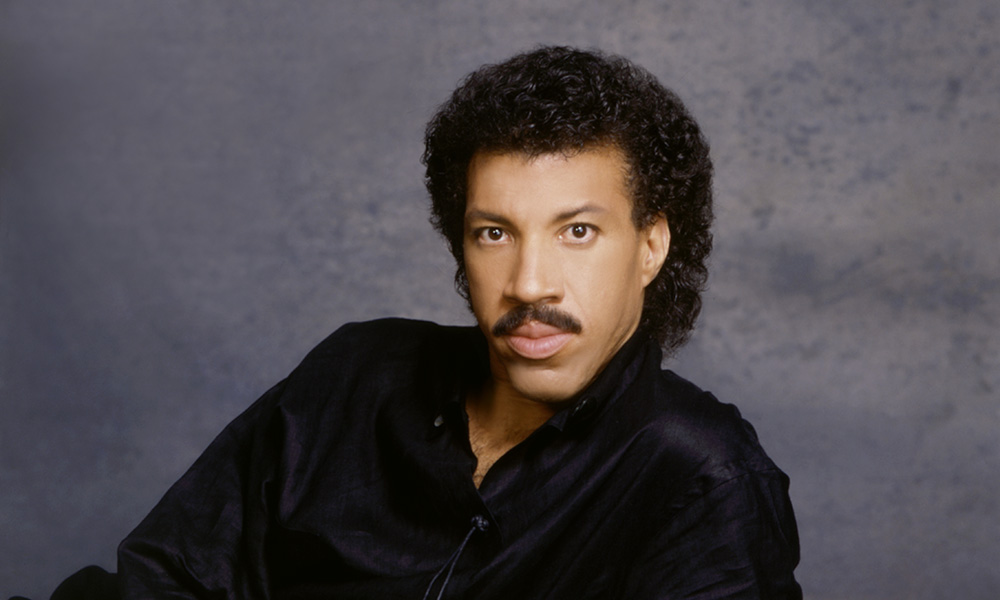
Few artists in the history of modern popular music have bridged genres, cultures, and generations as effortlessly as Lionel Richie. With over 100 million records sold worldwide, an Oscar, a spot in the Rock & Roll Hall of Fame, and a record-setting run of nine consecutive years with a No. 1 single, Richie stands as one of the definitive songwriters and performers of the late 20th century. His signature blend of smooth soul, pop sensibility, and country-tinged lyricism created a soundtrack for love, celebration, and heartbreaks across the globe.
Born and raised on the historic campus of the Tuskegee Institute in Alabama, Richie’s journey began not in high-stakes recording studios, but in the gospel traditions, classical lessons, and Southern storytelling of his upbringing. As a founding member, saxophonist, and co-lead singer of The Commodores, he helped define the sound of 1970s funk and R&B before emerging as Motown’s premier balladeer with classic tracks like “Easy” and “Three Times a Lady.”
By the 1980s, Richie’s transition to a solo career launched him into global superstardom. Albums like Can’t Slow Down and hits like “All Night Long (All Night),” “Hello,” and “Say You, Say Me” established him as a dominant force on the pop charts. Beyond his solo records, his collaborative genius produced historic moments—from co-writing the landmark charity anthem “We Are the World” with Michael Jackson to writing Kenny Rogers’ signature crossover smash, “Lady.”
Spanning more than five decades, Richie’s career is defined by an extraordinary capacity for reinvention and resilience. Whether enduring personal hardship and vocal surgeries, crafting a No. 1 country comeback with Tuskegee, or mentoring the next generation of musical talent as a judge on American Idol, Lionel Richie remains an enduring icon of warmth, melody, and pop-mastery.
Table of Contents
Early Life and Foundations (1949–1967)
Lionel Brockman Richie Jr. was born on June 20, 1949, in Tuskegee, Alabama. He was raised on the historic campus of the Tuskegee Institute (now Tuskegee University), where his family had deep institutional roots spanning generations. His mother, Alberta R. Foster, was an educator and school principal, while his father, Lionel Brockman Richie Sr., served as a systems analyst for the U.S. Army.
Richie grew up in a supportive, tightly knit community. His maternal grandfather had worked alongside Booker T. Washington, the founder of the Tuskegee Institute. Music entered his life primarily through his grandmother, Adelaide Towson Foster, a Fisk University graduate and classical pianist who attempted to give young Lionel formal piano lessons. Richie struggled with reading sheet music and instead began playing by ear, improvising melodies and soaking up a wide range of musical influences—from gospel and classical to country and rhythm & blues.
During his teenage years, Richie’s family temporarily relocated to Joliet, Illinois, where he attended Joliet Township High School East. A standout star athlete in tennis, he accepted a tennis scholarship to return home and attend the Tuskegee Institute. Initially, Richie considered entering the priesthood within the Episcopal Church. However, he ultimately chose to major in economics with a minor in accounting, graduating with a Bachelor of Science degree in 1974.
The Commodores Era (1968–1981)
While a freshman at Tuskegee in 1968, Richie accepted a saxophone given to him by his uncle, Bertram. Though he could not yet play the instrument proficiently, the saxophone helped him connect with fellow students seeking to form a musical group. Joining forces with classmates, Richie helped form a band called the Mighty Mystics (later the Jays). After merging with another local group, the ensemble officially christened themselves The Commodores.
[1968: The Commodores Formed]
  └── [1972: Signed to Motown]
        └── [1974: "Machine Gun"]
              └── [1978: "Three Times a Lady"]
                    └── [1981: "Endless Love"]
The band quickly gained a reputation across Alabama for their high-energy, danceable funk sound. In 1971, talent executive Suzanne de Passe arranged an audition that landed the Commodores a spot as the opening act for The Jackson 5’s international tour. This breakthrough led to a recording contract with Motown Records in 1972.
The Commodores released their debut album, Machine Gun, in 1974, establishing themselves as a premier funk and R&B act. Richie served as co-lead singer, saxophonist, and keyboardist. As the group evolved, Richie’s gift for melodic, accessible songwriting transformed their sound:
- “Happy People” (1974): Co-written by Richie, marking his first major chart success as a songwriter.
- “Sweet Love” (1975): Introduced a softer, soul-ballad direction that widened the group’s mainstream appeal.
- “Easy” (1977) & “Brick House” (1977): Showcased Richie’s dual capabilities—writing both smooth, reflective country-tinged ballads and driving funk anthems.
- “Three Times a Lady” (1978): Written as a tribute to his mother, grandmother, and wife, the song reached No. 1 on pop, R&B, and country charts globally, becoming Motown’s biggest-selling single to that point.
- “Sail On” & “Still” (1979): Solidified Richie as one of pop music’s top songwriters.
By the end of the 1970s, the Commodores were Motown’s top-grossing act, but Richie’s growing status as an independent songwriter began creating natural distance between him and the group.
Transition to Solo Stardom (1980–1982)
In 1980, country icon Kenny Rogers approached Richie to write a song for him. Richie delivered “Lady,” a soulful crossover ballad that spent six consecutive weeks at No. 1 on the Billboard Hot 100. The success proved Richie could create massive hits independent of the Commodores.
In 1981, film director Franco Zeffirelli asked Richie to compose the theme song for the movie Endless Love. Recorded as a duet with Diana Ross, “Endless Love” spent nine weeks at No. 1 on the Billboard Hot 100. It became the biggest-selling single in Motown’s history, earning Academy Award and Golden Globe nominations.
Prompted by Motown executives to step into the spotlight as a solo artist, Richie officially departed the Commodores in 1982. His self-titled debut solo album, Lionel Richie (1982), went triple-platinum and generated three top-10 hits: “You Are,” “My Love,” and the lead single “Truly,” which earned Richie his first Grammy Award for Best Male Pop Vocal Performance.
Peak Superstardom Era (1983–1987)
Between 1983 and 1986, Lionel Richie became one of the most commercially successful pop stars on the planet, achieving a historic record of having a No. 1 single for nine consecutive years (1978–1986)—a feat shared only with Irving Berlin.
┌────────────────────────────────────────────────────────┐
│             LIONEL RICHIE: THE PEAK ALBUMS              │
├─────────────────┬──────────────┬───────────────────────┤
│ Album Title     │ Release Year │ Key Hits              │
├─────────────────┼──────────────┼───────────────────────┤
│ Lionel Richie   │ 1982         │ "Truly", "You Are"    │
│ Can't Slow Down │ 1983         │ "All Night Long",     │
│                 │              │ "Hello", "Penny Lover"│
│ Dancing on the  │ 1986         │ "Say You, Say Me",    │
│ Ceiling         │              │ "Dancing on the... "  │
└─────────────────┴──────────────┴───────────────────────┘
Can’t Slow Down (1983)
Richie’s second solo effort, Can’t Slow Down, became a global phenomenon. Blending pop, R&B, dance, and country, the album sold over 20 million copies worldwide and won the Grammy Award for Album of the Year in 1985.
- “All Night Long (All Night)”: A Caribbean-influenced celebration track that topped charts worldwide. Richie famously performed the song before a live global television audience of over 2.6 billion people at the closing ceremony of the XXIII Olympic Games in Los Angeles in 1984.
- “Hello”: An iconic soft-rock ballad accompanied by a famous music video featuring a clay bust sculptured by a visually impaired student.
- Additional top-10 singles included “Running with the Night,” “Stuck on You,” and “Penny Lover”.
“We Are the World” (1985)
In early 1985, activist Harry Belafonte, producer Quincy Jones, and musician Michael Jackson teamed up with Lionel Richie to create a charity supergroup, USA for Africa. Richie and Jackson co-wrote the anthem “We Are the World” over several days at Jackson’s Hayvenhurst home. Recorded in a single night immediately following the American Music Awards, the song brought together 45 top American recording artists. The single sold over 20 million physical copies, raised tens of millions of dollars for African famine relief, and won the Grammy Award for Song of the Year.
Dancing on the Ceiling (1986)
In late 1985, Richie wrote and recorded “Say You, Say Me” for the film White Nights. The song reached No. 1 and won both the Academy Award (Oscar) for Best Original Song and the Golden Globe Award. The track was included on his 1986 album, Dancing on the Ceiling, which yielded hit singles including the title track, “Ballerina Girl,” and “Se La”.
Hiatus, Personal Life, and Mid-Career Transition (1988–2010)
By 1987, the intense pressure of touring, recording, and media scrutiny led Richie to step away from the music industry. During this hiatus, he managed several severe personal challenges:
- Vocal Cord Surgeries: Richie developed surgical polyps on his vocal cords, undergoing three separate surgeries that threatened his singing career before he fully recovered.
- Family Loss: He spent extended time in Tuskegee caring for his father, Lionel Sr., who passed away in 1990.
Personal Life & Relationships
Richie has been married twice and is a father to three children:
- Brenda Harvey (m. 1975, div. 1993): Richie married his college sweetheart Brenda Harvey in October 1975. In 1984, the couple began informally raising three-year-old Nicole Camille Escovedo (daughter of musician Peter Michael Escovedo). They officially adopted her as Nicole Richie in 1990. The marriage ended following a publicized breakdown and separation, concluding in divorce in 1993.
- Diane Alexander (m. 1995, div. 2004): In December 1995, Richie married fashion designer and former dancer Diane Alexander. They have two children together: son Miles Brockman (born 1994) and daughter Sofia Richie (born 1998), both of whom became high-profile models and media personalities. The couple divorced in 2004.
                   Lionel Richie
                         │
        ┌────────────────┴────────────────┐
        │ (m. Brenda Harvey)              │ (m. Diane Alexander)
        │ (1975–1993)                     │ (1995–2004)
        │                                 │
  Nicole Richie                     ┌─────┴─────┐
(b. 1981, adopted 1990)             │           │
                             Miles Brockman   Sofia Richie
                               (b. 1994)        (b. 1998)
Return to Recording
- Time (1998)
- Renaissance (2000)
- Just for You (2004)
- Coming Home (2006)
- Just Go (2009)
Late-Career Resurgence and Television (2011–Present)
American Idol & Live Performances
- Global Touring: In 2013, Richie launched the multi-year All the Hits, All Night Long tour, playing sold-out arenas across North America, Europe, Australia, and Asia.
- Las Vegas Residency: He launched his residency show, Lionel Richie: All the Hits, at the Planet Hollywood Resort & Casino in Las Vegas.
- American Idol: In 2018, Richie joined the judging panel for the reboot of American Idol alongside Katy Perry and Luke Bryan, introducing his musical experience to a new generation of performers.
- Documentary Work: In 2024, Richie executive produced and featured prominently in the Netflix music documentary The Greatest Night in Pop, detailing the behind-the-scenes recording of “We Are the World”.
Major Honors and Awards
┌────────────────────────────────────────────────────────┐
│             MAJOR CAREER ACCOLADES & HONORS            │
├──────┬─────────────────────────────────────────────────┤
│ Year │ Award / Recognition                             │
├──────┼─────────────────────────────────────────────────┤
│ 1985 │ Grammy Award for Album of the Year              │
│      │ (Can't Slow Down)                               │
│ 1986 │ Academy Award (Oscar) for Best Original Song    │
│      │ ("Say You, Say Me")                             │
│ 1986 │ Grammy Award for Song of the Year               │
│      │ ("We Are the World")                            │
│ 1994 │ Inducted into the Songwriters Hall of Fame       │
│ 2016 │ MusiCares Person of the Year                     │
│ 2016 │ Songwriters Hall of Fame Johnny Mercer Award    │
│ 2017 │ Kennedy Center Honors                           │
│ 2022 │ Library of Congress Gershwin Prize              │
│ 2022 │ Inducted into the Rock & Roll Hall of Fame      │
└──────┴─────────────────────────────────────────────────┘
Studio Discography
- With The Commodores:
- Machine Gun (1974)
- Caught in the Act (1975)
- Movin’ On (1975)
- Hot on the Tracks (1976)
- Commodores (1977)
- Natural High (1978)
- Midnight Magic (1979)
- Heroes (1980)
- In the Pocket (1981)
- Solo Studio Albums:
- Lionel Richie (1982)
- Can’t Slow Down (1983)
- Dancing on the Ceiling (1986)
- Louder Than Words (1996)
- Time (1998)
- Renaissance (2000)
- Just for You (2004)
- Coming Home (2006)
- Just Go (2009)
- Tuskegee (2012)
Ultimately, Lionel Richie’s legacy extends far beyond his multi-platinum record sales, Grammys, and shelf of lifetime achievement awards. He occupies a rare space in popular culture as an artist whose music dissolved the rigid boundaries between R&B, pop, and country, uniting listeners across political, cultural, and geographic divides. From the funk-infused grooves of the Commodores in the 1970s to the monumental pop dominance of the 1980s, his songs provided a universal vocabulary for love, heartbreak, and community.
That enduring appeal lies in Richie’s fundamental approach as a creator: a commitment to radical simplicity, direct emotional honesty, and unforgettable melody. Whether writing a intimate ballad at a piano or co-creating an anthem to alleviate global famine, his work has always prioritized human connection above technical display.
Today, as an elder statesman of the music industry, his impact continues to ripple outward. Through his ongoing presence as a mentor on American Idol, his energetic live performances, and the legacy of his timeless catalog, Lionel Richie remains a vital, beloved figure in American music. His journey from the campus of the Tuskegee Institute to the absolute summit of global superstardom stands as a masterclass in artistic versatility, personal resilience, and the lasting power of a simple, heartfelt song.