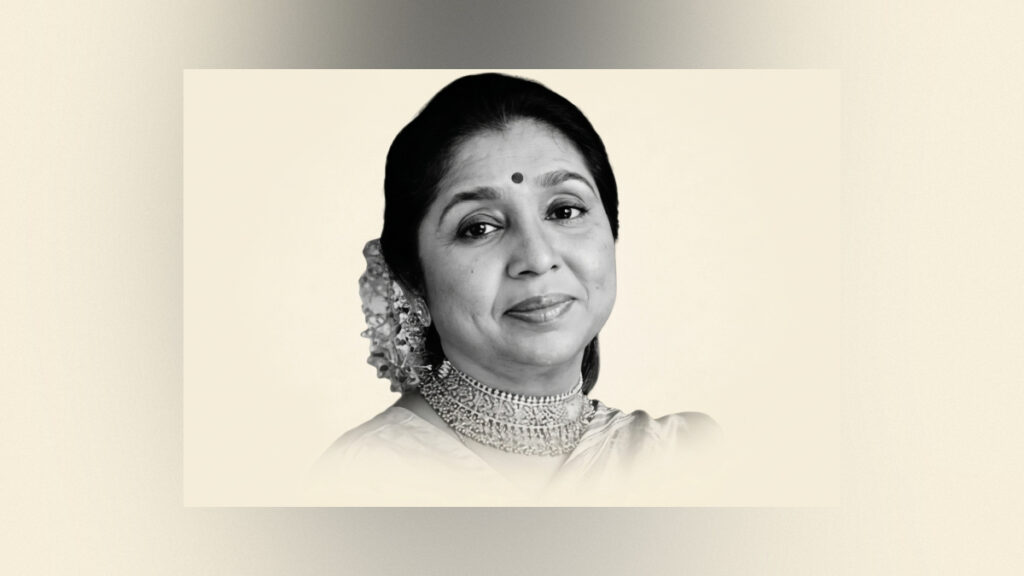
Indian music legend Asha Bhosle is being remembered on what would have been her 93rd birthday for a career defined not only by extraordinary musical versatility but also by remarkable professional commitment. One particular incident in Kolkata, recalled by actor Zeenat Aman after Bhosle’s death, offers a striking glimpse into the singer’s determination to honour her commitments even when she was physically unwell.
Born on 8 September 1933, Bhosle would have turned 93 in 2026. She died on 12 April at the age of 92 in Mumbai. She had been admitted to Breach Candy Hospital after suffering extreme exhaustion and a chest infection. She later died from multiple organ failure. Her funeral was held with full state honours at Shivaji Park in Mumbai on 13 April.
Bhosle’s career stretched across more than eight decades and encompassed an extraordinary range of musical styles. She became one of the defining playback voices of Indian cinema, while also making her mark in ghazals, classical music, folk music and other forms. Reports have credited her with recording more than 12,000 songs in multiple Indian languages. She also received some of India’s highest cultural honours, including the Dadasaheb Phalke Award and the Padma Vibhushan.
Yet alongside the scale of her musical achievements, it was her attitude towards work that left a particularly strong impression on those who knew her.
Zeenat Aman recently recalled one such episode from a musical evening in Kolkata roughly a decade ago. The two were scheduled to appear at the same event. When Bhosle arrived, Aman was reportedly shocked to see that the veteran singer had bruises and cuts across her body.
Bhosle had been involved in an accident just a day before the performance. Despite her injuries, however, she did not cancel her appearance. She arrived at the venue as scheduled and went ahead with the concert.
The incident was particularly striking because Bhosle was already in her eighties at the time. Rather than allowing her age and injuries to prevent her from fulfilling a professional commitment, she took to the stage and performed for the audience. Aman later described the experience as revealing something significant about Bhosle’s character and her approach to her profession.
For Aman, the memory also carried a personal dimension. The two had a long professional association through Hindi cinema, with Bhosle providing the playback vocals for several songs connected with films in which Aman appeared.
Among the best-known examples are ‘Meri Soni Meri Tamanna’ from Yaadon Ki Baaraat, ‘Do Lafzon Ki Hai Dil Ki Kahani’ from The Great Gambler and ‘Dum Maro Dum’ from Hare Rama Hare Krishna. These songs became closely associated with the era of Hindi cinema in which Aman was one of the prominent screen stars, while Bhosle’s distinctive voice helped shape their musical identity.
Bhosle’s appeal, however, extended far beyond any particular actress or generation of Hindi cinema. Her ability to adapt her voice and style to different musical settings allowed her to remain relevant across changing eras. She could move from energetic film songs to more restrained romantic compositions and ghazals, demonstrating a versatility that became one of the defining features of her career.
Her contribution was also recognised well beyond commercial success. She was nominated twice for Grammy Awards and received major Indian honours for her contribution to music. Her career included collaborations with composers and musicians across generations, helping establish her as one of the most versatile and prolific recording artists in Indian music.
The Kolkata incident therefore stands as more than an anecdote from a celebrated career. It illustrates the determination that remained part of Bhosle’s professional identity even in the later decades of her life.
Her death in April brought an end to one of the longest and most influential careers in Indian playback singing. Government officials, musicians and artists across India paid tribute to her, with the Indian government describing her passing as the end of an era in music.
For generations of listeners, Bhosle’s legacy will live through thousands of recordings. But memories such as the one shared by Zeenat Aman add another dimension to that legacy: that of an artist who regarded the stage and her audience as commitments worth honouring, even when circumstances made the task difficult.
The image of an ageing singer appearing before an audience with visible injuries, yet still carrying on with her performance, has consequently become one of the memorable stories attached to Bhosle’s extraordinary life in music.