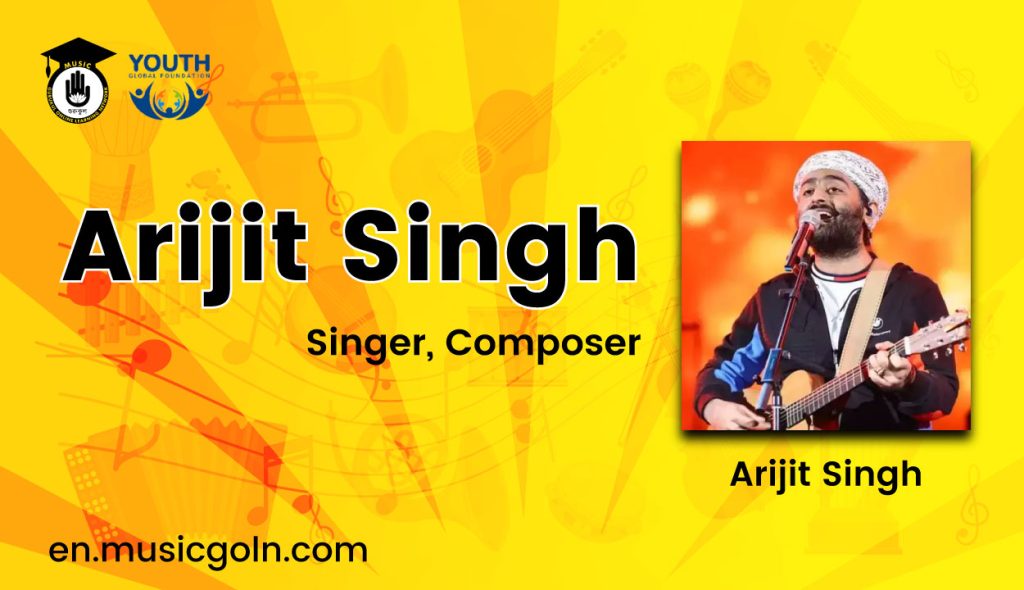
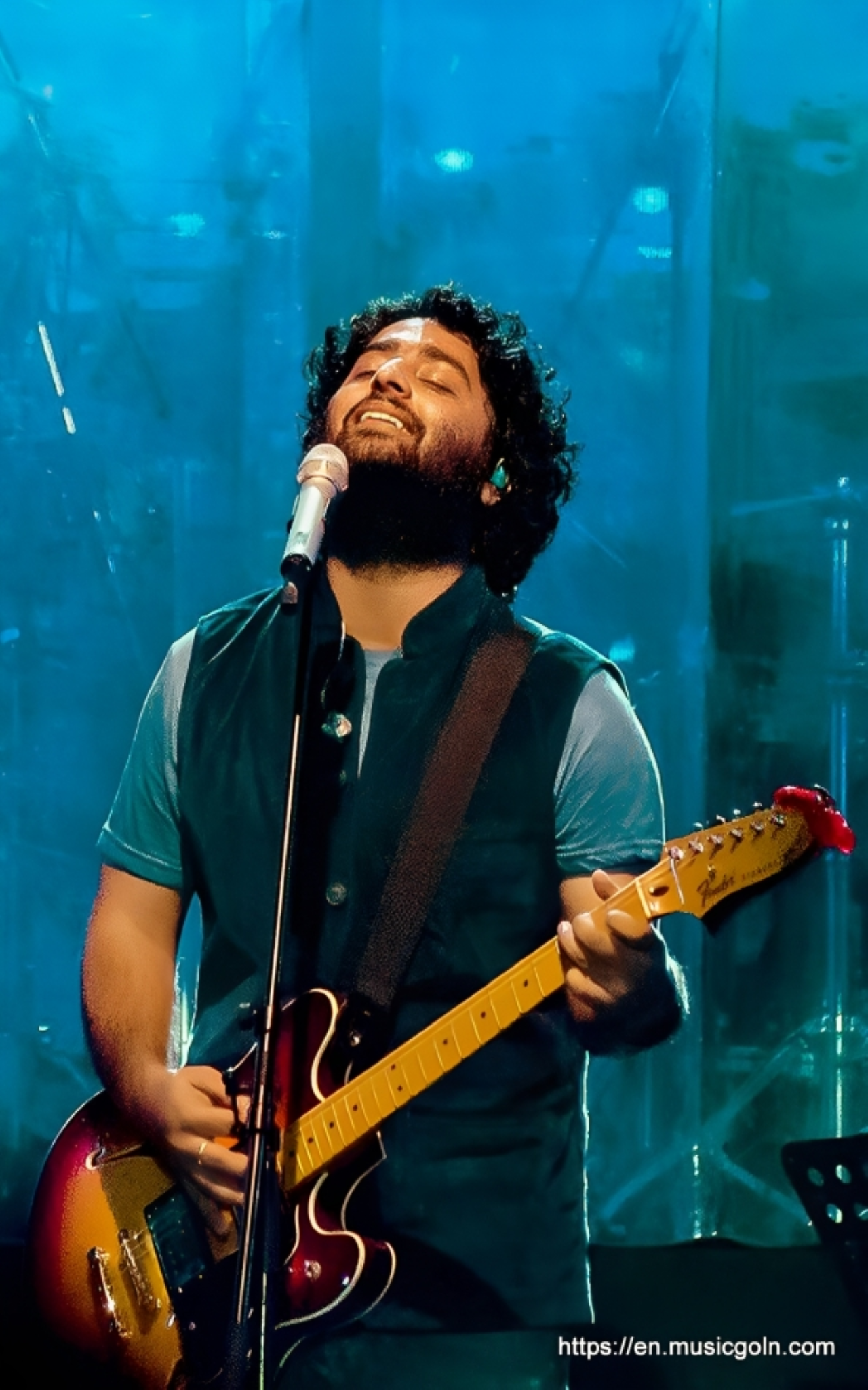
Arijit Singh (born 25 April 1987) is an Indian singer and music composer. He sings predominantly in Hindi and Bengali, but has also performed in various other Indian languages. He is the recipient of a National Award and six Filmfare Awards. He is often cited as one of the best singers in the Indian music industry, and has established a huge fan base throughout South Asia, predominantly in India, Pakistan, Bangladesh and Nepal. He is also known as the “King of Playback Singing”.
Singh began his career when he participated in the contemporary reality show, Fame Gurukul in 2005, but did not receive widespread recognition before the release of ‘Tum Hi Ho’ and ‘Chahun Main Ya Naa’ in 2013. He was declared the most-streamed Indian artist of 2020 and 2021 by Spotify. He is the most followed Asian soloist on Spotify.

Table of Contents
Early Life of Arijit Singh
Arijit Singh was born on 25 April 1987 in Jiaganj, Murshidabad, West Bengal to Kakkar Singh, a Punjabi Sikh father and Aditi Singh, a Bengali mother. His paternal family came from Lahore during the Partition. He began his music training at a very young age at home. His maternal aunt trained in Indian classical music, and his maternal grandmother used to sing. His maternal uncle played the tabla, and his mother also sang and played the tabla.
He studied at Raja Bijay Singh High School and later at the Sripat Singh College, a University of Kalyani affiliate. According to him he “was a decent student, but cared more about music” and his parents decided to train him professionally. He was taught Indian classical music by Rajendra Prasad Hazari and trained in tabla by Dhirendra Prasad Hazari. Birendra Prasad Hazari taught him Rabindra Sangeet (songs written and composed by Rabindranath Tagore) and pop music. At the age of three, he started training under the Hazari brothers, and at the age of nine, he received a scholarship from the government for training in vocals in Indian classical music. Growing up, he listened to Mozart, Beethoven and Bengali classical music. He idolised musicians like Bade Ghulam Ali Khan, Ustad Rashid Khan, Zakir Hussain and Anand Chatterjee, and enjoyed listening to Kishore Kumar, Hemant Kumar and Manna Dey.
Early Career of Arijit Singh
Singh’s musical career began when his guru Rajendra Prasad Hazari, who felt that “Indian classical music was a dying tradition”, insisted he leave his hometown and participate in the reality show Fame Gurukul (2005) at the age of 18. He was eliminated by audience polling, finishing in sixth place. During the show, filmmaker Sanjay Leela Bhansali recognised his talent and had him sing ‘Yun Shabnami’, a song scheduled to be used in his upcoming film Saawariya. During production, the script changed and the song was no longer required; it was never released. After Fame Gurukul, Kumar Taurani, the head of Tips, signed him for an album which was never released.
He participated in another reality show 10 Ke 10 Le Gaye Dil and won. He chose to move to Mumbai in 2006 to freelance, staying in a rented room in the Lokhandwala area of the city. He invested the prize money of ₹10 Lakh from 10 Ke 10 Le Gaye Dil to build his recording studio. He became a music producer and began composing music and singing pieces for advertisements, news channels and radio stations. Singh spent a part of his early musical career as a music programmer and music producer for music directors such as Shankar–Ehsaan–Loy, Vishal–Shekhar, Mithoon, Monty Sharma and Pritam. Whilst working with other composers he supervised the vocals and the chorus sections, but it was whilst working with Pritam that he began to produce and programme music by himself.
Career of Arijit Singh:
2010–2013: Early Releases and Aashiqui 2
In 2010, Singh started working with Pritam on three films: Golmaal 3, Crook, and Action Replayy. He began by singing scratches in the Telugu film industry with the 2010 film Kedi, performing the song ‘Neeve Na Neeve Na’, composed by Sandeep Chowta. In 2011, Singh made his Bollywood musical debut with the Mithoon composition, ‘Phir Mohabbat’ from Murder 2; although he recorded it in 2009, it was not released until 2011.
That same year, whilst he was programming for the song ‘Raabta’ from Agent Vinod (2012), Pritam asked him to sing as well. His part was retained in all four versions of the song, and he was chosen to sing the entire composition in one of those versions. Apart from Agent Vinod, Singh dubbed for Pritam in three other films released during the year: Players, Cocktail, and Barfi!.
He also sang for Chirantan Bhatt in 1920: Evil Returns for the song ‘Uska Hi Banana’. Glamsham, in its review of ‘Uska Hi Banana’, wrote that Singh had sung the song intensely, emotionally, and passionately, and at a very high pitch. He performed on Vishal–Shekhar’s composition ‘Duaa’ in the film Shanghai, which won him the Mirchi Music Award for Upcoming Male Playback Singer. He was also nominated in the same category for ‘Phir Le Aya Dil’ from Barfi!.
Singh’s major breakthrough came in Aashiqui 2, where he served as a lead and key vocalist. He rose to immense prominence with the release of the song ‘Tum Hi Ho’ from the movie. The track won him several awards and nominations, including the Filmfare Award for Best Male Playback Singer. In the same year, his three songs from the Telugu movie Swamy Ra Ra also gained significant popularity.
Singh continued to work with Pritam, singing ‘Dilliwaali Girlfriend’, ‘Kabira’, and ‘Ilahi’ for Yeh Jawaani Hai Deewani. Other than singing the encore version of ‘Kabira’, he was the music producer of the track, along with ‘Balam Pichkari’ from the same film. Singh performed the song for Phata Poster Nikhla Hero titled ‘Main Rang Sharbaton Ka’, also a composition by Pritam, as well as the song ‘Dhoka Dhadi’ for R… Rajkumar.
He sang for Shah Rukh Khan in the song ‘Kashmir Main Tu Kanyakumari’ from Chennai Express, which was composed by Vishal–Shekhar. Apart from rendering the duet version of ‘Har Kisi Ko’ from Boss along with Neeti Mohan, the year marked his collaboration with Sharib–Toshi on the song ‘Kabhi Jo Baadal Barse’ from Jackpot, and with Sanjay Leela Bhansali on the semi-classical number ‘Laal Ishq’ from Goliyon Ki Raasleela: Ram-Leela. Later, Singh picked ‘Kabhi Jo Baadal Barse’ as one of his favourite songs, and he chose ‘Tose Naina’ from Mickey Virus as the one “closest to his heart”.
2014
In 2014, Singh was afforded the opportunity to work with two of his favourite music directors, Sajid–Wajid and A. R. Rahman. He performed two tracks for Main Tera Hero and the song ‘Raat Bhar’ from Heropanti for Sajid–Wajid, and dubbed the Hindi version of the song ‘Medhuvaagathaan’ from Kochadaiiyaan, titled ‘Dil Chaspiya’, for A. R. Rahman.
He rendered three remixed songs: Amit Trivedi’s ‘Hungama Ho Gaya’ for Yaariyan, Sharib–Toshi’s ‘Samjhawan’ for Humpty Sharma Ki Dulhania, and ‘Mast Magan’ for 2 States. Furthermore, he performed ‘Jiya’ for Gunday and Arko Pravo Mukherjee’s ‘Aaj Phir’ for Hate Story 2. Singh worked with Vishal Bhardwaj, recording two songs for Haider, and collaborated with Sachin–Jigar on ‘Jaise Mera Tu’ in Happy Ending.
The year marked his collaboration with many other music directors, including Tony Kakkar and Palak Muchhal. During the year, he provided vocals for Mithoon on ‘Humdard’ for Ek Villain and ‘Hai Dil Ye Mera’ for Hate Story 2. He worked with Vishal–Shekhar on ‘Manwa Laage’ for Happy New Year, and with Shankar–Ehsaan–Loy on ‘Sajde’ for Kill Dil. He sang two songs on Sharib–Toshi’s Zid, and three tracks for Pritam Chakraborty’s Holiday, which were arranged by Singh himself.
Jeet Gannguli’s song ‘Muskurane’ garnered him the most nominations for the year, whilst he received two Filmfare nominations for ‘Suno Na Sangemarmar’ and the Sufi song ‘Mast Magan’. Singh picked ‘Gulon Mein Rang Bhare’—originally sung by Mehdi Hassan and rewritten for Haider by Vishal Bhardwaj—as his favourite track of the year.
2015
Singh made his Tamil debut in 2015 with the song ‘Neeye Vaazhkai Enbena’ from the film Pugazh. He also provided vocals for the dance song ‘Sooraj Dooba Hain’ from Roy, which was composed by Amaal Mallik and written by Kumaar; it was dubbed the “Party Anthem of the Year”. During the year, he sang a duet, ‘Agar Tum Saath Ho’, with Alka Yagnik for the movie Tamasha, composed by A. R. Rahman and written by Irshad Kamil. He worked again with Amaal Mallik on the song ‘Khwaishein’ from Calendar Girls.
Apart from dubbing the Hindi version of the song ‘Pookkalae Sattru Oyivedungal’ from Rahman‘s I along with Shreya Ghoshal, Singh teamed up with Gannguli and Bobby–Imran for Khamoshiyan, where he performed the film’s title song. He sang ‘Baatein Ye Kabhi Na’ for Gannguli and ‘Tu Har Lamha’ for Bobby–Imran. He collaborated with Gannguli on two other projects: ‘Teri Khushboo’ for Mr. X and the title track for Hamari Adhuri Kahani. Besides working with Chirantan Bhatt on ‘Teri Meri Kahaani’ and Sachin–Jigar on ‘Chunar’, he worked with several new composers, including Bann Chakraborty, Khamosh Shah, Jatinder Shah, and Manj Musik.
Moreover, Singh recorded a reprise version of Sonu Nigam’s 1999 song ‘Deewana Tera’ for Ek Paheli Leela. The year marked the first collaboration between Singh and Himesh Reshammiya on the song ‘Baaton Ko Teri’ from All Is Well. He voiced Bhardwaj in ‘Shaam Ke Saaye’ and ‘Kya Pataa’ for Talvar and Drishyam respectively, and he performed Phantom’s ‘Saware’ and ‘Sooiyan’ from Guddu Rangeela. As well as recording soundtracks, Singh released his second promotional single during the year; titled ‘Chal Waha Jaate Hain’, the song was composed by Mallik and featured Tiger Shroff and Kriti Sanon. Singh also made his Marathi debut with the song ‘Yaar Illahi – Qawwali’ from the film Katyar Kaljat Ghusali.
In 2015, Chinmayi Sripada recorded a romantic duet titled ‘Sooiyan’, written by Irshad Kamil and Amit Trivedi, with Singh for the Bollywood film Guddu Rangeela. Arijit was the lead vocalist on the soundtrack of the 2015 film Dilwale, singing ‘Janam Janam’. He performed the duet ‘Gerua’, composed by Pritam and written by Amitabh Bhattacharya, with Antara Mitra; the music video, featuring Shah Rukh Khan and Kajol, received a positive response. He also sang the dance song ‘Tukur Tukur’ for Dilwale, also composed by Pritam and written by Bhattacharya, which was well received.
Arijit completed shooting for his directorial debut in 2015. Titled Bhalobasar Rojnamcha, it is a Bengali feature film compiled of seven short films. Co-written by Singh, a work-in-progress version of the film has been sent to various film festivals abroad.
2016
In early 2016, Singh sang ‘Yeh Fitoor Mera’, written by Swanand Kirkire and composed by Amit Trivedi. Firstpost, in its review, spoke positively of the track, calling it a trademark song from the Fitoor album, and commended Singh’s singing. Singh also made his Gujarati debut during this period with the song ‘Satrangi Re’ from the film Wrong Side Raju.
Some of his noteworthy Hindi songs of 2016 included ‘Soch Na Sake’—a duet with Tulsi Kumar from the movie Airlift, composed by Amaal Mallik and written by Kumaar—and ‘Sanam Re’, the title track of the movie Sanam Re, composed and written by Mithoon. Other significant releases included ‘Bolna’ from the movie Kapoor & Sons, and ‘Itni Si Baat Hain’, a duet with Antara Mitra composed by Pritam Chakraborty and written by Manoj Yadav.
Singh was the key vocalist on the Raaz Reboot soundtrack, performing ‘Lo Maan Liya’ (composed by Jeet Gannguli and written by Kausar Munir). He also sang the haunting melodies ‘Raaz Aakhein Teri’ and ‘Yaad Hain Na’ for the same film. Additionally, he performed the duet ‘Dharkhaast’ from the film Shivaay with Sunidhi Chauhan; the music was composed by Mithoon with lyrics penned by Sayeed Quadri. Daily News and Analysis, in their review of ‘Dharkhaast’, commended the singing of both Singh and Chauhan.
As the lead vocalist for the film Ae Dil Hai Mushkil, Singh sang the immensely popular title track, ‘Ae Dil Hai Mushkil’, composed by Pritam Chakraborty and written by Amitabh Bhattacharya. He also performed ‘Channa Mereya’, which garnered over 110 million views. Furthermore, he rendered another chart-topping hit, ‘Nashe Si Chadh Gayi’, from the movie Befikre; the promotional video for the song amassed over 330 million views on YouTube. At the end of 2016, he sang ‘Naina’ for the film Dangal. In its review, Zee News wrote that Arijit Singh’s “Naina song from Dangal will touch your heart”, and the track was further praised by Indian actor Varun Dhawan.
2017
In 2017, Singh sang for Shah Rukh Khan, performing a romantic duet with Harshdeep Kaur titled ‘Zaalima’. Composed by Pritam’s JAM8 and written by Amitabh Bhattacharya for the movie Raees, the song was highly anticipated, with Khan sharing multiple teasers before its full release. He also provided vocals for Salim–Sulaiman’s compositions ‘Kuch Parbat Hilayein’ and ‘Babul Mora’, written by Amitabh Bhattacharya for the inspirational film Poorna. Furthermore, he rendered ‘Alvida’ from the film Rangoon, a performance the Deccan Chronicle praised in its review.
He also performed ‘Roke Na Ruke Naina’, composed by Amaal Mallik and written by Kumaar for the film Badrinath Ki Dulhania. Additionally, he contributed to the chorus song ‘Namami Brahmaputra’ (English: I Bow to the Brahmaputra); composed by Papon, the track is dedicated to the Brahmaputra river, which holds significant cultural, economic, and social importance for the Assamese people. Singh also recorded ‘Haareya’ for the Hindi movie Meri Pyaari Bindu, and the song ‘Murshida’ for Begum Jaan, written by Rahat Indori and composed by Anu Malik.
Singh sang ‘Phir Bhi Tumko Chaahunga’, composed by Mithoon with lyrics by Manoj Muntashir, for the Half Girlfriend soundtrack. Due to immense public demand, Zee Music Company released the track ahead of its planned schedule. He also performed ‘Pal Bhar’, which is a reprise and extended version of the same song, also written by Muntashir and composed by Mithoon.
As the lead vocalist for the film Raabta, he sang ‘Ik Vaari Aa’, composed by Pritam with lyrics penned by Amitabh Bhattacharya. For the same soundtrack, Singh lent his vocals and played acoustic guitar alongside Roland Fernandes for the song ‘Lambiyaan si Judaiyaan’, composed by JAM8. He also performed ‘Tera Hoke Rahoon’, a song composed by the JAM8 trio (Kaushik, Akash, and Guddu) with lyrics by Bipin Das, for the movie Behen Hogi Teri.
His other contributions included ‘O Saathi’ for the Hindi film Shab, with music and lyrics by Mithoon, and the dance track ‘Main Tera Boyfriend’ with Neha Kakkar, written by Kumaar and composed by Sourav Roy. Singh was the lead singer for the Jagga Jasoos soundtrack, performing the dance song ‘Ullu Ka Pattha’, the light-hearted ‘Galti Se Mistake’, ‘Jhumri Talaiyya’, and ‘Phir Wahi’—all composed by Pritam and written by Amitabh Bhattacharya.
He collaborated again with Shah Rukh Khan for the film Jab Harry Met Sejal, performing the dance track ‘Beech Beech Mein’ with additional vocals by Shefali Alvares and Shalmali Kholgade, as well as ‘Hawayein’, composed by Pritam Chakraborty and written by Irshad Kamil. The Indian media described Singh’s vocals in ‘Hawayein’ as “mesmerising”.
To conclude the year, Singh sang ‘Bairagi’ for the film Bareilly Ki Barfi, and ‘Jaana Ve’ and ‘Aaj Zid’ for Aksar 2, with music composed by Mithoon and lyrics by Sayeed Quadri. He also recorded ‘Main Hoon Saath Tere’ for Shaadi Mein Zaroor Aana. Finally, he sang and made an appearance in the music video for ‘Pal’, featured in the film Monsoon Shootout; his vocal texture in this track garnered further favourable reviews from the Indian media.
2018
In 2018, Singh sang ‘Aaj Se Teri’ for the film Pad Man, composed by Amit Trivedi and written by Kausar Munir. He performed ‘Binte Dil’ for the film Padmaavat, written by A. M. Turaz and composed by Sanjay Leela Bhansali. He also delivered another chart-topper titled ‘Subah Subah’ for the film Sonu Ke Titu Ki Sweety with Prakriti Kakar, composed by Amaal Mallik and written by Kumaar, as well as the friendship anthem ‘Tera Yaar Hoon Main’. Additionally, he provided vocals for the films Dil Juunglee, 3 Storeys, Hichki, Raazi, Parmanu: The Story of Pokhran, Veere Di Wedding, 102 Not Out, Baazaar, Kedarnath, and Karwaan.
2019
In 2019, Singh sang ‘Ruan Ruan’ from the film Sonchiriya, composed by Vishal Bhardwaj and penned by Varun Grover, followed by the title track for Mere Pyare Prime Minister on a composition by Shankar–Ehsaan–Loy with lyrics by Gulzar. In March, his song ‘Ve Maahi’ with Asees Kaur from the film Kesari, composed by Tanishk Bagchi, was released; the song garnered 200 million views on YouTube by July 2019.
This was followed by ‘First Class’ with Neeti Mohan and the title song ‘Kalank’ from the film Kalank, both composed by Pritam Chakraborty and penned by Amitabh Bhattacharya. He rendered ‘Khairiyat’ from the film Chhichhore, also composed by Pritam and written by Amitabh Bhattacharya, which was released in September 2019. In October, his song ‘Ghungroo’ with Shilpa Rao was released from the movie War, with lyrics by Kumaar and music by Vishal–Shekhar. In late December 2019, he sang ‘Dariyaganj’ with Dhvani Bhanushali for the film Jai Mummy Di, composed by Amartya Bobo Rahut and written by Siddhant Kaushal.
2020
In January 2020, ten of his songs were released. Three tracks were from the film Love Aaj Kal: ‘Shayad’, ‘Haan Tum Ho’, and ‘Haan Main Galat’, all composed by Pritam. He performed the title track of Chhapaak along with ‘Khulne Do’ and ‘Sab Jhulas Gaya’, composed by Shankar–Ehsaan–Loy with lyrics by Gulzar. He sang ‘Dua Karo’ from the film Street Dancer 3D alongside Bohemia, and ‘Chal Ghar Chalen’ for the movie Malang, composed by Mithoon. He also provided the songs ‘Azaadi Ke Liye’ and ‘Mere Watan’ for the Amazon Original series The Forgotten Army.
Singh also contributed a song to the Bengali film Love Aaj Kal Porshu. On 18 July 2020, he announced his upcoming venture into non-film music under his own banner, ‘Oriyon Music’. He made an appearance in the music video for Sunny M.R.’s single ‘Lifafe’ on 31 July 2020. In August 2020, his song ‘Dil Ko Maine Di Kasam’ was released, composed by Amaal Mallik and featuring actors Asim Riaz and Himanshi Khurana.
Singh released his first independent single, ‘Rihaa’, under his Oriyon Music banner on 4 October 2020, followed by the Bengali version, ‘Mukto Kore Dao’, on 10 October 2020; the Hindi lyrics were written by Shloke Lal, whilst Singh penned the Bengali lyrics himself. He also sang ‘Aabaad Barbaad’ and ‘Humdum Hurdum’ for the film Ludo, directed by Anurag Basu and composed by Pritam.
2021
In early January, Singh performed ‘O Saaiyan’ for the film The Power, alongside Raj Pandit. On 12 March 2020, Singh revealed that he would be composing the music for the film Pagglait under his own banner, Oriyon Music, marking his debut venture as a music composer in Bollywood. The soundtrack album was subsequently released on 15 March 2021 across various music streaming services. During this year, he also provided vocals for several other major films, including 83, Tadap, Sooryavanshi, and Bhuj: The Pride of India.
2022
In January 2022, Singh sang two tracks, ‘Soch Liya’ and ‘Aashiqui Aa Gayi’, for the movie Radhe Shyam. Additionally, Arijit Singh and Shreya Ghoshal collaborated on a song for the film Bachchan Pandey, which was composed by Amaal Mallik with lyrics written by Kumaar.

Vocals and musical style:
Arijit is often compared to singer Atif Aslam due to their similar voice textures and tones. Regarding this, Aslam stated, “If God’s kind to someone you should also respect them. Arijit has been blessed and people should respect him. I am no one to control anyone. We need to understand there’s no such thing as number one.” Music director Amaal Mallik added, “…can’t compare anyone to Atif Aslam, he is a senior and has been around for years,” noting that “Arijit is Arijit, Atif is Atif, they have their own styles and strengths.”
In an interview with The Times of India, Singh mentioned that he has a “natural voice” and said he did nothing special to maintain it. He has described his voice as “nasal” and believes that it matches with all the actors. Shekhar Ravjiani, of the music director duo Vishal–Shekhar, wrote that Singh’s “vocal texture is brilliant. The way he emotes and the soul he puts into each song is exemplary.”
India Today describes his voice as “raw and grainy”, whereas the paper’s Moeena Halim identifies his voice as soulful and baritone; meanwhile, the International Business Times considers his voice “soothing”. Koimoi, in a review, commended his voice, and Bollywood Hungama, in a review of Aashiqui 2, described Singh as a singer with a “rich texture and depth in his voice”, though they suggested he should “sing smoothly” without heavy breaths in between. NewsX also acclaimed Singh’s voice.
Singh has stated that he would most like to explore the classical music style. He has also mentioned that he loves singing folk music and enjoys all genres except for heavy metal—as it is too loud for him. Singh is most commonly known for his romantic songs and has been associated with the “romantic singer” tag. Regarding this, Singh said the label is unintentional, as he has not planned his career path.
He is happy with the songs that come his way and tries to do his best, believing that performing one type of song does not “hamper” his growth. However, throughout his career, he has explored diverse musical styles, including the club party song ‘Raat Bhar’, the electronic ‘Blame The Night’, the Punjabi folk-inspired ‘Samjhawan’, the Sufi/Qawwali track ‘Mast Magan’, and a ghazal titled ‘Gulon Mein Rang Bhare’.
Regarding this variety, Hindustan Times stated that “he can sing nice fun songs as well.” According to Krsna, “A vocalist needs to have all genres of music at his fingertips and Arijit has that.” Whilst reviewing the soundtrack of Main Tera Hero, Bollywood Hungama felt he “shines” in a “totally different setup” from his previous work. Reviewing ‘Uska Hi Banana’, Koimoi described Singh’s voice as “marvellous” and Glamsham wrote that he sang it intensely, emotionally, and passionately. Reviewing the emotional song ‘Chunar’ (dedicated to a mother) from Any Body Can Dance 2, Koimoi wrote that Singh’s voice “truly conveys the pain and the Indian musical arrangements work their magic along with the emotionally rich lyrics. The song finds an instant connect with the listener.”
Singh’s “mispronunciation” of the phonetic ‘ta’ syllable was criticised by India West whilst reviewing ‘Chunar’. Similarly, Bollywood Hungama considered his pronunciation “flawed” in the title track of Khamoshiyan. However, the film’s producer, Mahesh Bhatt, said, “It is a sensational song. One of the best songs that I have heard in my lifetime and its poetry is simply brilliant.” Whilst reviewing his other tracks in the film, The Indian Express felt Singh’s rendition sounded as if “he’s on autopilot”, though Rajiv Vijayakar from Bollywood Hungama felt his performance was “emotional”. Reviewing ‘Soch Na Sake’ from Airlift, Bollywood Hungama acclaimed Singh’s rendition of the song.
Singh insists on the presence of lyricists during recording sessions to better understand the relevance of the words and feelings behind a song. He has named Irshad Kamil, Sayeed Quadri, and Amitabh Bhattacharya as his favourite lyricists. Whilst speaking with Subhash Ghai at a question-and-answer session at the Whistling Woods International Campus, Singh said, “Singing is like talking. It is an art of expression. There are other factors too but they all follow on once you understand your lyrics and rhythm well. There are no rules. You just have to practice well.” Sharing childhood memories, he noted, “I mostly practised modern Bengali and Indian classical music. My guru Rajendra Prasad Hazari inspired me to practice more of modern singing as according to him Indian classical was dying.”
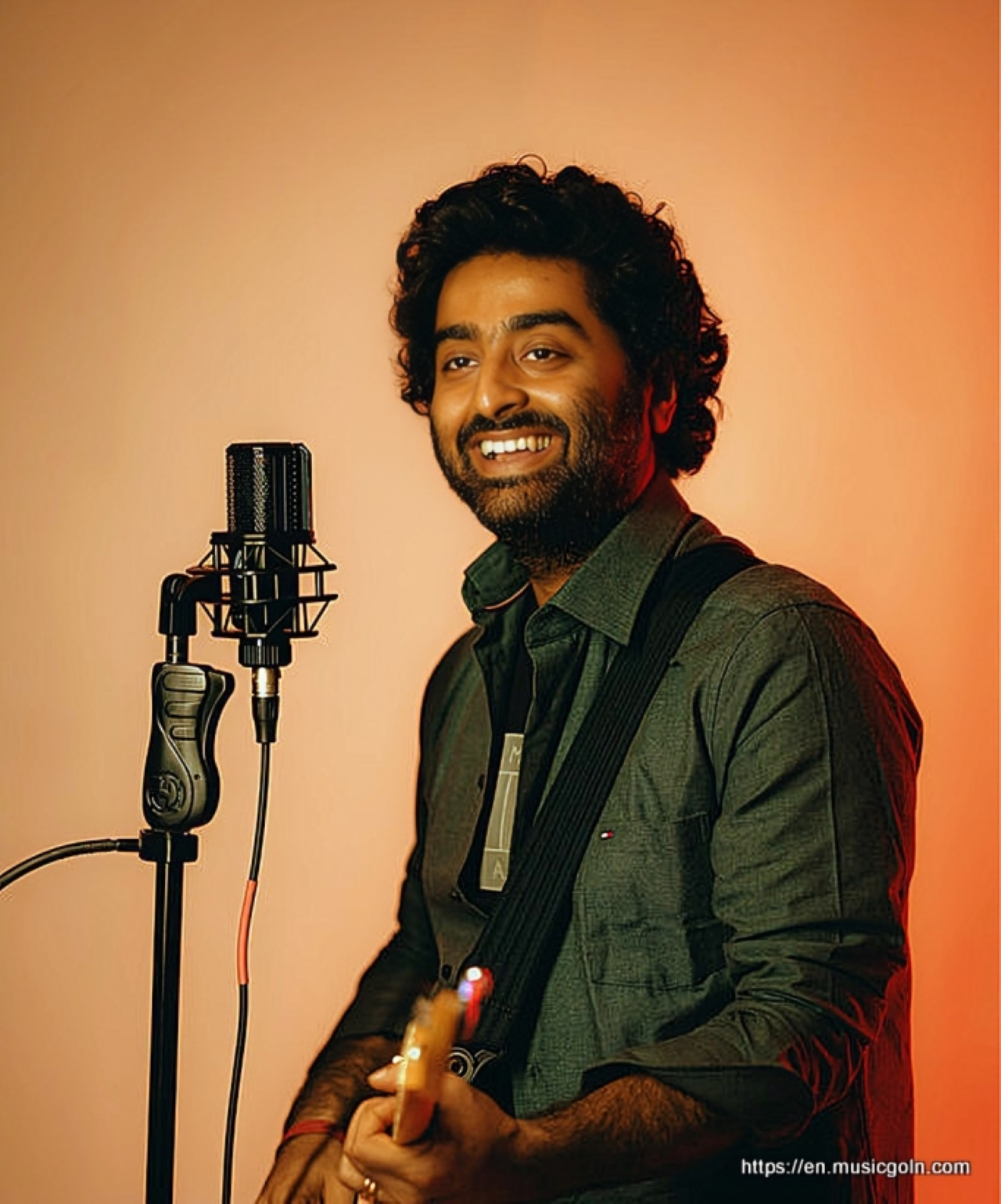
Public image and influences:
Arijit has shared his fondness for singer Kishore Kumar, while citing Mohit Chauhan and Atif Aslam as inspirations with whom he is often compared. Though he has been inspired by many artists, Singh named KK as his favourite singer along with Ayushmann Khurrana. He named Pritam Chakraborty, Vishal–Shekhar, Shankar–Ehsaan–Loy, Amit Trivedi, Mithoon, and A. R. Rahman as his favourite music directors. Furthermore, Singh has idolised Ghulam Ali, Jagjit Singh, and Mehdi Hassan.
In an interview with Filmbeat in April 2013, he declared that he is the biggest fan of singer Krishnakumar Kunnath (KK). His desire to sing for Aamir Khan became a reality in 2016 with the song ‘Naina’ from the film Dangal. In an interview with The Indian Express, Singh stated that he loves the work of Shalmali Kholgade, Shefali Alvares, and Irfan. He also mentioned that his “current favourite” singer is Chinmayi.
In 2016, he appeared on the popular chat and comedy programme The Kapil Sharma Show, aired on Sony TV India. The show’s host, Kapil Sharma, explained the difficulties he had in bringing Singh onto the programme due to his shy nature.
Singh has often been portrayed by the Indian media as a “small-town boy who made it big”. He has also been trolled on social media, to which he replied: “I use my social media sparingly for things that are close to my heart. I don’t read the comments. My team filters out the comments for me; I don’t involve myself a lot in paying attention to criticism on social media. I speak what I want to speak and my team lets me know the needful.”
Arijit enjoys listening to retro songs by singers such as Lata Mangeshkar and Mohammed Rafi, as well as classical and ghazal songs, along with the music of Coldplay. He has expressed a desire to work with the artist Norah Jones someday, as he loves her music. Despite his massive success, he admits that he is uncomfortable with all the attention that fame has brought him.
Industry Perspectives
In an interview, music director and composer Pritam stated: “Arijit is a good singer, a smart musician, and an intelligent musician as well.” Vishal Dadlani, of the music director duo Vishal–Shekhar, described Singh as a “phenomenal singer.” In another interview, Dadlani remarked: “Arijit has the ability and the openness needed to make every recording a genuine collaboration. He’s also a really nice guy, with no ego. That helps.” Filmmaker Sanjay Leela Bhansali, in an interview with The Hindu, added: “Arijit Singh is very special.“
Artistic Recognition
Shreya Ghoshal has noted that he “is versatile and has a soulful voice.” Shankar Mahadevan remarked: “I knew him before he became Arijit Singh. He is an educated musician, he understands his Sargam, and he has got depth.” Suresh Wadkar also praised him, describing him as one of the “great singers of this generation.“
Legacy and Future (2025–2026)
By early 2026, Singh’s impact on the industry reached new heights. In 2025, he was honoured with the Padma Shri, one of India’s highest civilian awards, for his outstanding contribution to the arts. His global influence was further highlighted by high-profile visits to his hometown of Jiaganj from international stars, including British singer-songwriter Ed Sheeran and Dutch DJ Martin Garrix.
In a surprising move in January 2026, Singh announced his retirement from Bollywood playback singing to focus on independent music, live performances, and mentoring new talent, effectively cementing his legacy as the defining voice of his era while transitioning into a new chapter of his career.
Personal Life of Arijit Singh
In 2014, Singh married Koel Roy, a childhood friend and neighbour. He is a father of three children; the family includes Koel’s daughter from her previous marriage and two sons, named Jul and Ali. Whilst Singh has interconnected apartments in Versova, Mumbai, he is known for his preference for a quiet life in his hometown of Jiaganj, Murshidabad. He is often seen by locals riding a simple scooter through the town’s narrow lanes or using public transport.
Singh has stated that, beyond his singing career, he is a keen badminton player, a writer, a cinema enthusiast, and a documentary maker. He is a passionate sports fan, supporting Manchester United in football and following cricket closely. He cites Sachin Tendulkar, Lance Klusener, Sourav Ganguly, and Jonty Rhodes as his favourite sportsmen, and admires Saina Nehwal in the world of badminton. He previously expressed a desire to perform the anthem for the 2022 World Cup in Qatar.
In a personal tragedy, Singh’s mother, Aditi Singh, passed away on 20 May 2021 due to a cerebral stroke. She had been undergoing treatment for COVID-19 and had recently tested negative before her passing.
Humanitarian Work
Singh is deeply committed to philanthropy, primarily through his NGO, “Let There Be Light”, and the Tatwamasi Foundation. His work focuses on supporting the “Below Poverty Line” (BPL) community in the Murshidabad district. His initiatives include organising blood donation camps (maintained with meticulous records and photographic proof of delivery), and the large-scale distribution of clothes, books, and stationery to children in need.
In recent years, his charitable efforts have expanded into significant infrastructure projects in his hometown, including the development of a multi-specialty hospital, a music academy, and a sports complex to benefit the local community.
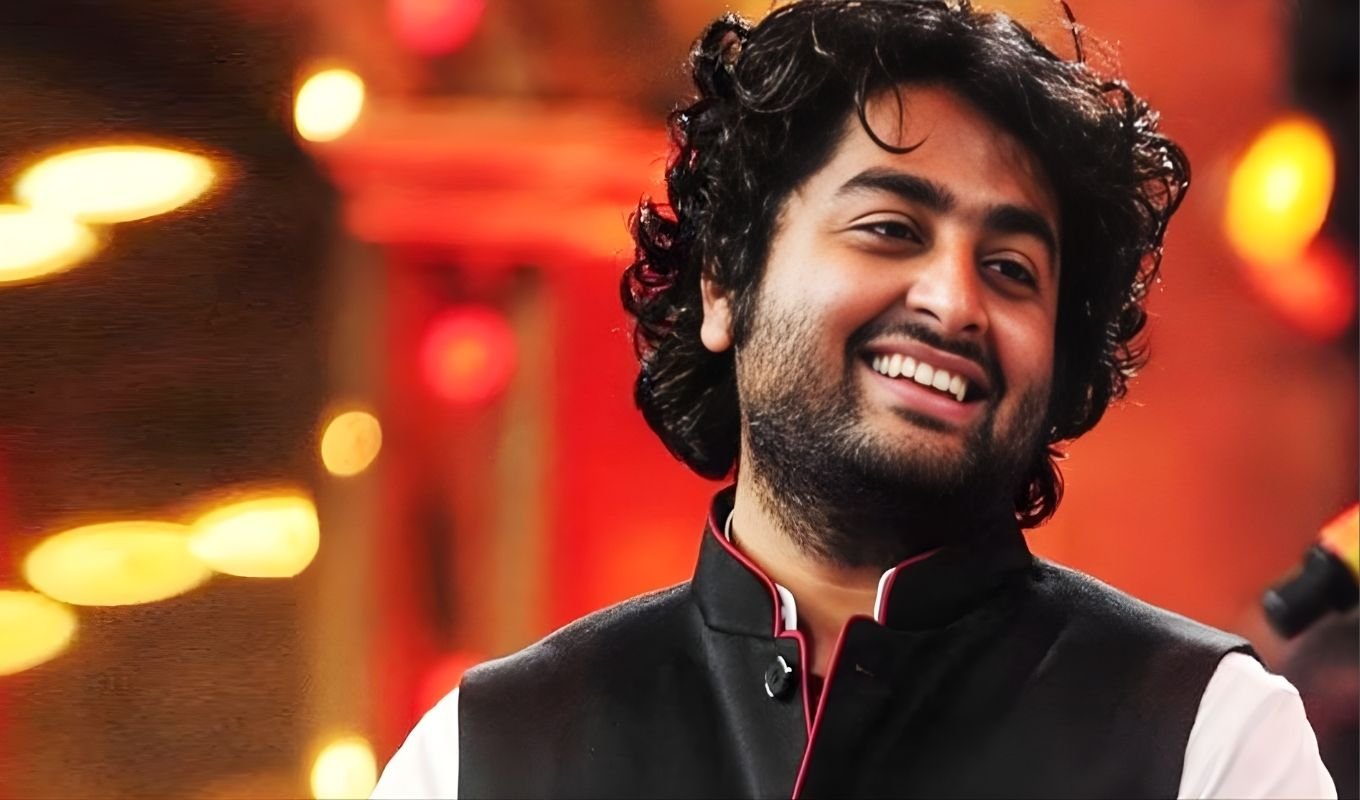
Awards and nominations:
At the beginning of his singing career, Singh received nominations for the Upcoming Male Vocalist of the Year at the 2013 Mirchi Music Awards for his renditions of ‘Phir Le Aya Dil’ and ‘Duaa’, winning the award for the latter. He was also presented with the Wizcraft Honour for Best Live Performer and was named one of the top ten artists from across the world to be featured at The SSE Arena, Wembley, in the SSE Live Awards 2016.
To date, Singh has received four Mirchi Music Awards, six Filmfare Awards, a Stardust Award, three IIFA Awards, two Zee Cine Awards, and two Screen Awards. Remarkably, he received Filmfare Awards for five consecutive years from 2016 to 2020. His work on the song ‘Tum Hi Ho’ from the 2013 film Aashiqui 2 earned him nine awards from ten nominations, including the 2014 IIFA Award and the Filmfare Award for Best Male Playback Singer.
In September 2014, the National Indian Students Union UK honoured Singh with the Youth Icon – Music Award. He was also named the most popular artist of 2014 by Hungama Digital Media Entertainment following an online poll. Forbes India magazine’s Celebrity 100 list placed him at rank 15 in 2016.
At the 7th Mirchi Music Awards in 2015, he was honoured as the Best Male Vocalist for his rendition of ‘Samjhawan’. He received nominations at the 60th Filmfare Awards for ‘Mast Magan’ and ‘Suno Na Sangemarmar’ and was voted Best Male Singer by IBN Live readers for the song ‘Muskurane’. In 2016, he won the Filmfare Award for Best Male Playback Singer for ‘Sooraj Dooba Hain’.
The Global Indian Music Academy (GiMA) Awards recognised him for ‘Soch Na Sake’, ‘Gerua’ (the most popular film and radio song), and ‘Sanam Re’ (the most streamed song). At The Times of India Film Awards 2016, he was nominated for ‘Aayat’, ‘Chunar’, and ‘Hamari Adhuri Kahani’. Late 2016 also saw Singh receive his first Stardust Award for Best Playback Singer (Male) for ‘Channa Mereya’.
In 2017, he won the Mirchi Music Award for Male Vocalist of the Year for ‘Ae Dil Hai Mushkil’, a song that also earned him the Filmfare Award and the Zee Cine Award for Best Male Playback Singer. At the 23rd Star Screen Awards, he was named Best Male Playback Singer for ‘Zaalima’ and his contributions to the Jagga Jasoos soundtrack.
By the 63rd Filmfare Awards in 2018, he won Best Male Playback Singer for ‘Roke Na Ruke Naina’ from Badrinath Ki Dulhania, marking his fourth consecutive win. In 2019, at the 66th National Film Awards, he was honoured with the National Award for Best Male Playback Singer for ‘Binte Dil’ from Padmaavat.
Singh also received the IIFA Award for Best Male Playback Singer for ‘Ae Watan’ from the film Raazi. Upon winning the Filmfare Award for ‘Kalank’ from the movie Kalank, he set a record by winning the award for five consecutive years, bringing his total Filmfare tally to six.