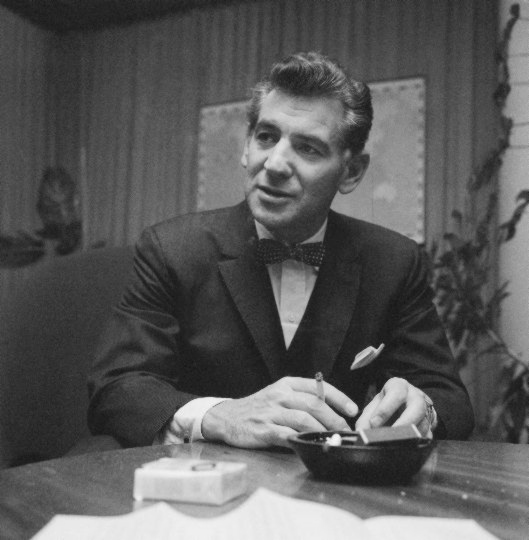

August 25, 1918. When the first cry of an infant resonated in a middle-class Ukrainian-Jewish immigrant family in the city of Lawrence, Massachusetts, his parents affectionately named him ‘Louis’. Yet to his family, he was always known simply as ‘Lenny’. At sixteen, driven by his own desire, he officially changed his name to ‘Leonard’.
That Lenny—Leonard Bernstein—was not merely a distinguished conductor or a celebrated composer of the twentieth century; he was an undisputed prince of music who led Western classical tradition out of its aristocratic, gated confines and straight into the hearts of the common people. He was at once a philosopher of sound, an unconventional educator, a harbinger of cultural revolution, and an endlessly restless humanist soul.
On his birthday, as a tribute to his memory, let us look back across that colourful, fiery, emotional, and intensely dramatic life—one that began at the keyboard of an old upright piano in a Boston parlour, leading all the way to Carnegie Hall, La Scala, the Vienna Philharmonic, and atop the rubble of the fallen Berlin Wall, where it merged with the world’s ultimate anthem of freedom.
Table of Contents
1. Roots, Childhood, and the First Touch of Music in a Wooden Box
Leonard Bernstein’s background and upbringing were rich with contrast. His father, Samuel Joseph Bernstein, and mother, Jennie (née Resnick), were Orthodox Jewish immigrants who had left Rivne in present-day Ukraine in search of a new life in the United States. Samuel was a thoroughly pragmatic businessman running the Samuel Bernstein Hair Company, a beauty and hair supply distributor. To this stern merchant, music was neither a respectable nor a secure profession; he believed that pursuing music was tantamount to stepping into an uncertain future.
As a child, Leonard was fragile and suffered acutely from asthma. Yet in 1928, when he was just ten years old, his life shifted permanently on its axis. A relative, Aunt Clara, temporarily deposited her old upright piano at their home.
The instrument’s metal strings, ivory keys, and wooden resonance stirred an astonishing thrill within young Leonard. With every press of a key, he felt as though he were unlocking a hidden realm within himself. Without any teacher’s guidance, he began teaching himself to decipher musical notation.
Witnessing his son’s irresistible and almost obsessive passion, Samuel eventually backed down from his rigid stance and agreed to pay for formal piano lessons. Leonard began his institutional training under Helen Coates (who would go on to serve as his devoted personal secretary for the rest of his life) and subsequently under the prominent Boston pianist Heinrich Gebhard.
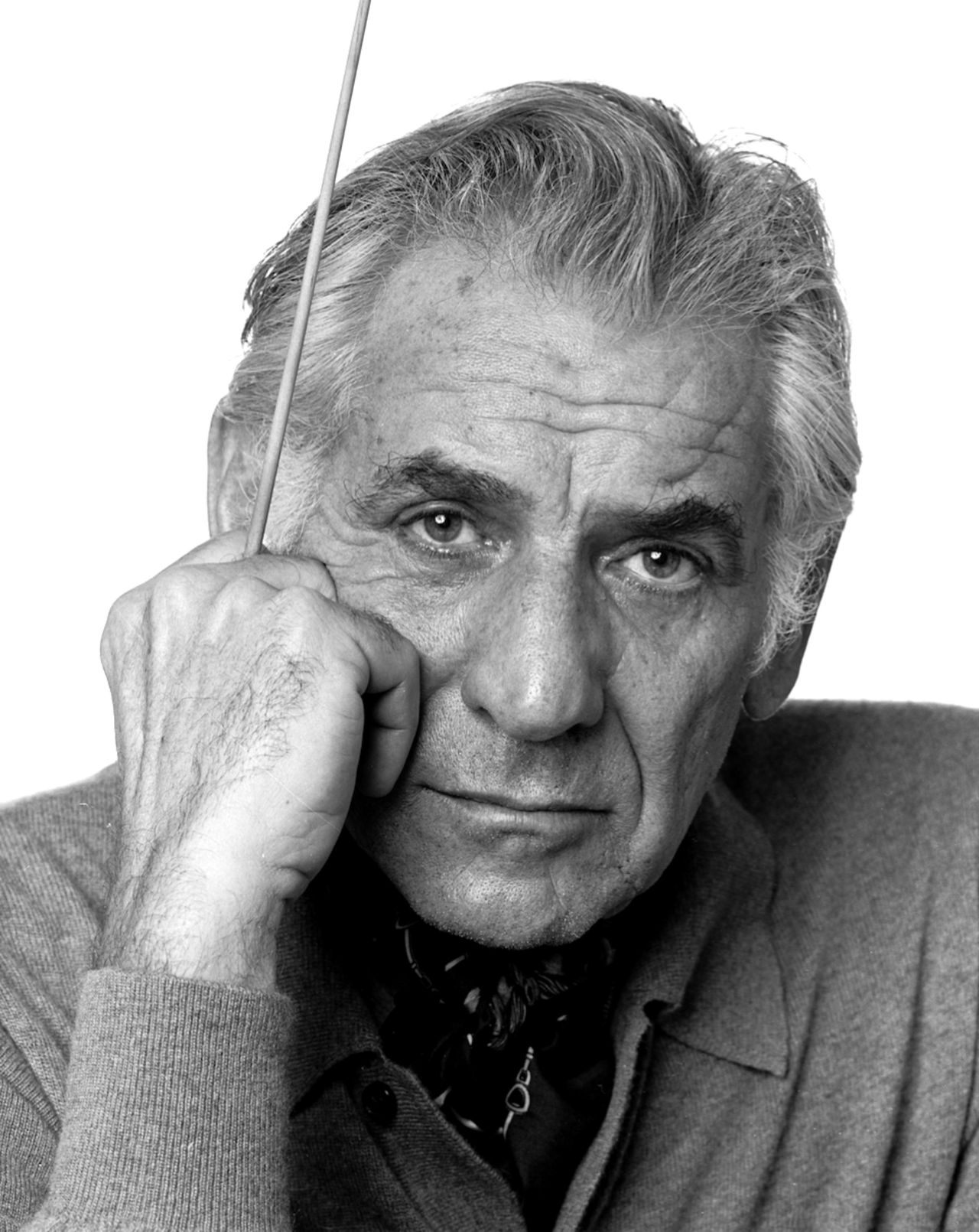
2. Harvard, Curtis Institute, and Classical Musical Tutelage
- Meeting Aaron Copland: In 1937, he met the renowned American composer Aaron Copland. Copland became not only a cherished mentor and friend, but his modern American idiom also deeply infused Bernstein’s own compositional voice.
- The Encounter with Dimitri Mitropoulos: Around the same time, he came into contact with the Greek-born conductor Dimitri Mitropoulos. Mitropoulos’s dramatic style—conducting without a baton, relying purely on raw physical and emotional intensity—captivated young Lenny.
Upon graduating summa cum laude from Harvard in 1939, Bernstein enrolled at the prestigious Curtis Institute of Music in Philadelphia. Here, he studied conducting under Fritz Reiner, one of the most exacting and disciplined conductors in the world. Bernstein thoroughly absorbed Reiner’s razor-sharp observational instincts and mathematical precision in score analysis. Simultaneously, he took advanced piano lessons under Isabella Vengerova.
Yet the mentor who exercised the most profound influence on Bernstein’s soul was Serge Koussevitzky, the legendary music director of the Boston Symphony Orchestra. At the Tanglewood Music Center in Massachusetts, under Koussevitzky’s tutelage, Leonard realized that conducting was far more than merely executing a written score; it was a spiritual outpouring of emotion from the depths of the soul. Koussevitzky adopted young Lenny as a spiritual son, igniting within him the ultimate spark of the conductor’s art.
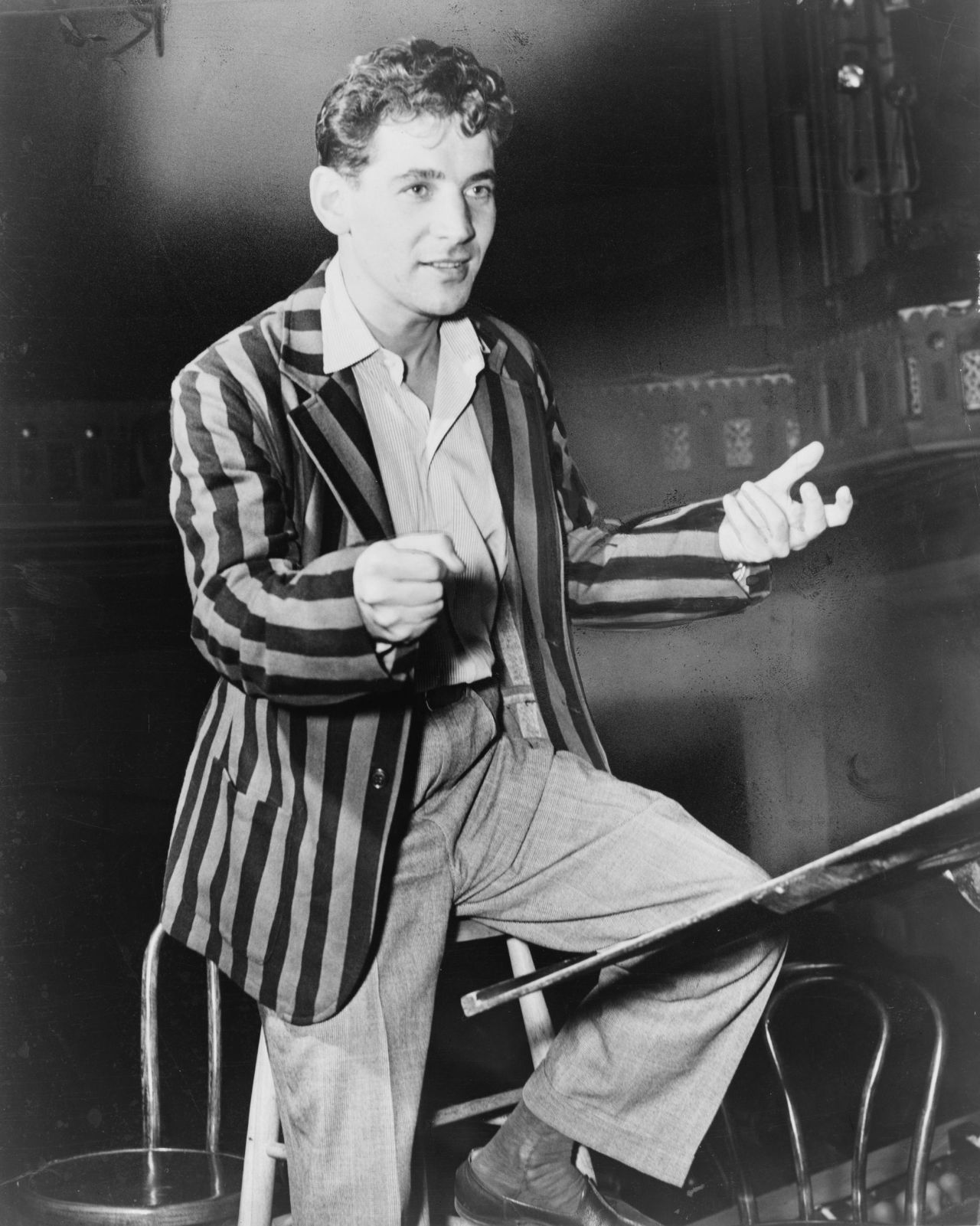
3. That Immortal Night: 14 November 1943
It was 1943. Leonard Bernstein was just twenty-five years old and had recently been appointed assistant conductor of the New York Philharmonic. On the afternoon of Sunday, 14 November, a special concert was due to be broadcast live across the United States via the CBS Radio network from New York’s historic Carnegie Hall.
Suddenly, the scheduled guest conductor, the world-renowned Bruno Walter, was struck down with severe influenza. There was no time for a rehearsal or any prior preparation whatsoever. At midday, word was dispatched to the young assistant conductor, instructing him to step onto the podium. Bernstein did not even own a proper tuxedo or tailcoat for the concert; he took to the stage wearing an ordinary suit.
Across the nation, millions of listeners tuned in on their radios. The twenty-five-year-old Bernstein stood on the podium, baton in hand, and gave the first cue. From the orchestra surged Schumann’s Manfred Overture, Miklós Rózsa’s Theme, Variations and Finale, and Richard Strauss’s exceptionally intricate signature work, Don Quixote.
Without a score before him, conducting entirely from memory, Bernstein poured forth such wild exhilaration, immaculate mathematical precision, and profound personal emotion that the whole of Carnegie Hall erupted. The audience rose to their feet in thunderous applause.
The following morning, on 15 November, the front page of The New York Times carried the headline: “It’s Like a Musical American Success Story”. Overnight, the unknown Leonard Bernstein became a national musical icon and an emerging star on the global stage.
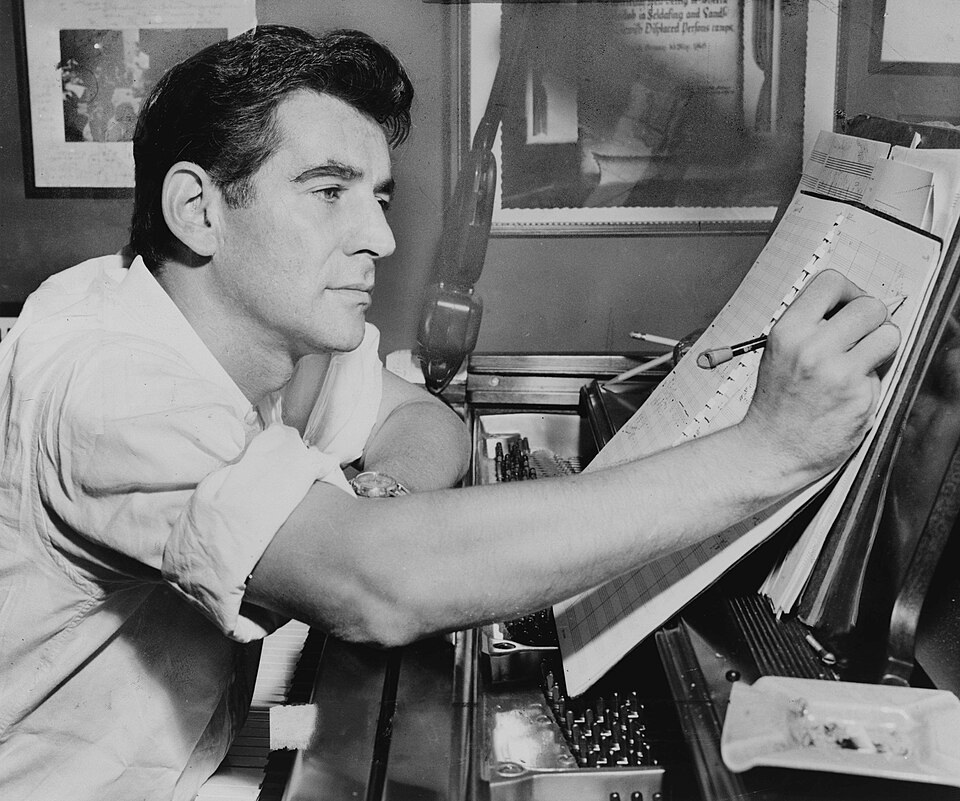
4. A Global Empire of Conducting, the New York Philharmonic, and the Mahler Revival
- The Israel Philharmonic Orchestra: He first travelled to Israel (then Mandatory Palestine) in 1947. Throughout his life, his relationship with the Israel Philharmonic remained intensely emotional. His concerts performed in the desert for frontline troops during Israel’s 1948 War of Independence, and atop Mount Scopus following the Six-Day War in 1967, remain golden chapters in history.
- La Scala, Milan (1953): Bernstein became the first American conductor to step onto the sacred stage of Italy’s premier opera house, La Scala. There, he conducted Cherubini’s demanding opera Medea alongside opera queen Maria Callas, as well as Rossini’s The Barber of Seville, astonishing European critics.
- The Vienna Philharmonic: Beginning with Verdi’s Falstaff at the Vienna State Opera in 1966, Bernstein initiated a historic and deeply affectionate partnership with the Vienna Philharmonic. His prominence and authority within the traditional, conservative, and aristocratic realm of European classical music was an unprecedented triumph for an American Jew.
- The Gustav Mahler Revival: By the mid-twentieth century, the symphonies of the Austrian-Jewish composer Gustav Mahler had fallen into relative obscurity across the world’s concert halls. Bernstein embarked on a personal crusade, recording and performing Mahler’s complete symphonies and choral works across the globe. He firmly believed that Mahler’s music encapsulated the existential crises, psychological angst, fear of mortality, and spiritual quests of modern twentieth-century humanity. The global restoration of Mahler to his rightful place is a feat credited singularly to Bernstein.
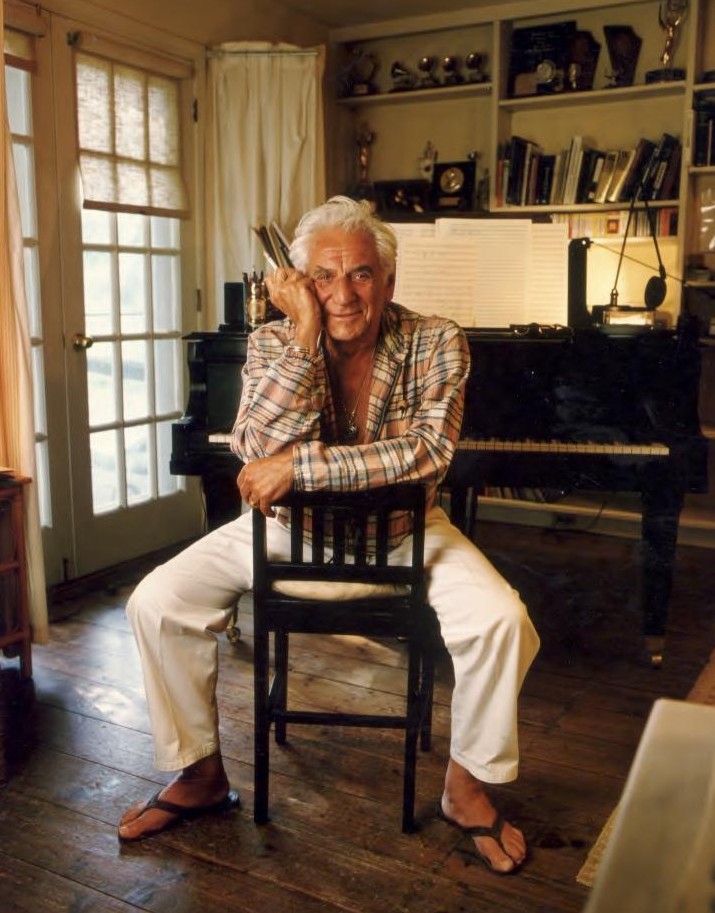
5. Bernstein the Composer: A Masterful Synthesis of Classical and Broadway
(a) Symphonic and Classical Masterpieces:
- Symphony No. 1 ‘Jeremiah’ (1942): Built upon the biblical lamentations of Jeremiah, this symphony reflects his Jewish heritage, spiritual wrestling, and search for faith.
- Symphony No. 2 ‘The Age of Anxiety’ (1949): Inspired by W. H. Auden’s famous poem, this masterpiece for piano and orchestra captures the existential loneliness and uncertainty of post-Second World War humanity.
- Symphony No. 3 ‘Kaddish’ (1963): Composed immediately following the tragic assassination of President John F. Kennedy, this monumental cantata-symphony gives dramatic form to humanity’s cosmic doubt, grief, and ultimate reconciliation with God.
- Chichester Psalms (1965): A sublime choral setting of original Hebrew texts commissioned for Chichester Cathedral in England, blending melodic beauty with modern, syncopated rhythms.
- MASS (1971): Commissioned by Jacqueline Kennedy for the inauguration of the John F. Kennedy Center for the Performing Arts in Washington, D.C., this massive theatrical work brought about an unprecedented fusion of the traditional Latin Catholic Mass with rock music, Broadway, and the blues.
(b) Broadway and Theatre Masterpieces:
- On the Town (1944) and Wonderful Town (1953): Two blockbuster theatrical productions that captured the pulse, energy, emotion, and vibrant pace of New York City on a musical canvas.
- Candide (1956): Based on Voltaire’s satire, this operetta is a work of peerless brilliance in its musical complexity, orchestration, and wit. Its Overture remains one of the most frequently performed concert pieces in the world.
- West Side Story (1957): A modern New York retelling of Shakespeare’s Romeo and Juliet. Combining Stephen Sondheim’s brilliant lyrics, Jerome Robbins’s groundbreaking choreography, and Bernstein’s immortal score, it marked an epochal turning point in Broadway history. Numbers such as “Maria”, “Tonight”, “America”, and “Somewhere” became eternal treasures of global music.
(c) Film and Opera:
- Bernstein’s magnificent original score for Elia Kazan’s celebrated film On the Waterfront (1954) earned him an Academy Award nomination.
- In his opera Trouble in Tahiti (1952) and its full-length sequel A Quiet Place (1983), he delivered a sharp critique of the superficiality, artificiality, and emotional isolation hidden beneath the facade of suburban American domesticity.
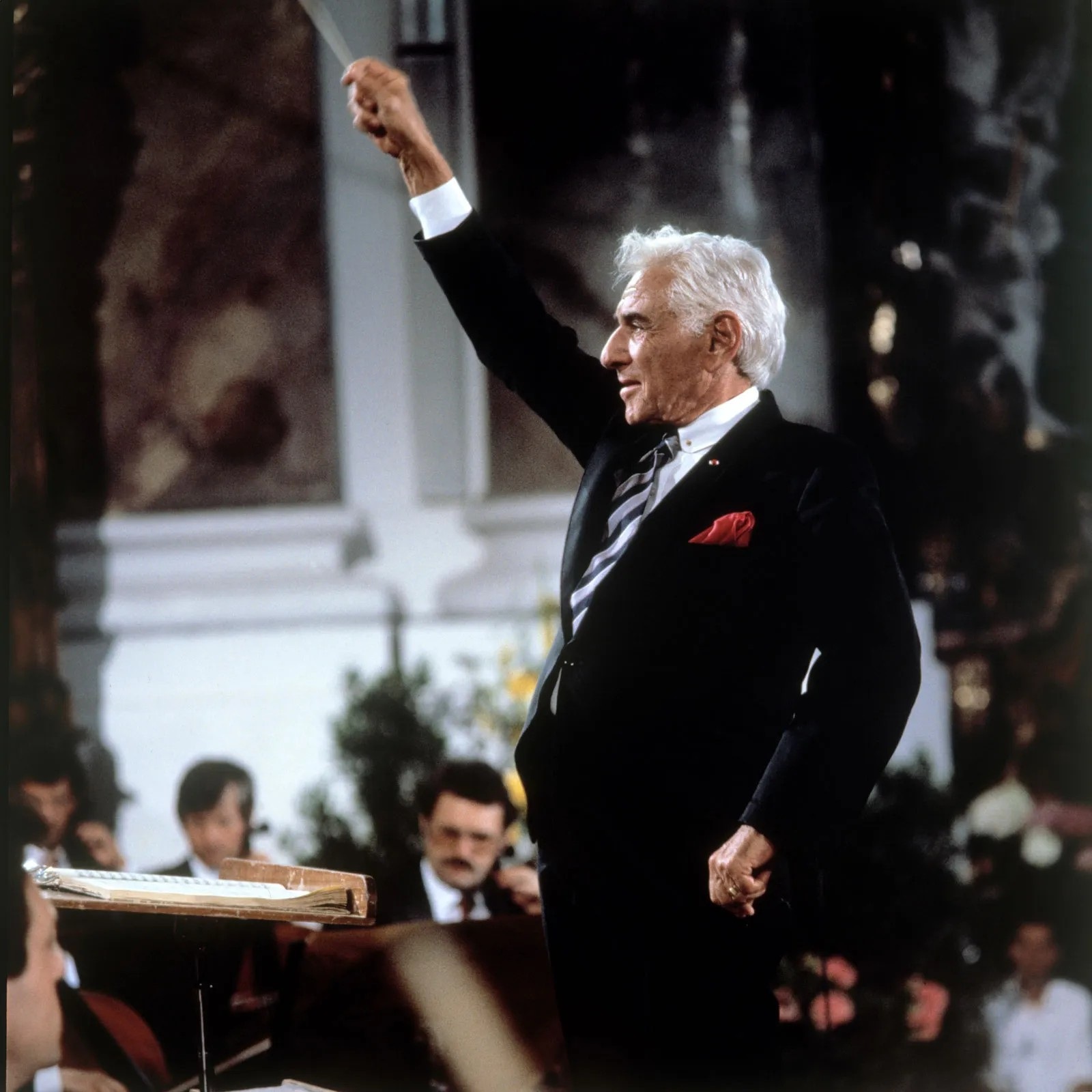
6. An Unconventional Educator, Foresight, and the Television Revolution
- Omnibus (1954–1958): In this famous CBS programme, he demystified classical composition in lucid terms. On one memorable occasion, he drew a massive score of Beethoven’s Fifth Symphony across the studio floor, standing atop it to illustrate how a simple four-note motif evolved into a monumental symphony.
- Young People’s Concerts (1958–1972): Over fourteen consecutive years with the New York Philharmonic, he produced fifty-three televised episodes broadcast live. Speaking with warm, engaging clarity to children, teenagers, and families, he explained concepts such as ‘impressionism in music’, ‘sonata form’, and how to listen to an orchestra. Watching these broadcasts inspired thousands of young people around the world to pursue music.
- The Harvard Norton Lectures (1973): Serving as the Charles Eliot Norton Professor of Poetry at Harvard University, he delivered six historical lectures compiled under the title The Unanswered Question. In them, he mathematically and conceptually demonstrated profound parallels between Noam Chomsky’s theories of generative grammar in linguistics and the underlying syntax and structure of musical language.
7. Social Responsibility, Politics, and ‘Radical Chic’
- The Civil Rights Movement: In 1965, he joined Dr Martin Luther King Jr. in person on the historic march from Selma to Montgomery, Alabama, demanding voting rights for African Americans, and performed in concert for the marchers.
- Anti-Vietnam War Stance: Throughout the 1960s and 1970s, he voiced vocal criticism of the United States government’s policies in Vietnam. Consequently, the FBI kept him under surveillance for decades, amassing a secret dossier on him exceeding three hundred pages.
- The ‘Radical Chic’ Affair (1970): To raise funds for the legal defence of arrested members of the Black Panther Party fighting for African American rights, Bernstein and his wife, Felicia, hosted a fundraising dinner at their luxurious Manhattan apartment. The prominent journalist Tom Wolfe penned a biting satirical essay in New York magazine about the evening, coining the phrase ‘Radical Chic’, which ignited fierce controversy across political and intellectual circles.
- Nuclear Disarmament and Human Rights: In the 1980s, he conducted concerts commemorating Hiroshima Day to protest nuclear weapons proliferation, and raised substantial sums for Amnesty International and AIDS awareness campaigns.