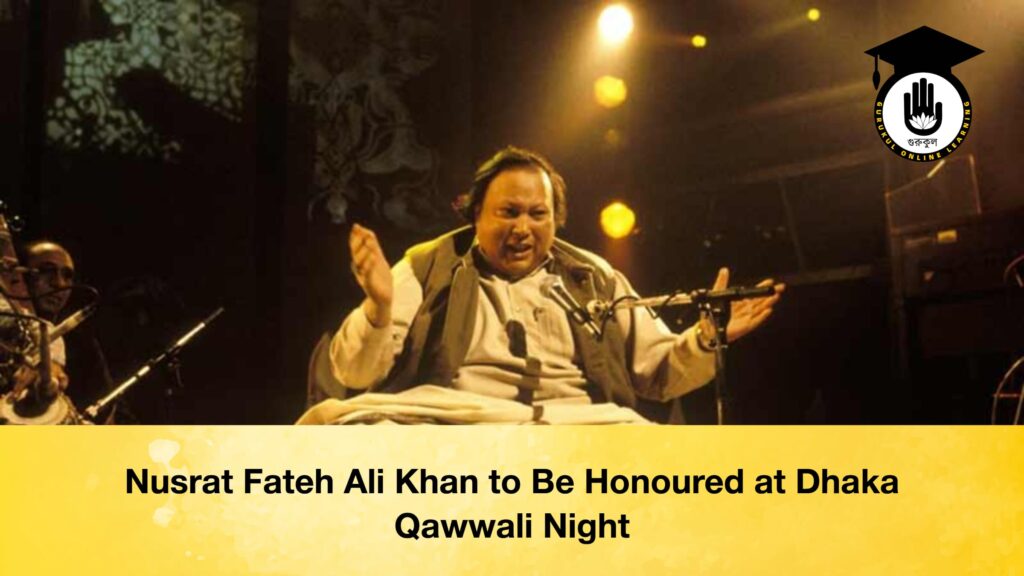
Organised by Capital Curve Communications, the event will feature performances by two Bangladeshi qawwali bands, Sufitan and Nafs. Nafs is recognised as the country’s first qawwali band, while Sufitan has gained popularity among local audiences. The HU Sufi Troupe will also perform Sufi dance, adding a visual element to the evening’s musical programme.
The organisers plan to transform the venue with elements inspired by Sufi culture, allowing visitors to experience the tradition beyond its musical performances. A dedicated photo gallery and tribute exhibition will showcase aspects of Nusrat Fateh Ali Khan’s life, career and contribution to qawwali. The displays are intended to help audiences appreciate the enduring influence of an artist whose voice carried South Asian devotional music to listeners around the world.
Rakib Hossain, founder and chief executive officer of Capital Curve Communications, said Ishq-e-Nusrat was intended to be more than a concert. The initiative, he explained, would offer an opportunity to express admiration and respect for the legendary singer while celebrating the lasting appeal of his music.
The auditorium doors will open to visitors at 4.30pm on 7 November. The main programme is scheduled to begin at 6pm and continue until 10pm. According to the organisers, the event will provide a family-friendly environment, with parking facilities available for attendees.
Tickets start at Tk 999, and seating will be limited. Prospective visitors may therefore wish to check availability before making arrangements to attend. The organisers hope the evening will attract both established qawwali enthusiasts and younger listeners interested in discovering the genre.
Born in 1948 in Faisalabad, Pakistan, Nusrat Fateh Ali Khan became one of the most influential figures in qawwali, a devotional musical tradition associated with Sufi culture in South Asia. He was renowned for his powerful voice, remarkable vocal control and emotionally charged performances, which often combined intricate rhythms with extended improvisations.
Qawwali traditionally expresses spiritual devotion, divine love and a sense of surrender through poetry and music. Although rooted in religious and cultural traditions, the genre has reached audiences well beyond its original settings. Nusrat played a pivotal role in that expansion, bringing qawwali to international stages and collaborating with musicians from different backgrounds. His work in film soundtracks and cross-cultural musical projects also helped introduce his distinctive style to wider audiences.
Nusrat Fateh Ali Khan died in 1997, but his influence continues to shape the appreciation of qawwali across generations. His recordings remain popular for their intensity, spiritual depth and distinctive musical expression.
The Dhaka tribute will offer audiences an opportunity to revisit that legacy through live performances and visual displays. By bringing together local musicians, dancers and admirers, Ishq-e-Nusrat aims to celebrate the enduring power of a musical tradition that continues to connect people across cultures.