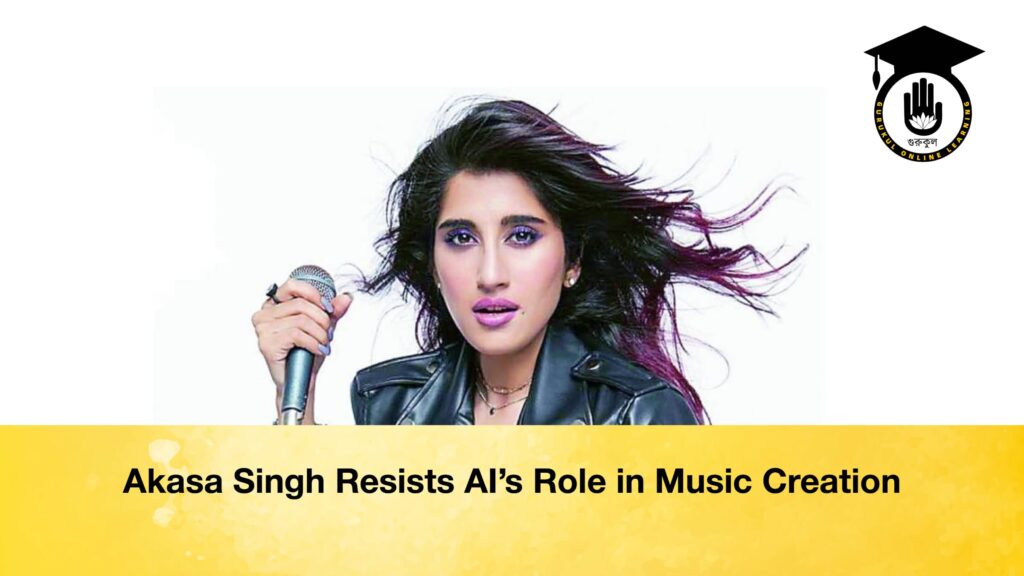
Indian singer Akasa Singh believes artificial intelligence should not replace the human creativity at the heart of music. Confident in her own voice and artistic abilities, she has made it clear that as long as she is able to sing and create music herself, she sees little need to rely on AI for the creative process.
During a recent visit to Bengaluru, Akasa spoke about the changing demands of the music industry, the growing expectations surrounding live performances, the pressure created by social media and the increasing use of artificial intelligence in music. Her comments come at a time when she is enjoying a strong phase in her career, with recent tracks such as ‘Jab Tak’ and ‘Pani Wali’ drawing attention.
For Akasa, being a successful singer today involves much more than releasing a popular song. Artists are increasingly expected to maintain a strong presence on stage while also remaining visible and active online. This has changed the way performers build their careers and interact with audiences.
She believes expectations from live performers have risen significantly. Audiences no longer look only for a singer standing on stage and delivering songs. They increasingly expect an energetic and visually engaging performance. That does not, however, mean every singer has to dance or follow the same performance style.
Akasa cited Sunidhi Chauhan as one of her inspirations when discussing stage presence. She also referred to Shreya Ghoshal as an example of an artist who can command a stage without relying heavily on dance. According to Akasa, singers can establish a distinctive identity through their voice, performance skills and stage presence, with each artist finding a style that suits them.
She views the improvement in live shows as a positive development. Indian performers, she believes, have the ability to deliver productions on an international scale and present their music and stagecraft to large audiences. Such performances, however, can require substantial financial investment, meaning artists may sometimes have to put their own money into staging ambitious shows.
Social media has also transformed the relationship between musicians and their audiences. Akasa pointed out that artists can now build a following directly through digital platforms instead of depending entirely on music directors, record labels or reality television programmes to reach listeners.
Yet the same platforms can create additional pressure. She expressed disappointment that an artist’s follower count may sometimes be considered alongside musical ability when opportunities are assessed. As a result, singers can find themselves expected to perform the role of content creators as well as musicians.
Akasa also believes the tastes of younger audiences are changing rapidly. With K-pop and music from different parts of the world readily accessible, listeners are exposed to a much wider range of performers and styles. Audiences are therefore paying attention not only to the songs themselves but also to clothing, choreography, stage design and the overall presentation of an artist.
This shift has raised the expectations placed on performers. A singer may now need to think about several aspects of a performance that once sat outside the traditional definition of singing.
Akasa’s strongest reservations, however, concern artificial intelligence. She is concerned that excessive reliance on AI in music could eventually affect not only singers but also instrumentalists, guitarists and live musicians whose skills are central to live performance.
Her preference is firmly rooted in human ability and individuality. She has also said that she was not entirely comfortable with the widespread use of auto-tune, making her even more cautious about the growing role of AI in music production.
Akasa does not reject technology altogether. Rather, she believes its usefulness lies in making routine and repetitive tasks easier, rather than taking over the creative role of an artist. For her, the character of a song comes from a singer’s own voice, interpretation and creative instincts. Those qualities, she feels, should remain fundamentally human.
Away from music, Akasa also spoke warmly about her long association with Bengaluru. She has been visiting the city regularly since 2011 and has developed a particular fondness for its weather and food. Although she has complaints about the traffic, Bengaluru remains one of the cities she likes most.
Her comments reflect a wider debate within the music industry as technology becomes increasingly capable of assisting with creative work. For Akasa, however, the appeal of music lies precisely in the human element: the voice of the singer, the individuality of the performer and the creative choices that make one artist different from another.