
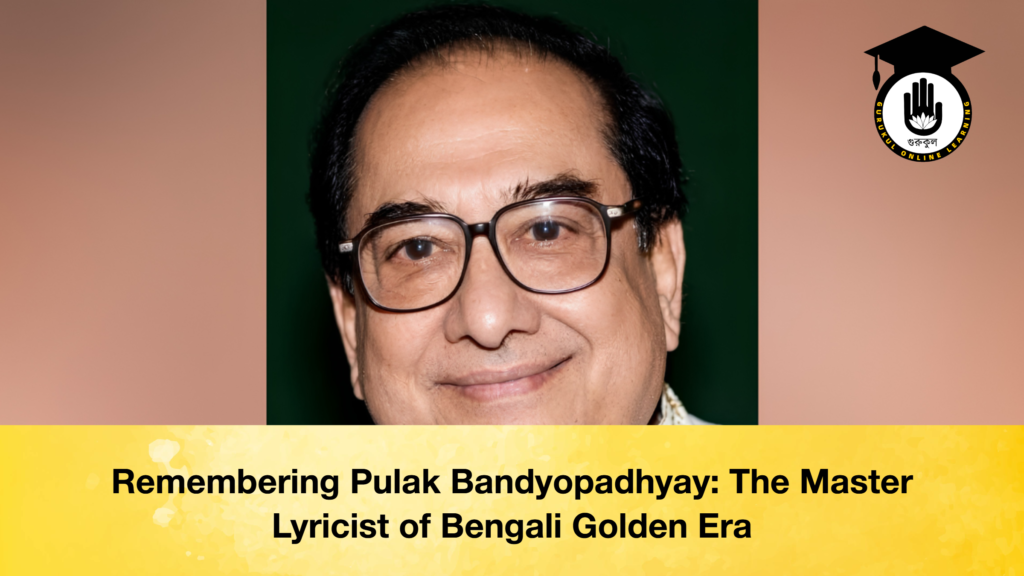
Some melodies transcend the boundaries of time, lingering softly in the human heart and evoking memories of a cherished past. Pulak Bandyopadhyay was a monumental figure in Bengali music whose lyricism captured every shade of human emotion, ranging from profound romance to poignant heartbreak. Born on 2 May 1931 in Salkia, Howrah, he grew up surrounded by a rich cultural atmosphere that nurtured his innate creative talents. After completing his graduation from the historic Scottish Church College in Kolkata, he dedicated his life to crafting words that resonated deeply with the common people.
Operating during the golden era of Bengali cinema throughout the 1960s and 1970s, Bandyopadhyay collaborated with legendary composers and iconic vocalists. His peerless ability to articulate simple yet deeply evocative thoughts made him a favorite among artists and directors alike. Iconic voices such as Manna Dey, Lata Mangeshkar, Hemanta Mukherjee, Asha Bhosle, and Sandhya Mukherjee immortalized his words through unforgettable renditions. A shining example of his timeless legacy remains the 1966 classic “Sankhabela,” featuring the immortal duet “Ke Prothom Kache Esechi,” sung by Lata Mangeshkar and Manna Dey, alongside other masterpieces like “Aaj Mon Cheyeche.”
With a staggering catalog comprising over four thousand creations, his artistic footprint extended far beyond cinematic songs into modern tracks, devotional compositions, children’s rhymes, novels, and screenplays. Notable literary and autobiographical works like Kothay Kothay Raat Heye Jay, Amar Priya Gan, and Bahatture showcased his versatility as an accomplished author. Songs like “Amar Bolar Kichu Chilo Na,” “Chirodini Tumi Je Amar,” and “Nijhum Sondhyay Pantha Pakhira” remain deeply ingrained in the cultural fabric of Bengal.
Despite a life filled with extraordinary creative output, his final chapter was shadowed by deep personal struggles and psychological distress. On 7 September 1999, his tragic demise in the Hooghly River left the entire cultural landscape in profound shock and mourning. Though his sudden departure posed questions that remain unanswered to this day, his timeless creations continue to inspire successive generations. Pulak Bandyopadhyay lives on through every enduring melody, reminding listeners that while individuals eventually fade away, true art remains immortal.