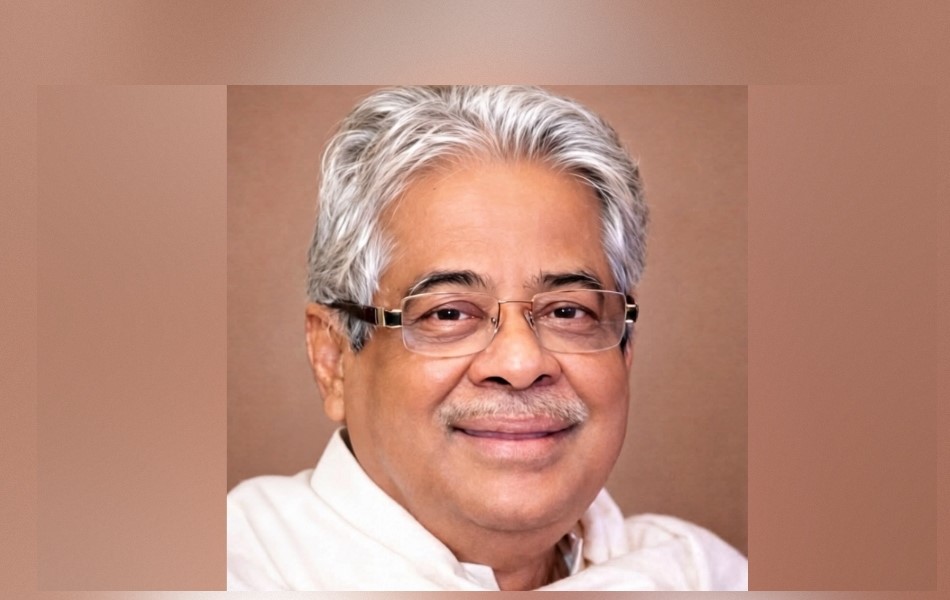
Some songs transcend entertainment and become part of a nation’s collective memory. Some lyrics survive not merely because of their melody, but because they give words to emotions that generations have struggled to express. Gazi Mazharul Anwar was one such creative force in Bangladesh’s cultural history, leaving behind a vast body of work that captured patriotism, love, longing, human emotion and attachment to the soil.
Born on 22 February 1943 in Taleshwar village of Daudkandi, Cumilla, Gazi Mazharul Anwar went on to establish himself as one of Bangladesh’s most prominent lyricists. His creative career also extended to composing, writing stories and screenplays, producing films and directing.
His professional journey as a lyricist began in 1964, when he started writing songs for Radio Pakistan. He later became associated with Bangladesh Television from its early days, contributing songs and plays as the newly independent country’s broadcasting and cultural landscape began to take shape.
In 1967, he entered the world of cinema as a lyricist for Ayna O Oboshishto. Film subsequently became one of the most important fields of his creative life. He did not limit himself to songwriting, but also worked in story, screenplay, dialogue, production and direction. His first film as a director, Nantu Ghatak, was released in 1982.
Yet it was his songwriting that made his name particularly enduring.
Patriotism and love for the homeland were recurring themes in his work. His lyrics often reflected the spirit of independence, the emotional bond between people and their country, and the memories associated with the land of Bengal.
Among his best-known works is the evocative line, “Ekbar jete de na amar chhotto sonar gay”—a simple expression of longing to return to one’s beloved village. The sentiment resonates far beyond a single song. It evokes childhood memories, rural Bengal and the enduring pull of one’s roots.
Other well-known songs associated with his writing include “Joy Bangla Banglar Joy” and “Akash-er Hate Achhe Ekrash Neel”. Several of his songs were also featured in the BBC Bangla survey of the greatest Bengali songs of all time, reflecting the lasting recognition of his contribution to Bengali music.
The scale of his output was remarkable. He is credited with writing more than 20,000 songs during a career spanning several decades. His lyrics were performed by celebrated singers from successive generations of Bangladesh, allowing his words to travel across changing musical tastes and generations.
His strength as a lyricist lay partly in his ability to combine simplicity with emotional depth. He frequently used familiar, accessible language rather than unnecessarily complicated expressions. Yet behind those straightforward words were stories of love, separation, nature, ordinary people, national identity and human relationships.
His songs often contained a strong narrative quality. Their characters could be lovers separated by circumstances, ordinary working people, freedom fighters or the homeland itself. That broad emotional range helped his writing remain relevant across different periods of Bangladesh’s cultural history.
Gazi Mazharul Anwar’s contribution was not confined to music. Through his involvement in cinema, he became part of a wider cultural tradition in which songs, storytelling and filmmaking intersected. His work as a director and producer added another dimension to an already extensive creative career.
His achievements were recognised with numerous honours, including the Bachasas Award. Among the country’s highest civilian cultural recognitions, he received the Ekushey Padak in 2002 and the Independence Award in 2021.
His artistic legacy has also continued through his family. His daughter Dithi Anwar has performed many of her father’s songs at cultural events and television programmes, helping introduce his work to audiences of a younger generation.
Gazi Mazharul Anwar died on 4 September 2022, aged 79. His death marked the passing of one of the most prolific figures in Bangladesh’s modern cultural history.
But his work did not end with his death.
For a lyricist, perhaps the most enduring form of recognition is the continued life of his words. Gazi Mazharul Anwar’s lyrics remain part of Bangladesh’s musical heritage, returning through recordings, cultural programmes and performances by new generations of artists.
His songs gave voice to emotions that were both deeply personal and widely shared. They spoke of love and separation, but also of homeland and identity. They could evoke the intimacy of a village while carrying the wider emotional landscape of a nation.
“Ekbar jete de na amar chhotto sonar gay”—the longing expressed in those words continues to resonate because the desire to return to one’s roots is universal.
Gazi Mazharul Anwar is no longer here to write new songs. Yet the enormous body of work he left behind continues to connect generations with Bangladesh’s cultural memory.
His legacy lives not simply in the number of songs he wrote, but in the fact that so many of those songs became part of people’s lives.
For that enduring contribution to Bengali music and culture, Gazi Mazharul Anwar continues to be remembered with respect and gratitude.