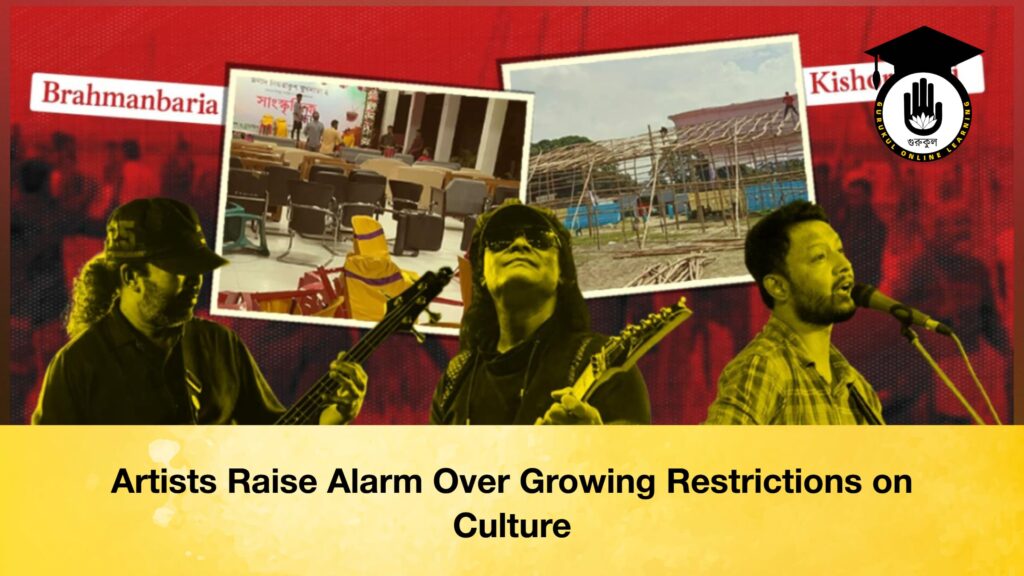
Musicians and cultural figures in Bangladesh have expressed growing concern over incidents involving interference in music and cultural programmes, cancellations of events and attacks at venues. They say such incidents are not only creating uncertainty for performers and organisers but are also raising wider questions about cultural diversity, freedom of expression and citizens’ rights.
The issue has returned to public attention following several incidents in recent weeks. On 19 August, authorities in Kishoreganj were asked to cancel a concert after the local Imam-Olama Parishad wrote to the district administration, warning that holding the event could lead to a complicated situation.
Later that night, a cultural programme at the police lines in Brahmanbaria came under attack. A large group of madrasa students reportedly entered the venue and vandalised chairs arranged for members of the audience. Police intervened to bring the situation under control, using batons, and at least 30 people were injured. Several police personnel were among those hurt.
Following the incident, three police officers were temporarily suspended over allegations of negligence in their duties. The action prompted discussion within the music community about the responsibilities of law enforcement agencies when cultural programmes face disruption or violence.
Hamin Ahmed, a founding member of popular band Miles and president of the Bangladesh Musical Bands Association, said the recent incidents should not be viewed as isolated occurrences. He believes there is an emerging tendency in different parts of the country to obstruct musical activities and that the government needs to address the matter seriously.
According to Hamin, the police response in Brahmanbaria was part of their responsibility to prevent those involved in the attack from causing further disorder. He also questioned the decision to take action against police officers following the incident.
For Hamin, music cannot simply be regarded as entertainment. It is a profession and a source of livelihood for performers, musicians, event organisers, sound technicians, lighting workers and many others whose income is connected to the cultural sector. When a concert is cancelled through threats or when an event is disrupted by vandalism, the consequences therefore extend beyond the loss of a single performance.
He also pointed to Bangladesh’s long-standing coexistence of religious values and cultural activities. In his view, attempts to control cultural practices through intimidation or extremism do not reflect the country’s broader social and cultural traditions. He called on the government to identify the sources of such tendencies and take effective measures to prevent them.
Ziaur Rahman Zia, composer and bassist of the band Shironamhin, has also questioned the security of cultural activities. He argued that if cultural programmes cannot be held safely, questions naturally arise about the responsibilities of the institutions charged with protecting the country’s cultural life.
Ziaur Rahman said responsibility for safeguarding culture lies with the relevant cultural authorities, while maintaining public order falls within the remit of the authorities responsible for internal security. He stressed that Bangladesh’s cultural identity encompasses a wide range of traditions, from music to traditional boat races.
In his view, cultural heritage, artistic expression and creative activities should not be obstructed through force. In a democratic society, citizens have rights to freedom of expression and personal liberty, although those rights must be exercised without violating the rights and safety of others.
He argued that disagreements over a cultural programme should be addressed through lawful and administrative procedures rather than intimidation, vandalism or physical intervention. Attempts to forcibly stop cultural events, he said, can turn an individual dispute into a broader question of civil rights.
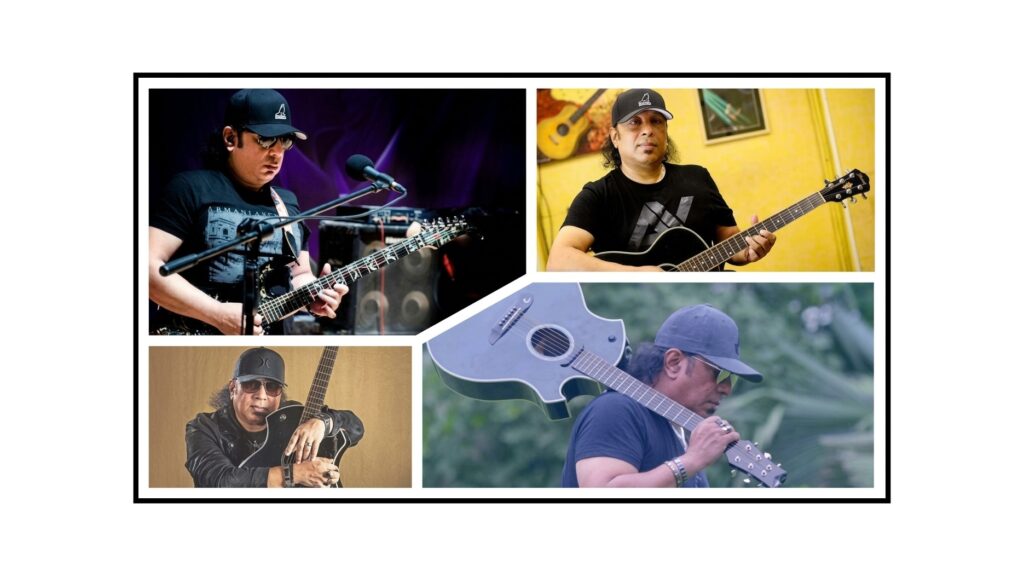
Singer and guitarist Ahmed Hasan Sunny has also described the recent incidents as a cause for concern. He believes greater opportunities should be created for children to learn music and that schools need stronger reading environments and libraries if culture is to play its role in building social cohesion and tolerance.
Sunny questioned why reading habits and access to libraries appear to be declining and why opportunities to engage with literature, including storybooks, are becoming more limited. In his view, music, literature and other cultural activities can broaden people’s outlook and encourage tolerance towards different opinions and ways of life.
He warned that a shrinking environment for music and cultural expression could have consequences beyond the cancellation of individual programmes. If opportunities for cultural participation continue to diminish, he argued, diversity of thought, mutual tolerance and peaceful coexistence could also come under pressure.
The issue also drew attention after Home Minister Salahuddin Ahmed said on 22 August that music and film screenings in Brahmanbaria had effectively faced a situation resembling a long-standing prohibition. His remarks added another dimension to the debate surrounding the state of cultural activities in the district.
The recent developments have therefore raised concerns among artists about both the freedom to practise culture and the effectiveness of measures taken to protect cultural events. Musicians and cultural figures argue that objections to a programme may be raised through lawful channels, but threats, attacks and vandalism cannot be an acceptable means of settling such disputes.
For the country’s cultural community, the challenge is not limited to protecting concerts. Bangladesh has a diverse cultural landscape that includes music, literature, theatre, cinema, folk traditions and regional festivals. These activities provide professional opportunities for thousands of people while also creating spaces where citizens can meet, exchange ideas and engage with different forms of expression.
Artists therefore believe that a safe cultural environment requires impartial administration, effective enforcement of the law and appropriate protection for legitimate cultural activities. Without such safeguards, isolated cancellations or attacks could gradually contribute to a wider sense of insecurity across the cultural sector.