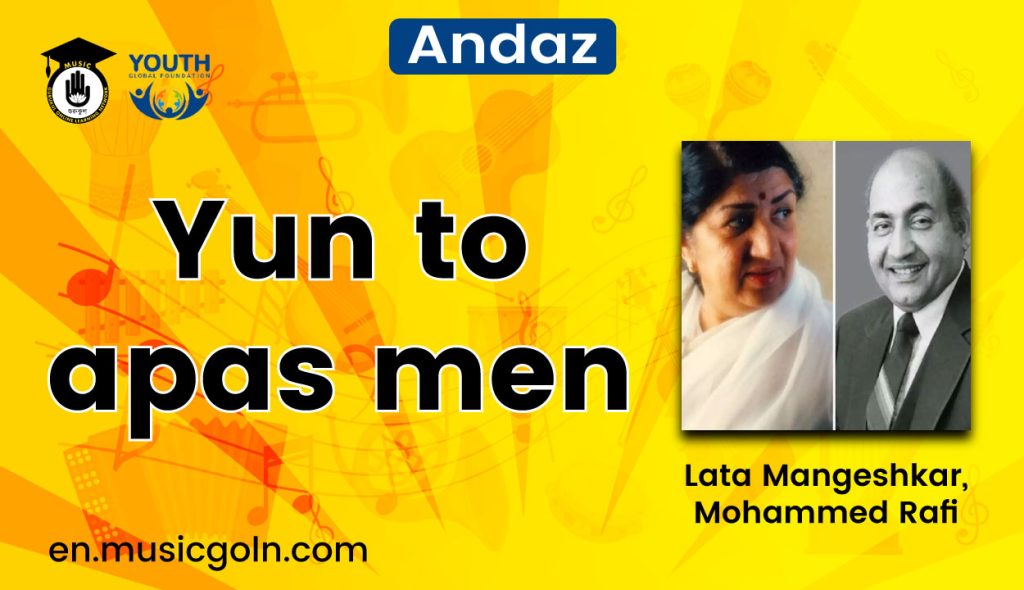
Yun to apas men lyrics | Lata Mangeshkar, Mohammed Rafi | Andaz | 1949
Singers: Lata Mangeshkar, Mohammed Rafi
Music Directors: Naushad Ali
Lyricists: Majrooh Sultanpuri
Composers: Naushad Ali
Mohammed Rafi was an Indian playback singer and musician. He is considered to have been one of the greatest and most influential singers of the Indian subcontinent Rafi was notable for his versatility and range of voice; his songs varied from fast peppy numbers to patriotic songs, sad numbers to highly romantic songs, qawwalis to ghazals and bhajans to classical songs. He was known for his ability to mould his voice to the persona and style of the actor lip-syncing the song on screen in the movie. He received six Filmfare Awards and one National Film Award. In 1967, he was honored with the Padma Shri award by the Government of India. In 2001, Rafi was honoured with the “Best Singer of the Millennium” title by Hero Honda and Stardust magazine. In 2013, Rafi was voted for the Greatest Voice in Hindi Cinema in the CNN-IBN’s poll.
He recorded songs for over a thousand Hindi films and in many Indian languages as well as some foreign languages, though primarily in Urdu and Punjabi, over which he had a strong command. He recorded as many as 7,000 songs throughout his career, spanning several languages and dialects such as Konkani, Assamese, Bhojpuri, Odia, Bengali, Marathi, Sindhi, Kannada, Gujarati, Tamil, Telugu, Magahi, Maithili, etc. Apart from Indian languages, he also sang in some foreign languages, including English, Farsi, Arabic, Sinhala, Mauritian Creole, and Dutch
Yun to apas men lyrics | Lata Mangeshkar, Mohammed Rafi | Andaz | 1949
Yun to apas men lyrics :
Yun toh apas mein bigadate
Hain khafa hote hain
Milane wale kahi
Milane wale kahi
Ulfat mein juda hote hain
Hain zamane mein ajab
Cheez mohabbat wale
Hain zamane mein
Hain zamane mein ajab
Cheez mohabbat wale
Dard khud banate hain
Khud apani dawa hote hain
Dard khud banate hain
Khud apani dawa hote hain
Milane wale kahi
Ulfat mein juda hote hain
Ha hale dil mujhse naa
Puchho meri najaren dekho
Hale dil mujhse
Hale dil mujhse naa
Puchho meri najaren dekho
Raz dil ke toh nigaho
Se ada hote hain
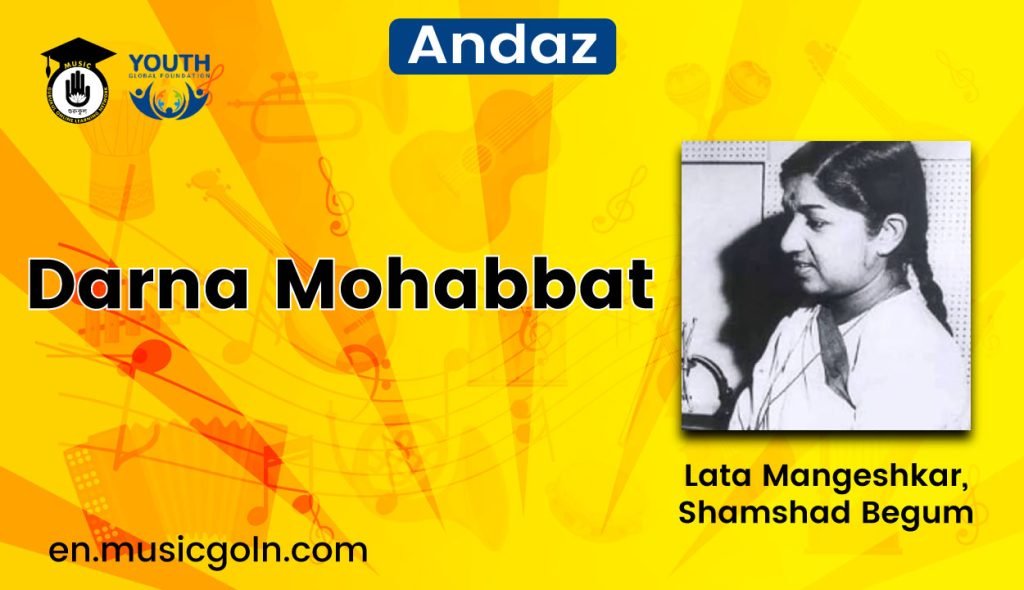
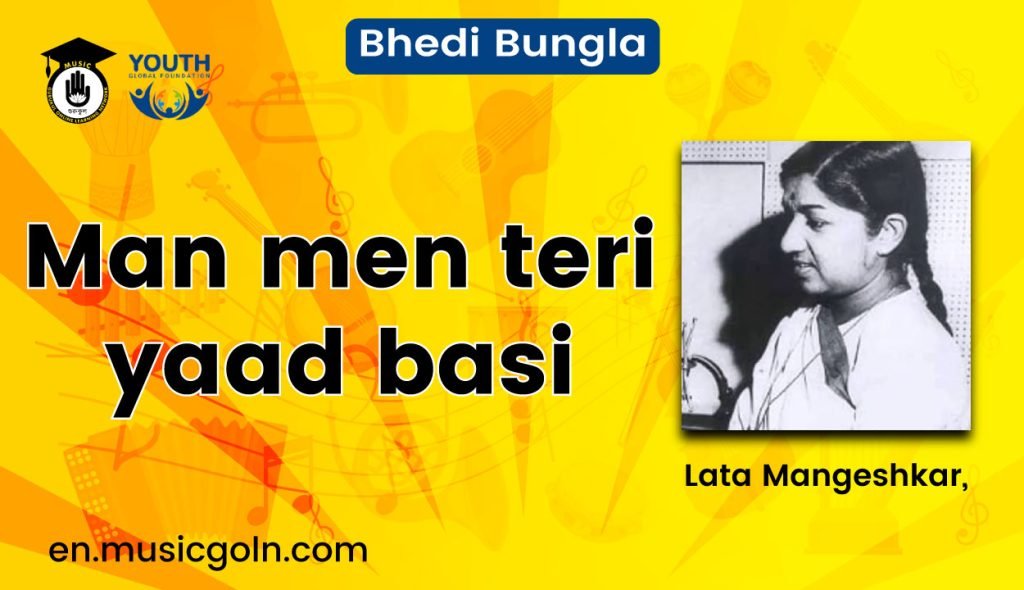
Lata Mangeshkar (born as Hema Mangeshkar; 28 September 1929 – 6 February 2022)was an Indian playback singer and occasional music composer. She is widely considered to have been one of the greatest and most influential singers in India.Her contribution to the Indian music industry in a career spanning eight decades gained her honorific titles such as the “Queen of Melody”, “Nightingale of India”, and “Voice of the Millennium”.
Lata recorded songs in over thirty-six Indian languages and a few foreign languages, though primarily in Marathi, Hindi, and Bengali. Her foreign languages included English, Russian, Dutch, Nepali, and Swahili.She received several accolades and honors throughout her career. In 1989, the Dadasaheb Phalke Award was bestowed on her by the Government of India.
In 2001, in recognition of her contributions to the nation, she was awarded the Bharat Ratna, India’s highest civilian honour; she is only the second female singer, after M. S. Subbulakshmi, to receive this honour. France conferred on her its highest civilian award, Officer of the National Order of the Legion of Honour, in 2007.
She was the recipient of three National Film Awards, 15 Bengal Film Journalists’ Association Awards, four Filmfare Best Female Playback Awards, two Filmfare Special Awards, the Filmfare Lifetime Achievement Award and many more. In 1974, she was one of the first Indian playback singers to perform at the Royal Albert Hall in London, UK. Her last recorded song was “Saugandh Mujhe Is Mitti ki” released on 30 March 2019 as a tribute to the Indian Army and the Nation.
At one point, she appeared in the Guinness World Records, which listed her as the most recorded artist in history between 1948 and 1987.
Initially, she is said to have imitated the acclaimed singer Noor Jehan, but she later developed her own style of singing.She brought a new signature style of singing to Indian film music, moving away from mehfil-style performances to suit both ‘modern’ and ‘traditional’ female protagonists. A soprano range voice with less volume or amplitude, she had enough weight in her voice to give definite shape to the melody of Indian film songs.
Although she had limited coloratura skills in her early career, she developed better tone and pitch as she progressed in her playback career. Lyrics of songs in Hindi movies were, in those days, primarily composed by Urdu poets and contained a higher proportion of Urdu words, including the dialogue.
Actor Dilip Kumar once made a mildly disapproving remark about her accent while singing Hindi/Urdu songs; so for a period of time, she took lessons in Urdu from an Urdu teacher named Shafi.In subsequent interviews she said that Noor Jehan heard her as a child and had told her to practice a lot. The two stayed in touch with each other for many years to come
In 2001, Mangeshkar was awarded the Bharat Ratna, India’s highest civilian honour.
In the same year, she established the Master Deenanath Mangeshkar Hospital in Pune, managed by the Lata Mangeshkar Medical Foundation (founded by the Mangeshkar family in October 1989). In 2005, she designed a jewellery collection called Swaranjali, which was crafted by Adora, an Indian diamond export company. Five pieces from the collection raised £105,000 at a Christie’s auction, and a part of the money was donated for the 2005 Kashmir earthquake relief. Also in 2001, she recorded her first Hindi song with the composer Ilaiyaraaja, for the film Lajja;
she had earlier recorded Tamil and Telugu songs composed by Ilaiyaraaja.
Her song “Wada Na Tod” was included in the film Eternal Sunshine of the Spotless Mind (2004) and in its soundtrack.