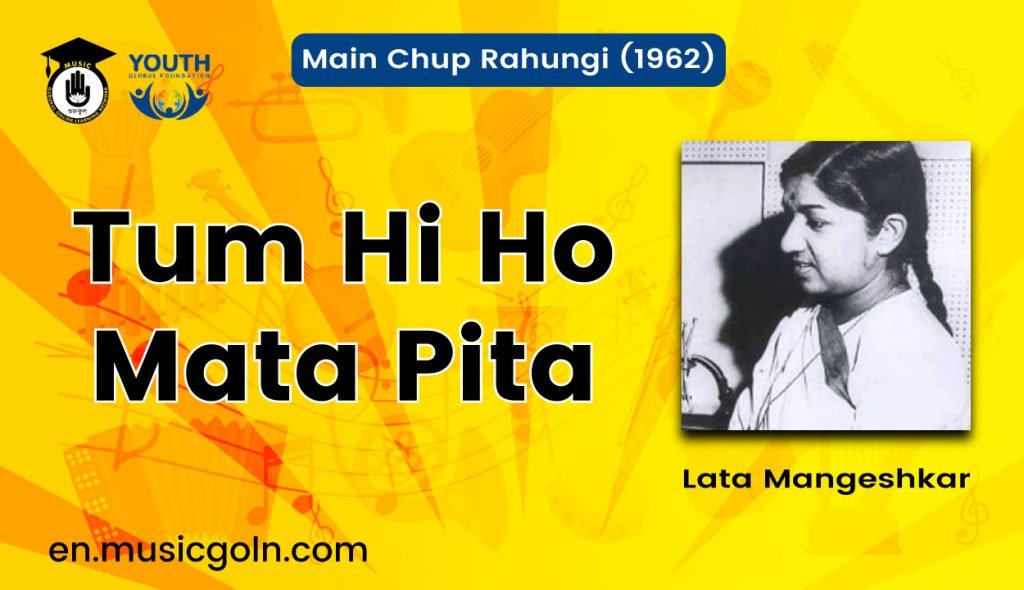
“Tumhi Ho Mata Pita” is perhaps one of the most culturally significant songs in the history of Indian cinema. Released in the 1962 film Main Chup Rahungi, it transcended the boundaries of the silver screen to become a universal prayer in schools and households across India. It is a song of pure surrender and devotion, embodying the essence of faith.
The music was composed by Chitragupta, a music director known for his melodic simplicity and grace. He crafted a tune that is both hummable and deeply meditative. The lyrics by Rajendra Krishan are profound yet accessible, describing the Divine as everything—mother, father, friend, and guide. The metaphor of being the “dust of the feet” (charnon ki dhool) or the “boatman” (khewayya) of life’s journey resonates deeply with the spiritual fabric of India.
Picturized on a young boy (played by Babool) singing in a school setting while Meena Kumari watches emotionally, Lata Mangeshkar’s rendition is legendary. She sang it with a “shuddhta” (purity) and calmness that makes the listener feel an immediate sense of peace. It remains a definitive example of how film music can become a part of a nation’s daily spiritual life.
Tum Hi Ho Mata Pita Lyrics | Main Chup Rahungi | Lata Mangeshkar | 1962
Tum Hi Ho Mata Pita Lyrics :
Tumhi ho mata pita tumhi ho
Tumhi ho bandhu sakha tumhi ho
Tumhi ho mata pita tumhi ho
Tumhi ho bandhu sakha tumhi ho
Tumhi ho saathi tumhi sahaare
Koi na apna siwa tumhaare
Aaa aaa
Tumhi ho saathi tumhi sahaare
Koi na apna siwa tumhaare
Tumhi ho naiyya tumhi khewayya
Tumhi ho bandhu sakha tumhi ho
Tumhi ho mata pita tumhi ho
Tumhi ho bandhu sakha tumhi ho
Jo khil sake na wo phool ham hain
Tumhaare charnon ki dhool ham hain
Aaa aaa
Jo khil sake na wo phool ham hain
Tumhaare charnon ki dhool ham hain
Daya ki drishti sadaa hi rakhna
Tumhi ho bandhu sakha tumhi ho
Tumhi ho mata pita tumhi ho
Tumhi ho bandhu sakha tumhi ho.