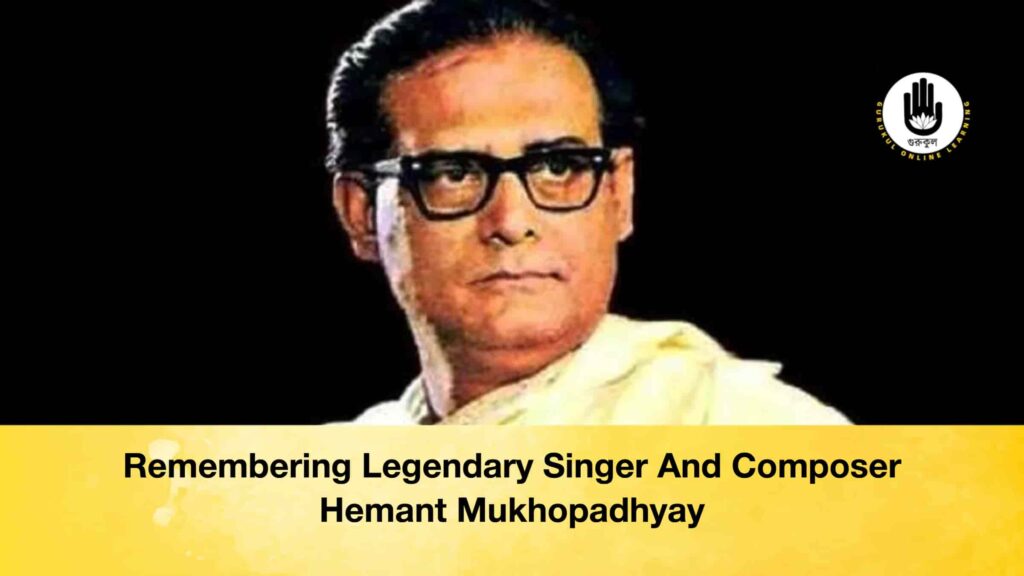
Hemant Mukhopadhyay remains an iconic figure in the musical history of the Indian subcontinent, celebrated for his extensive contributions as a singer, composer, and music director. Performing in Bengali, Hindi, and various other regional languages, he earned a vast and enduring following. His distinct voice brought classic melodies to life, making his renditions deeply embedded in the cultural fabric of the region.
Table of Contents
Cultural Impact and Notable Works
Mukhopadhyay’s versatile vocal range allowed him to master both popular cinema songs and traditional compositions. Tracks like the Hindi melody “Hai Apna Dil To Aawara” and the Bengali cinematic duet “Ei Poth Jodi Na Sesh Hoy” became immensely popular and remain etched in public memory.
Beyond playback singing for commercial cinema, Mukhopadhyay was a highly revered exponent of Rabindrasangeet (the songs written and composed by Rabindranath Tagore). Critics and audiences alike noted that Tagore’s compositions found a unique, resonant expression through his rich baritone voice, which helped popularise the genre across a broader demographic.
Humanitarian Role in the 1971 Liberation War
During the 1971 Bangladesh Liberation War, Mukhopadhyay emerged as a dedicated friend to the people of Bangladesh. His music served as a powerful source of inspiration and morale for millions fighting for independence. His rendition of the patriotic song:
“Ma go, bhabna keno? Amra tomar shantipriyo shanto chhele, tobu shotru ele ostro hate dhorte jani…”
(O Mother, why do you worry? We are your peace-loving, quiet sons, yet we know how to take up arms when the enemy arrives…)
was regularly broadcast over the airwaves of Swadhin Bangla Betar Kendra (the radio station operated by Bangladeshi revolutionaries). The anthem provided profound emotional support and encouragement to freedom fighters and citizens alike.
In addition to broadcasting motivational tracks, Mukhopadhyay actively collaborated with other prominent Indian artists to support the humanitarian crisis caused by the conflict. He performed at numerous refugee camps and benefit concerts, directly collecting and donating the proceeds to aid the millions of Bangladeshi refugees who had sought shelter in India.
Awards, Institutional Refusals, and Legacy
Throughout his long and illustrious career, Mukhopadhyay received widespread institutional acclaim, including winning the National Film Award for Best Male Playback Singer twice. However, he was also notable for his independent stance regarding state honours; he famously declined both the Padma Shri and the Padma Bhushan—two of India’s highest civilian awards—proffered by the Government of India.
Born on 16 June 1920, the legendary artist passed away on 26 September 1989. On the anniversary of his birth, music enthusiasts and historians across the subcontinent continue to pay deep tribute to his artistic genius and his selfless humanitarian efforts.
Key Biographical and Career Milestones
| Date / Year | Notable Milestone or Historical Event | Cultural / Humanitarian Impact |
| 16 June 1920 | Born in Varanasi (Benares), British India. | Marks the birth of a future musical icon. |
| Mid-20th Century | Released landmark songs like “Hai Apna Dil To Aawara” and “Ei Poth” | Consolidated his position as a leading playback singer. |
| 1971 | Performed for refugee funds; tracks broadcasted via Swadhin Bangla Betar Kendra. | Provided crucial humanitarian aid and morale during the war. |
| Career Span | Won the Indian National Film Award on two occasions. | Recognized officially for his outstanding playback singing. |
| Institutional Stance | Declined the prestigious Padma Shri and Padma Bhushan awards. | Demonstrated a rare independence from state accolades. |
| 26 September 1989 | Passed away in Calcutta (now Kolkata), West Bengal, India. | Marked the end of an era for subcontinental music. |