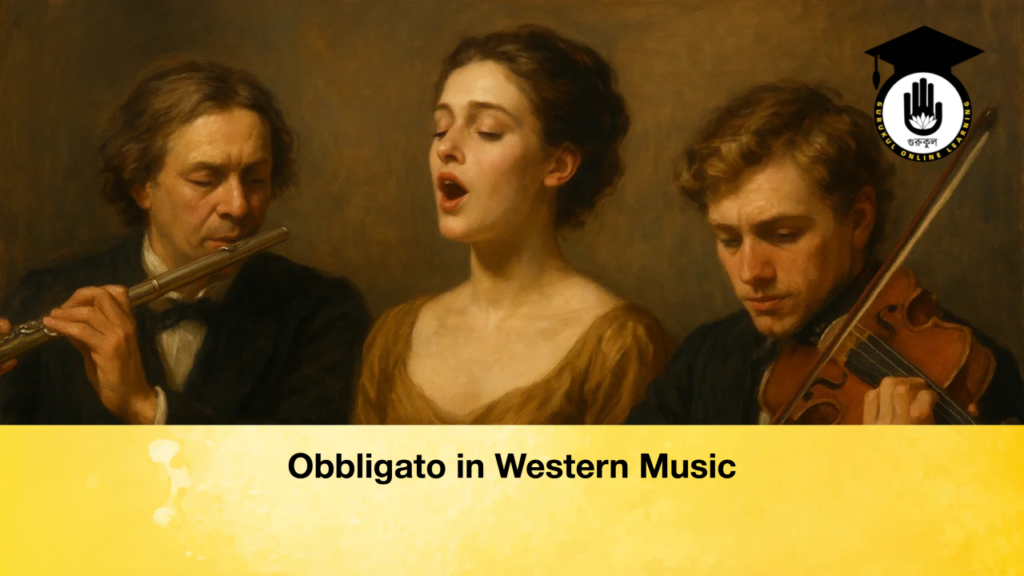
In Western music, especially within the classical tradition, composers have developed a refined vocabulary to guide performers in shaping sound, texture, and expression. Among these terms, “Obbligato” occupies a unique and often misunderstood position. Though it appears frequently in scores from the Baroque period onwards, many students mistakenly confuse it with accompaniment, ornamentation, or improvisation.
In reality, Obbligato represents a core compositional concept, one that reveals how Western music balances structure and expression. To understand obbligato is to gain insight into how melodies converse, how instruments share emotional responsibility, and how music moves beyond a single linear voice into a layered artistic form.
Table of Contents
What Does “Obbligato” Mean?
The word obbligato comes from Italian and literally means “obligatory” or “required.”
In musical terms, it refers to:
A melodic or instrumental part that is essential to the composition and must be performed as written.
An obbligato line is not optional, not merely supportive, and not decorative in the casual sense. The music is considered incomplete if the obbligato part is removed or altered.
This distinguishes obbligato from:
- ad libitum parts (optional),
- figured accompaniment,
- or improvised embellishments.
Obbligato vs. Accompaniment
A common misunderstanding is to assume that any secondary instrument is “accompaniment.” However, obbligato differs fundamentally.
Accompaniment
- Supports the main melody harmonically or rhythmically
- Can often be simplified or altered
- Does not carry independent melodic importance
Obbligato
- Has its own melodic identity
- Interacts directly with the main theme
- Is written with precise intention by the composer
- Cannot be omitted without damaging the composition
In many works, the obbligato line functions almost like a second voice, engaging in dialogue with the principal melody.

Historical Origins of Obbligato
Baroque Period (c. 1600–1750)
The concept of obbligato developed most clearly during the Baroque era, when composers began exploring polyphony, counterpoint, and expressive instrumental writing.
Composers such as:
- Johann Sebastian Bach
- George Frideric Handel
- Antonio Vivaldi
- Georg Philipp Telemann
frequently used obbligato instruments—especially violin, flute, oboe, and organ—in vocal arias and sacred works.
In Baroque music:
- The voice often carried the main text.
- The obbligato instrument expressed emotional subtext, spiritual intensity, or dramatic tension.
For example, in Bach’s cantatas, a solo violin or oboe obbligato may mirror, anticipate, or emotionally comment on the sung text.
Classical Period (c. 1750–1820)
During the Classical era, clarity, balance, and formal structure became central. Obbligato writing continued, but with greater elegance and restraint.
- Mozart frequently used obbligato clarinet, flute, or oboe in operatic arias.
- These lines often softened emotional expression or highlighted lyrical beauty.
- The obbligato instrument became an expressive partner rather than a purely decorative element.
Romantic Period (19th Century)
In the Romantic era, obbligato lines became more emotionally charged.
Composers such as:
- Schubert
- Brahms
- Mahler
- Richard Strauss
used obbligato instruments to heighten drama, longing, melancholy, and introspection.
In German Lieder, for example, a piano or instrumental obbligato often expresses what the text leaves unsaid—inner emotion, memory, or longing.
20th Century and Beyond
Though the Italian term “obbligato” appears less frequently in modern scores, the concept remains very much alive.
It is found in:
- orchestral music,
- film scores,
- jazz arrangements,
- popular ballads,
- and even electronic compositions.
A violin line soaring above a film score, or a saxophone weaving around a jazz vocal, often functions as an obbligato—even if the term is not explicitly written.

Musical Characteristics of an Obbligato Line
An obbligato part typically shows the following features:
1. Melodic Independence
It is not just harmonic filler; it has a recognisable melodic shape.
2. Structural Necessity
The piece loses meaning or balance without it.
3. Expressive Purpose
Obbligato often conveys emotion, atmosphere, or narrative depth.
4. Rhythmic Contrast
It may move independently from the main melody to create interest.
5. Instrument-Specific Writing
Composers often write obbligato lines to showcase the expressive capabilities of a particular instrument.

Obbligato in Vocal Music
One of the most important uses of obbligato appears in vocal music.
In these works:
- The voice delivers words and primary melody.
- The obbligato instrument adds emotional colour and nuance.
For example:
- A flute obbligato may symbolise innocence or longing.
- An oboe obbligato may express sorrow or devotion.
- A violin obbligato may convey passion or intensity.
This duality allows music to speak on multiple emotional levels at once.

Obbligato in Instrumental Music
In instrumental works, obbligato appears as:
- a secondary melodic voice,
- a featured solo line within an ensemble,
- or a contrapuntal partner.
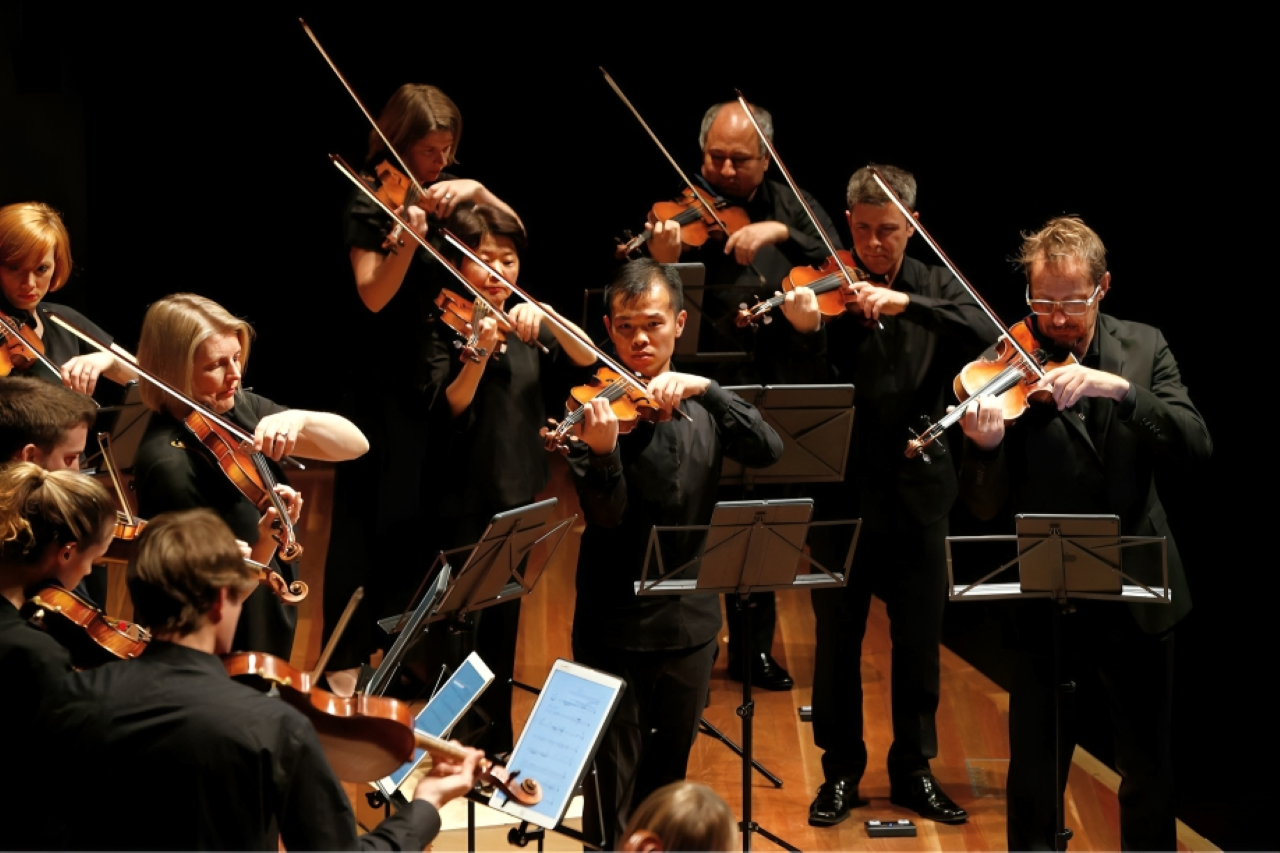
In chamber music and orchestral writing, obbligato lines help:
- avoid monotony,
- enrich texture,
- and maintain musical dialogue.
Performance Practice: Playing an Obbligato
Performing an obbligato part requires sensitivity and awareness.
Balance
The obbligato must be clearly heard but must not overpower the main melody.
Phrasing
Its phrasing should complement the principal line, often breathing together.
Tone and Colour
Obbligato lines often demand a lyrical, singing quality.
Rhythmic Precision
Even expressive freedom must remain rhythmically secure.
Listening
Good obbligato performance depends on constant listening and interaction.

Why Composers Use Obbligato
Composers choose obbligato for several artistic reasons:
- To add emotional depth
- To create musical dialogue
- To highlight instrumental colour
- To strengthen structural unity
- To expand expressive possibilities
Obbligato allows music to speak in layers, much like voices in a conversation.

Obbligato in Modern Genres
Though rooted in classical tradition, obbligato concepts appear widely today.
Film Music
Solo violin, flute, or cello lines acting as emotional narrators.
Jazz
Saxophone or trumpet obbligato behind vocal improvisation.
Pop and Rock
String or guitar lines woven into the main melody.
Musical Theatre
Orchestral obbligato lines reinforcing character emotion.
Educational Value of Studying Obbligato
For students of music, understanding obbligato helps develop:
- musical listening skills,
- ensemble awareness,
- phrasing and balance,
- expressive interpretation,
- and compositional insight.
It teaches that music is not only about melody and harmony, but about relationship and interaction.
Obbligato as a Musical Voice
Obbligato is far more than a technical instruction. It is a philosophy of musical partnership.
It represents:
- cooperation between voices,
- emotional dialogue,
- and the idea that music gains meaning through interaction.
To understand obbligato is to understand how Western music transforms sound into expression—how instruments and voices come together to say more than one line ever could alone.
For musicians, listeners, and learners alike, recognising the role of obbligato opens a deeper doorway into the soul of Western musical thought.