
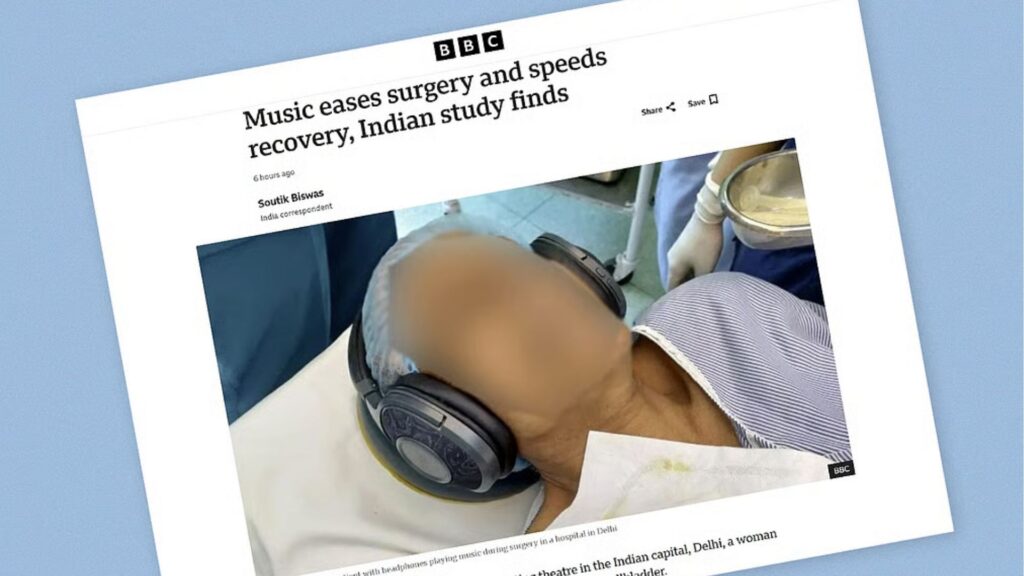
A new study from Maulana Azad Medical College in New Delhi suggests that playing music for patients during surgery can reduce stress, lower the amount of anaesthetic required, and accelerate recovery.
In the study, patients undergoing laparoscopic gallbladder removal – a minimally invasive “keyhole” procedure – were given mild music via headphones while under general anaesthesia. Although largely unconscious, parts of the brain remain responsive to sound. Researchers found that those who listened to music required lower doses of anaesthetic drugs such as propofol and fentanyl.
“By reducing the amount of anaesthetic, patients wake up more quickly, with a clearer mind and fewer post-operative side effects such as increased heart rate or elevated stress hormones,” said Dr Farah Hussain, an anaesthesia specialist and certified music therapist involved in the study. “The aim is to discharge patients promptly while ensuring they remain alert, pain-free, and physiologically stable.”
The 11-month study included 56 adults aged 20 to 45, randomly divided into two groups. Both received standard anaesthesia, but only one group listened to calming flute or piano music. Those who heard music experienced faster recovery, more stable blood pressure, and lower cortisol levels than those who did not.
Professor Sonia Wadhawan, director of the intensive care department, explained that even under general anaesthesia, the body responds to surgical stress. Music, by calming these internal physiological reactions, can make surgery a less stressful experience.
While music therapy in medicine is not new – long used in stroke rehabilitation and mental health – its application in the technologically-driven environment of an operating theatre represents a subtle but significant innovation. Early results suggest that integrating music could reshape conventional approaches to surgery and patient recovery.