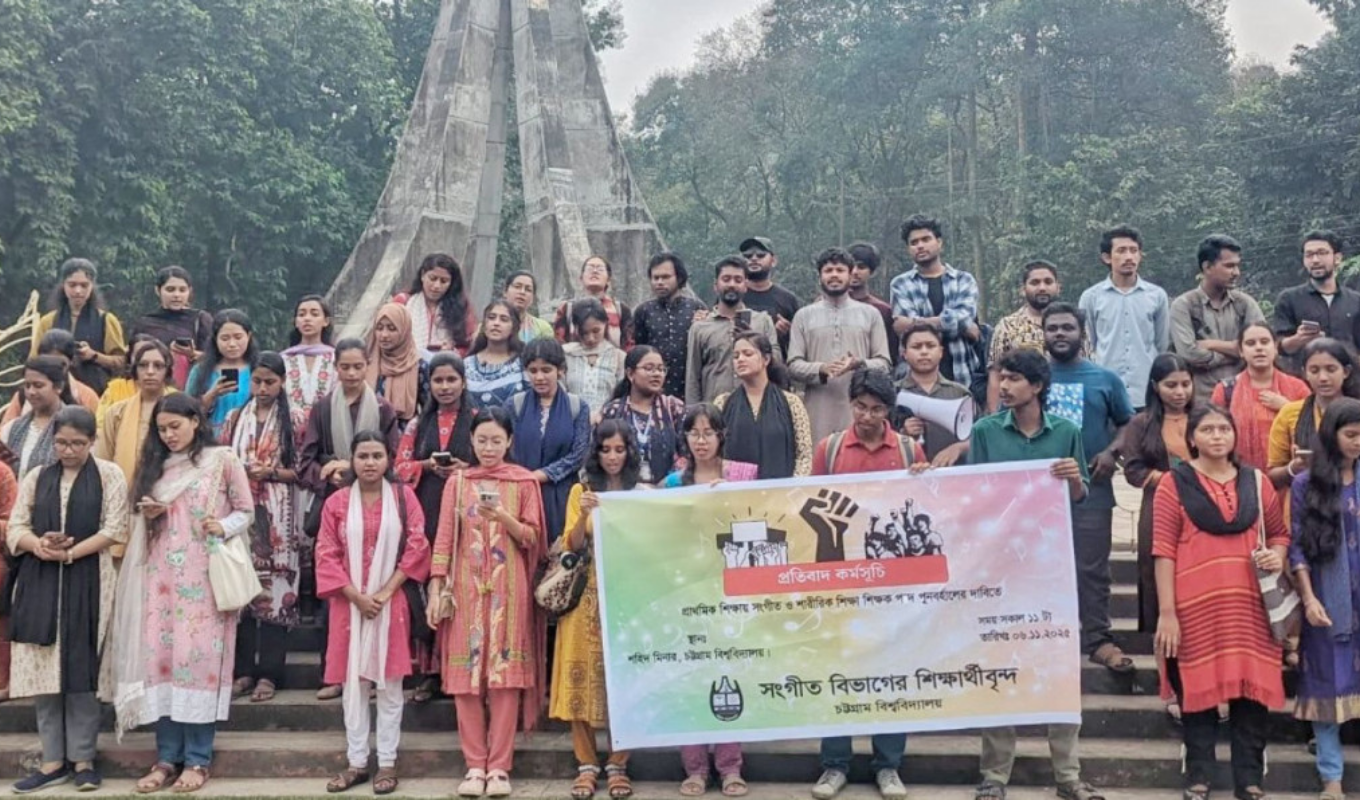
The recent decision by the interim government to suspend the recruitment of music and physical education teachers in Bangladesh’s government primary schools has raised serious concerns. Although the country is undergoing various policy reforms within public administration, it remains essential to uphold democratic values and ensure that the interests of ordinary citizens stay at the forefront.
Music and physical education are not merely recreational subjects; they play a vital role in shaping well-rounded individuals. Through music education, students learn discipline, creativity, and an understanding of cultural heritage. Physical education similarly contributes to students’ mental well-being. At a time when many young people struggle with mental health issues, music and sport offer healthy outlets, easing academic pressure and supporting emotional balance.
Many Muslim-majority countries treat music education as a fundamental part of schooling. Kuwait, for instance, has required weekly music classes for all schoolchildren since the early years of its public education system. In 1958, the country established its Music Education Supervisor Office, introducing a formal curriculum. Turkey also mandates music as a primary school subject and updated its curriculum in 2007 to incorporate modern teaching approaches that enhance creativity.
Bangladesh’s public education system is already lagging behind its peers. Reducing subjects that promote creativity and critical thinking could worsen the situation by making students more dependent on rote memorisation. The decision may also widen existing social disparities. Lower-middle- and middle-class families often rely on public schools, and limiting cultural and physical development opportunities will deepen inequalities between socio-economic groups.
Music and sports are integral to Bangladeshi culture. From traditional folk songs to lullabies and wedding music, songs have shaped our collective identity across generations. Similarly, Bangladesh’s achievements in cricket and other sports have brought global recognition. Without proper opportunities in childhood, the next generation of athletes will not emerge to represent the nation in future decades.
As a democracy, Bangladesh must protect values that encourage unity, equality, and creativity. A school curriculum should reflect cultural heritage and artistic practices that connect all citizens, regardless of social class or belief. Removing such subjects risks undermining the holistic development of children and contradicts democratic ideals.
While many Muslim-majority nations are modernising their curricula by integrating music and sports to develop balanced future citizens, Bangladesh risks moving backward if it diminishes these important components of education. Reform does not mean discarding everything; long-standing subjects that have benefited learners for decades should not be eliminated in the name of change. Improving education requires research-based curriculum updates, investment in extracurricular activities, enhanced teacher training, and better pay—rather than removing essential subjects.
Table: Music Education in Different Countries
| Country | Key Characteristics | Policy/Year |
|---|---|---|
| Kuwait | Weekly compulsory classes for all students | Music Education Supervisor Office (1958) |
| Turkey | Music is mandatory in primary schools | Revised curriculum in 2007 |
| Malaysia | Part of national standards-based curriculum | KSSR emphasises holistic growth |