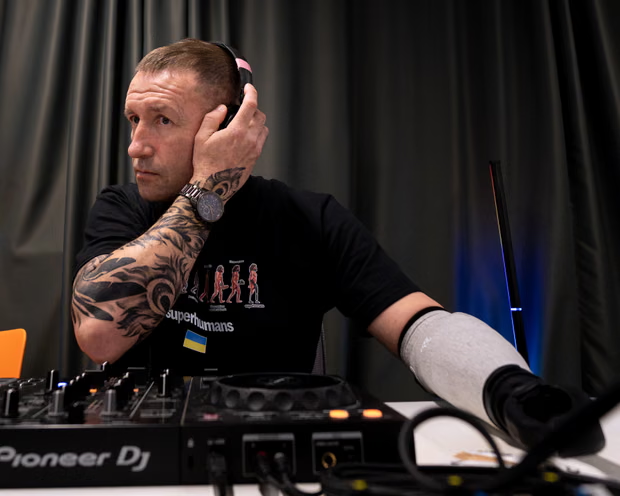
In Ukraine, music is becoming a vital tool for recovery, offering therapeutic relief to war-wounded veterans. At the Superhumans centre near Lviv, a unique music therapy programme called EnterDJ is helping soldiers who have suffered severe physical and psychological trauma. The programme, which teaches war veterans to mix electronic dance music, is providing them with a sense of purpose, rehabilitation, and new opportunities to perform.
Table of Contents
A Different Soundscape Amidst War
In a country where the sounds of war—air defence interceptions, drone attacks, and explosions—have been the backdrop of daily life since Russia’s invasion, music still resonates. Despite the ongoing conflict, clubs in Kyiv remain open, with electronic dance music (EDM) continuing to be a crucial part of the Ukrainian cultural fabric. Iconic venues like K41 have transformed into bomb shelters before returning to fundraising efforts, and new creative spaces such as Abo Records have emerged from abandoned factories.
However, it’s at the Superhumans centre where the true rehabilitative power of music is most evident. The centre provides critical medical and psychological support to veterans, including prosthetics and reconstructive surgery. It is here that EnterDJ, a programme launched in partnership with Victory Beats (a charity focused on emotional healing through music), is helping veterans rediscover joy, creativity, and healing.
From Trauma to DJing: The EnterDJ Programme
The EnterDJ programme was the brainchild of Volodymyr Nedohoda, founder of Victory Beats, and DJ Vlad Fisun. It began after Howard Buffett, the son of billionaire Warren Buffett and a key supporter of the Superhumans centre, suggested forming a Superhumans band. Nedohoda recalls working with a 25-year-old soldier with severe brain damage who, after an initial sound therapy session, requested a DJ console. This moment was the catalyst for EnterDJ.
“We started with a relaxation session to calm the nervous system, but it triggered pain due to the low frequencies,” Nedohoda explains. “When he felt better, he asked for a DJ console.” This soldier’s progress was remarkable: over time, he used his injured hand to mix music, eventually performing a DJ set a year later, despite ongoing health challenges.
EnterDJ’s format is simple: all participants need is a laptop, headphones, and an internet connection. Some veterans join from home, while others attend the dedicated space at the Superhumans centre. The programme is designed to immerse them fully in the process, using electronic music as a tool for rehabilitation.
Veterans Find Healing Through Music
Oleksandr, one such veteran, shares how DJing helped him recover. “I was serving in Poltava when a missile destroyed my leg,” he recalls. “I remember everything—the blast, calling my commander, and realising I’d never walk the same way again.” Despite the trauma, Oleksandr remained optimistic. “I woke up knowing my leg was gone, but thankful my body and brain were OK. That’s the most important.”
For Oleksandr, EnterDJ became part of his daily routine. “If I had a hard day, I would DJ to get some good moments, or celebrate when I gained something in my rehabilitation,” he explains. Within six months, he was performing alongside the Lviv Philharmonic Orchestra, using a Midi controller to layer sounds over a composition written by British composer Nigel Osborne.
“I started with sound therapy, using singing bowls, but when I saw the DJ console, it reminded me of my school days,” he says. “Before being fitted with a prosthetic leg, EnterDJ helped distract me from trauma and rehab.” Oleksandr now uses music as a way to heal, composing ambient tracks for therapeutic purposes and adding electronic effects to live classical instruments.
The Power of Music: From Therapy to Performance
Roman Cherkas, who lost both his lower limbs in a mortar strike, found a similar therapeutic outlet through DJing. “Music is my remedy,” he says. “When I go two days without it, the phantom pains, bad thoughts, and depression start. Music gives me energy, it switches my brain on and makes me feel better.” After months of rehabilitation, Roman performed in Lviv at a showcase hosted by the drum’n’bass label Hospital Records. His recovery has been marked by his deep engagement with music, sometimes mixing for hours at a stretch.
Olga Rudneva, CEO of Superhumans, is proud of the veterans who have gone on to perform on big stages, but emphasises the primary goal of the EnterDJ programme: “Positive healing effects for patients; reduced phantom pain; improved mood and socialisation.”
A Broader Impact
While EnterDJ’s primary focus is on war veterans, the programme also reaches children and adults across Ukraine. Its creators believe in the power of music to heal beyond individual trauma, contributing to the cultural rebuilding of a nation ravaged by conflict. Yevhen Skrypnyk, CEO of Victory Beats, is a passionate advocate for music’s transformative role. “In Ukraine, we’re fighting for our lives and our culture,” he says. “Through music, we can connect people and break down stereotypes. It’s a powerful tool against Russian propaganda.”
Andreas Boesch, partnership curator at EnterDJ, agrees: “Music is an international language that everyone can understand. It’s a way to share the greatness of Ukraine’s resilience with the world.”
For the veterans who have embraced DJing at the Superhumans centre, music is more than just therapy—it’s a way to reclaim control over their lives, connect with others, and find new meaning amidst the ongoing war.