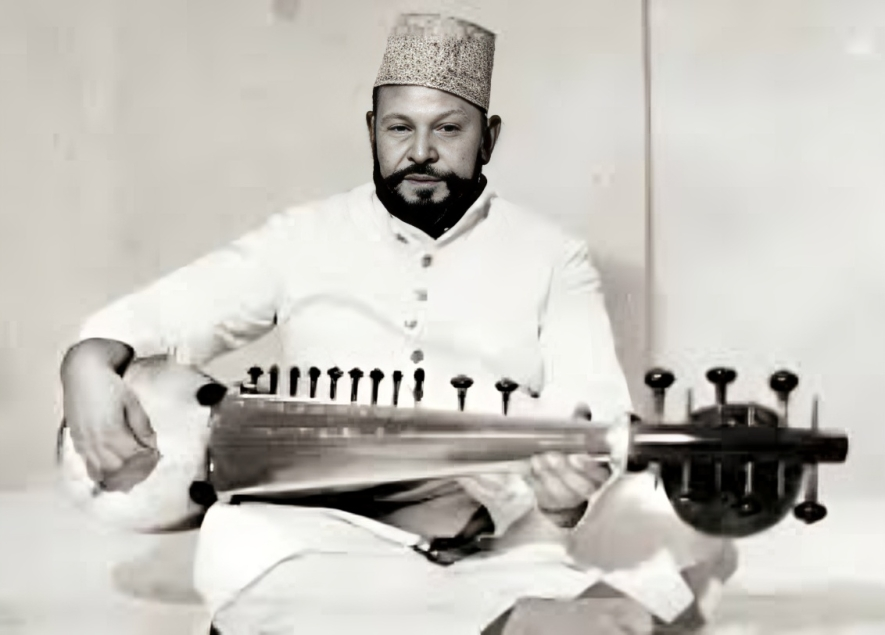

There are artists whose presence in music is loud and commanding, and then there are those whose influence flows quietly, persistently—like a mountain stream that never truly disappears. Happy Akhand belonged to the latter kind. Though his life was tragically short, his contribution to Bangladeshi modern music remains deep, enduring and profoundly influential.
Many still remember the unforgettable scene from the 1980 film Ghuddy. A young man, guitar in hand, sings with gentle intensity: “Amar pran je mane na… ke banshi bajay re.” Seated beside him is a captivated Suborna Mustafa, while Rashedul Islam Asad and Nayla Azad Nupur appear on screen. That young singer was Happy Akhand, barely twenty years old at the time, yet already radiating a rare musical maturity.
Born on 12 October 1960 in Dhaka, Happy’s musical journey began remarkably early. At just thirteen, in 1973, he stunned audiences at a cultural programme at the University of Dhaka’s TSC by playing the keyboard with the band Spondon. The audience sensed instantly that this was no ordinary teenager. That boy, and the young man later seen in Ghuddy, were one and the same.
Happy was guided and inspired by his elder brother, Lucky Akhand—already an emerging composer and a performer for Swadhin Bangla Betar Kendra. Lucky recognised his brother’s extraordinary aptitude for instruments at a very young age and nurtured it with care. While Happy gravitated towards Latin blues and jazz, Lucky exposed him to Russian, Roman and Greek music, shaping an eclectic musical sensibility that later defined Happy’s work.
At only fifteen, Happy recorded the timeless song “Abar Elo Je Shondha.” The song’s origin has since become part of Bangladeshi musical folklore—conceived by the riverbank at dusk, inspired by nature, and later completed with lyrics by S. M. Hedayet. When Lucky Akhand played the recording to legendary Indian singer Manna Dey in Kolkata, the maestro reportedly praised Happy’s voice, calling it remarkable for its tone and projection.
National recognition followed swiftly. In 1977, Happy performed the song on Bangladesh Television’s programme Bornali, improvising it with jazz influences. The response was overwhelming. That same programme also featured “Ei Prithibir Buke Ashe Jara,” once again showcasing his instinctive grasp of rhythm and harmony.
Beyond singing, Happy was a gifted arranger and instrumentalist. Even as a teenager, he arranged music for songs by Nasir Uddin Ahmed Apu and Firoz Shai. In 1979, alongside Firoz Rashid, he co-founded the band Miles. Their debut album Miles (1982) was Bangladesh’s first full English-language album, followed by A Step Further in 1986. Although a brilliant guitarist, Happy primarily played keyboards for the band before leaving in 1986.
Happy Akhand’s artistry shone brightest in his subtle fusion of blues, jazz, reggae and Bengali melody. Songs such as “Nil Nil Shari Pore,” “Pahari Jhorna,” and “Tumi Amar Prothom Premer Gaan” remain masterclasses in musical restraint and emotional depth. The opening guitar solo of the latter is still regarded as one of the most romantic passages in Bengali music history.
Equally significant was his role as a mentor. At a time when formal music education was scarce, Happy taught countless musicians through informal sessions lasting hours. Icons such as Ayub Bachchu, Shafin Ahmed, James, Kumar Bishwajit and even renowned Kolkata composer Madhu Mukherjee benefited from his guidance.
Despite his brilliance, the era was unkind to rock and fusion musicians. Limited opportunities, political uncertainty and cultural resistance left Happy deeply frustrated. On 28 December 1987, the music world lost him forever. He was just 27.
Though his life ended early, Happy Akhand’s influence continues to ripple through generations. Even today, when one sees a young bohemian walking with a guitar slung over his shoulder, it is difficult not to think of Happy Akhand—the quiet pioneer whose music still flows, endlessly.
Happy Akhand: Key Facts :
| Category | Details |
| Full Name | Happy Akhand |
| Date of Birth | 12 October 1960 |
| Place of Birth | Dhaka, Bangladesh |
| Date of Death | 28 December 1987 |
| Professions | Singer, Composer, Guitarist, Keyboardist, Music Director |
| Notable Film | Ghuddy (1980) |
| Iconic Songs | Abar Elo Je Shondha, Ke Banshi Bajay Re |
| Band | Miles (Co-founder) |
| Albums | Miles (1982), A Step Further (1986) |
| Legacy | Pioneer of modern, jazz-influenced Bengali music |