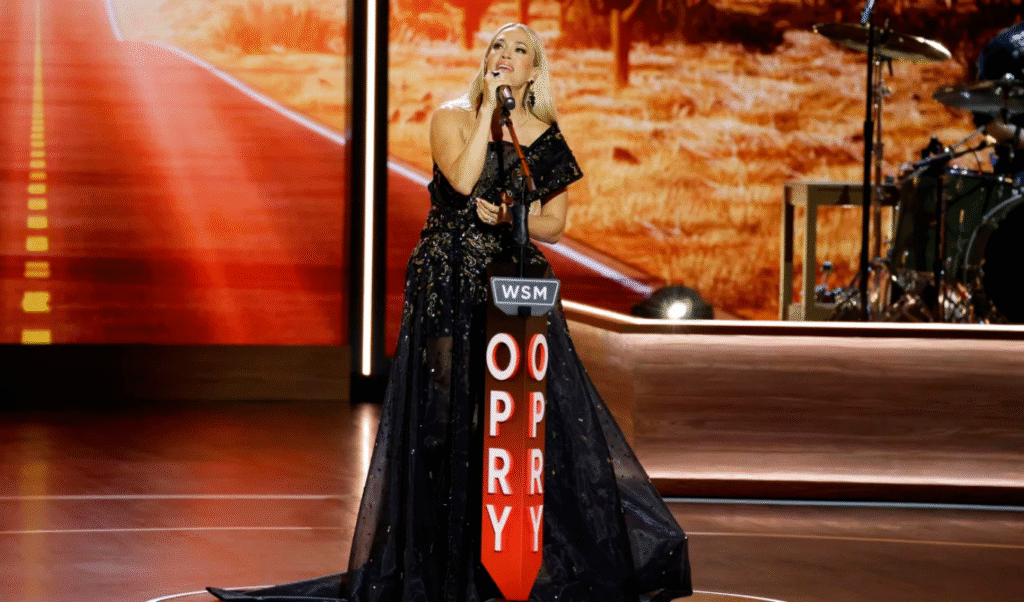
The Grand Ole Opry, the world’s longest-running live radio show, is celebrating 100 years of preserving and shaping the legacy of country music. The ultimate symbol of this remarkable history is a simple but iconic piece of wooden flooring. This 6-foot circle, worn and weathered over time, was originally part of the stage at the Opry’s former home, the Ryman Auditorium in downtown Nashville. When the Opry moved to the Grand Ole Opry House in 1974, the historic flooring was carefully transported to the new venue, where it remains as a silent witness to decades of performances from the genre’s greatest stars.
Visitors to the Opry today can only glimpse this sacred spot through a guided tour, which includes the chance to stand at the same microphone used by countless country legends. This unique circle has witnessed the performances of many different artists, from traditional ballad singers to modern country superstars, and it continues to represent the heart of country music’s history.
The Opry’s journey began on 28th November 1925, when it first broadcast on WSM radio in Nashville. At the time, country music was not yet a recognised genre, but the Opry quickly became a central hub for emerging country artists. What began as a radio “barn dance” to promote National Life and Accident Insurance soon became a vital platform for local talent and an essential part of the music scene in Nashville. Artists with backgrounds in vaudeville, Appalachian folk, and even Black musical traditions, such as harmonica virtuoso DeFord Bailey, graced the Opry stage.
The show was revolutionary for its time, combining a mix of music, comedy, and dance with a touch of social conservatism, while also fostering new styles of country music. In the 1940s, Bill Monroe introduced bluegrass, while stars like Roy Acuff and Minnie Pearl became national icons. Over time, the Opry solidified its place as an essential part of the American cultural fabric, helping define who belonged under the “big tent” of country music.
As the Opry’s popularity grew, it relocated to the Ryman Auditorium in 1943, where it stayed for over 30 years before moving to its current home at the Grand Ole Opry House in 1974, situated within the Opryland USA theme park. By this point, the Opry had become a cultural landmark, bridging the gap between pop culture and the preservation of country music’s roots. The Opry also helped propel country artists to fame, making an appearance on the show a key milestone for any aspiring star.
Throughout the decades, the Opry’s relationship with its artists has evolved. Legendary figures such as Porter Wagoner, Jim Ed Brown, and Jeannie Seely made the Opry their home, committing to perform regularly. For rising stars like Kathy Mattea in the 1980s, the Opry became a platform to honour and uplift the institution while gaining wider recognition.
As the country music industry evolved, so did the Opry’s priorities. Today, the show continues to function as a multigenerational family, with both its long-standing members and newer stars ensuring the tradition endures. Gina Keltner, associate producer of talent, explains that the Opry’s leadership now looks for members who represent a mix of devotion to the institution and the potential for long-lasting impact. Vince Gill, for example, who joined in 1991, is one of the many artists who continue to perform regularly, ensuring the Opry’s continued vitality.
The Opry has also sought to remedy oversights of previous eras, such as inducting artists who have displayed a long-term commitment to the show. Recent inductees like Lainey Wilson represent the new wave of stars, who, like the icons before them, bring something unique to the country music landscape.
Lainey Wilson, one of the most significant country stars of her generation, made her Opry debut in 2020 and was officially inducted in 2024. Growing up in rural Louisiana, Wilson visited the Opry as a child and knew that being a member would mark the pinnacle of her career. She spent years honing her distinct sound and image, drawing inspiration from country legends like Dolly Parton and Reba McEntire. By the time she made her Opry debut, she had already achieved commercial success with hits and major TV roles, solidifying her place in the country music elite.
Wilson’s induction, presented by Garth Brooks and Trisha Yearwood, marked a milestone not just for her career, but for the Opry’s legacy of recognising those who truly “get” country music. As Wilson continues to rise in fame, her devotion to the Opry and its history remains steadfast, demonstrating the importance of maintaining strong connections to country music’s roots.
Another notable recent inductee is Kathy Mattea, whose membership came later in her career, over 40 years after she first achieved commercial success. Mattea’s vocal style and emotionally resonant songwriting have earned her a place among the Opry’s legends, making her a fitting addition to its ongoing legacy.
The Opry continues to play a vital role in fostering the careers of today’s country music stars, while preserving the history of the genre. As the show looks towards its next 100 years, it remains committed to recognising the country stars of the future, ensuring the Opry’s influence and significance remain intact for generations to come.
Key Moments in Grand Ole Opry History
| Year | Event |
|---|---|
| 1925 | Opry first aired on WSM in Nashville, Tennessee. |
| 1943 | The Opry moved to the Ryman Auditorium, becoming a national cultural hub. |
| 1974 | The Opry relocated to the Grand Ole Opry House, within the Opryland USA theme park. |
| 1980s | The Opry helped launch the careers of modern country stars like Kathy Mattea. |
| 2024 | Lainey Wilson and Kathy Mattea inducted, marking a new chapter in the Opry’s legacy. |