
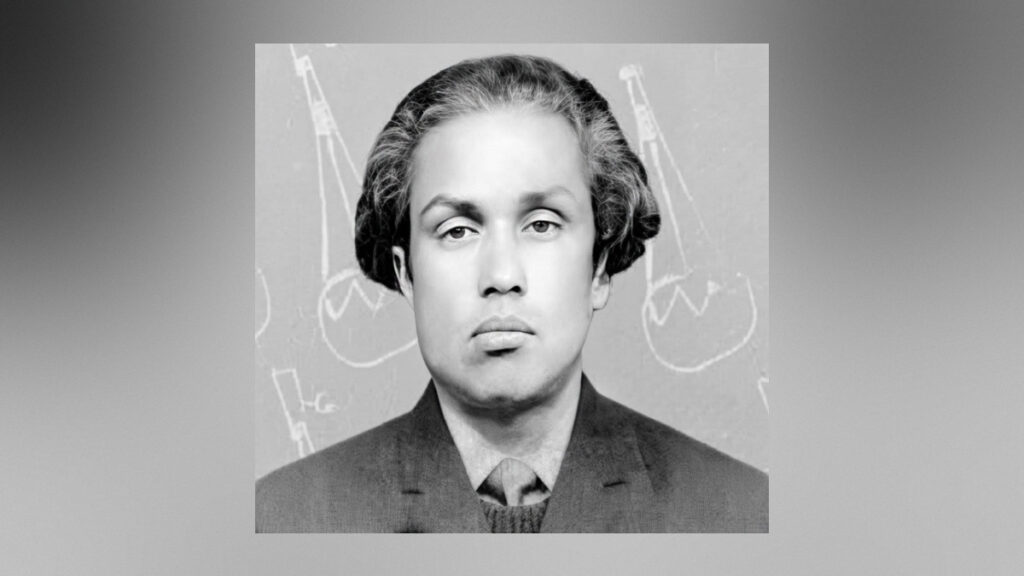
Bangla folk music has been shaped by generations of poets and spiritual practitioners whose compositions extend far beyond entertainment. Their songs explore love, separation, humanity, faith and the search for the Creator, offering listeners reflections on life and the human soul. Among the most distinguished figures in this tradition was Durbin Shah, a Baul poet, mystic practitioner and celebrated interpreter of Bengali folk literature.
His songs offer a glimpse into the inner world of human experience. Some express the soul’s longing for the Creator, while others explore the depth of human affection, the pain of separation and the mysteries of life and death. Through simple folk expressions and evocative imagery, he conveyed complex spiritual and philosophical ideas, establishing a distinctive place for himself in the history of Bangla music.
Table of Contents
Early Life and Family Background
Durbin Shah was born on 2 November 1920, corresponding to 15 Kartik 1327 in the Bengali calendar, at Taramoni Tila in Noarai village, on the northern bank of the Surma River. The area was then part of Chhatak police station in Sunamganj subdivision, Sylhet district. The hill where he was born later became known as Durbin Tila in his honour.
His full name is recorded as Makhdumzada Shah Syed Kalim Ahmed Durbin Shah. His father, Safat Ali Shah, was a Sufi practitioner, while his mother, Hasina Banu, was a Pirani. He therefore grew up in a family environment shaped by spiritual practice and religious traditions.
Durbin Shah lost his father when he was just seven years old. Despite this early bereavement, the spiritual heritage of his family left a lasting impression on his outlook and creative development. The influence of Sufi thought and mysticism would later become central to his musical compositions.
In 1946, he married Surfa Begum.
A Diverse World of Music and Spiritual Thought
Sufism, mysticism and spiritual philosophy formed the foundation of Durbin Shah’s music. Yet his creative interests extended well beyond these subjects. His songs reflected the many dimensions of human life, including love, separation, relationships, religious beliefs, folk traditions and social experiences.
His compositions covered a remarkable range of musical forms and themes. These included Baul songs, songs of separation, regional folk music, mass songs, Maljora, Jari, Sari, Bhatiyali, Goshtho, songs of union and Radha-Krishna devotional poetry. He also wrote Hamd and Naat, Marfati songs, compositions remembering spiritual guides, the Prophet and saints, as well as devotional and instructional songs.
His work explored Sufi philosophy, the nature of the human body, the relationship between the body and soul, deeper spiritual truths and patriotic themes. Questions surrounding birth, death, human existence and the relationship between the individual and the Supreme Being also featured prominently in his compositions.
One of the defining qualities of his music was his ability to express profound philosophical ideas through familiar words and images drawn from everyday folk life. His language was accessible, but the thoughts behind it often invited deeper reflection. Listeners could connect with the emotional surface of a song while also considering its wider implications for identity, existence and the meaning of life.
Several of his compositions became widely recognised among admirers of Bangla folk music. They include:
- ‘Nirjon Jamunar Kule Bosiya Kadambatale’
- ‘Amar Ontoray Amar Kolijay’
- ‘Bondhu Jodi Hoito Nodir Jol’
- ‘Ochena Ek Jongla Pakhi Thake Matir Pinjiray’
- ‘Amay Ami Chinte Gele Baje Boro Gondogol’
- ‘Ki Ghor Banailare Malik O Mistri’
Each song carries its own emotional and philosophical character. Some express longing and the pain of separation, while others reflect on the human condition and the search for spiritual understanding.
The image of an unfamiliar wild bird confined within an earthly cage, for example, offers a striking metaphor for the mystery of human existence. Such imagery allows listeners to consider the relationship between the visible body and the unseen self. This ability to transform ordinary folk expressions into reflections on deeper questions was central to Durbin Shah’s artistic identity.
Published Works and Literary Contributions
The preservation and publication of Durbin Shah’s compositions played an important role in securing his place in Bengali folk literature. Among his notable publications was the Premsagar Palligeeti series, which brought together a substantial body of his songs.
His published works included:
- Premsagar Palligeeti, Volume I (1950)
- Premsagar Palligeeti, Volume II (1950)
- Premsagar Palligeeti, Volume III (1968)
- Premsagar Palligeeti, Volume IV (1968)
- Pak Bangla Bhagya Niyantran Geeti (1970)
- Premsagar Palligeeti, Volume V (1973)
These publications helped preserve his compositions in written form and made them more accessible to readers, researchers and musicians. This was particularly significant for a tradition in which many songs were passed down orally, through performances and from one generation to another.
A further contribution to the preservation of his work came in 2010, when folk literature researcher Sumankumar Das edited and published Durbin Shah Samagra. A second edition appeared in 2014, incorporating additional previously unpublished and uncollected songs. The expanded volume contained a total of 355 compositions.
The collection offered a broader view of his creative range and provided an important resource for those interested in studying his music and its place in Bengali folk culture.
Recognition Beyond Bangladesh
Durbin Shah’s musical reputation was not confined to the region where he was born and raised. His work also reached Bengali communities living abroad.
In 1967, he travelled to England at the invitation of expatriate Bengalis. Another legendary Baul practitioner, Shah Abdul Karim, accompanied him on the visit.
His songs impressed expatriate Bengalis and music enthusiasts through their lyrical depth, melodies, emotional delivery and spiritual themes. In recognition of his knowledge, musical understanding and spiritual insight, he was honoured with the title ‘Gyaner Sagar’, meaning ‘Ocean of Knowledge’.
The title reflected more than his learning. It recognised the depth of his understanding of folk traditions, spiritual practice and music. His visit also demonstrated how regional folk compositions could connect with Bengali audiences beyond their place of origin.
Death and Enduring Legacy
Durbin Shah died at his home on 15 February 1977, corresponding to 3 Falgun 1383 in the Bengali calendar. Based on his recorded birth and death dates, he was 56 years old.
Although his life was relatively short, he left behind an extensive and diverse body of work that continues to hold an important place in Bangla folk music. His compositions are not confined to a single religious or cultural tradition. Their exploration of love, separation, humanity, spirituality and the mysteries of existence gives them a wider appeal.
Durbin Shah was more than a Baul poet or mystic songwriter. He was an exceptional interpreter of Bengali folk life, Sufi philosophy and spiritual thought. His songs encourage listeners to look inward, question their identities and reflect on the relationship between human beings, the world around them and the Creator.
His contribution also lies in the way he brought philosophical depth into the language of ordinary people. Rather than relying on complicated express