
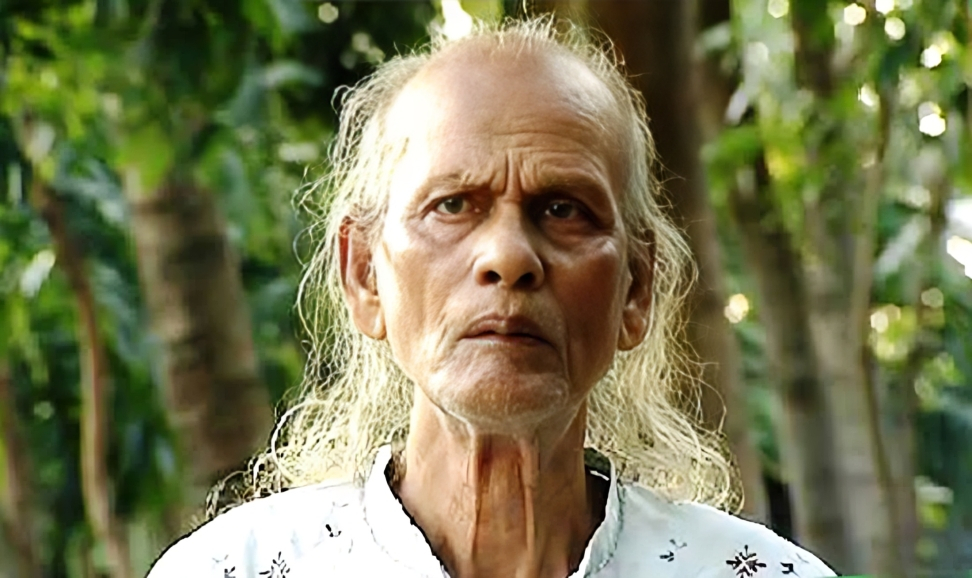
Bhati Bangla—the low-lying riverine heartland where, from the village of Ujandhol along the banks of the Kalni River in Sunamganj’s Dirai Upazila, a melody rippled forth to resonate across the hearts of the entire Bengali-speaking world. He gave verbal and musical expression to the tears, love, and self-realisation of the soil and its people. When reflecting upon this musical wizard and Baul Samrat (Emperor of Bauls), Shah Abdul Karim, a piercing sense of regret overshadows any feeling of pride today. Just as the immortal philosophical lineage of Lalon Sai infused new life into our literature and culture, Shah Abdul Karim expanded that very same wisdom in the modern era. Yet, as a nation, there is no pardon for the way we have submerged a cultural guardian of such rare stature in neglect, apathy, and institutional oblivion.
Today, when we look back, a profound vacuum and sense of guilt haunt us. We love to sing his songs, electrify concert stages with his tunes, utilise his melodies in corporate brand advertisements, and amass tens of millions of views on YouTube and social media. Yet, when it comes to preserving his genius, his life philosophy, and the memories of every turning point in his existence, our contribution remains virtually non-existent.
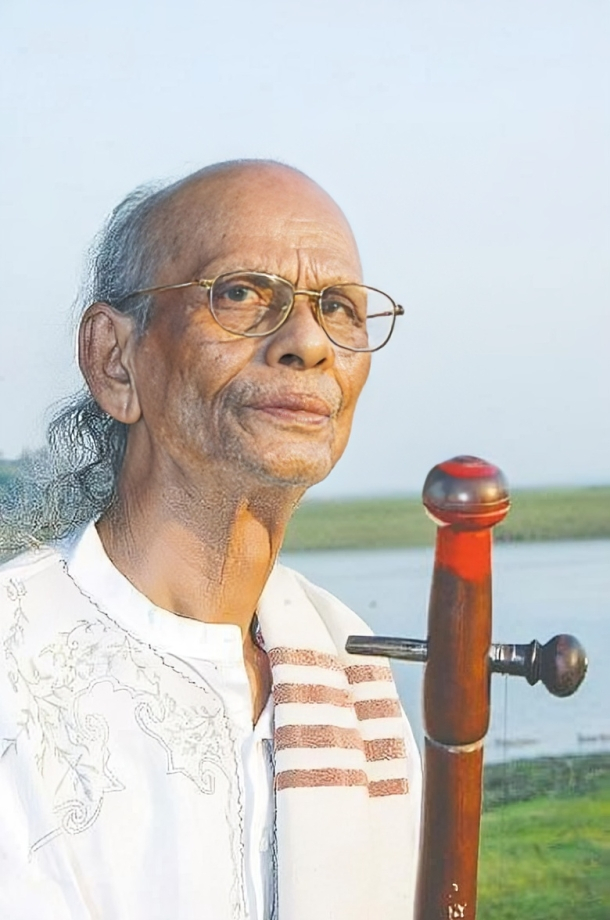
Table of Contents
Not Even Ten Hours of Video Interviews: The Irreparable Loss of an Unrecorded History
Shah Abdul Karim was not merely a singer or lyricist; he was a self-taught social thinker of our agrarian society, an egalitarian philosopher, and a cultural icon. Yet, in exchange for the monumental work he left behind throughout his lifetime, what have we managed to preserve?
If one were to scour his entire lifespan, calculating the high-definition audio-visual documents of Shah Abdul Karim speaking in his own voice, giving in-depth interviews, or recounting his life story, one would likely fail to assemble even ten hours of archived material! This is no ordinary failure; it is a matter of supreme disgrace for a nation that claims to be culturally conscious.
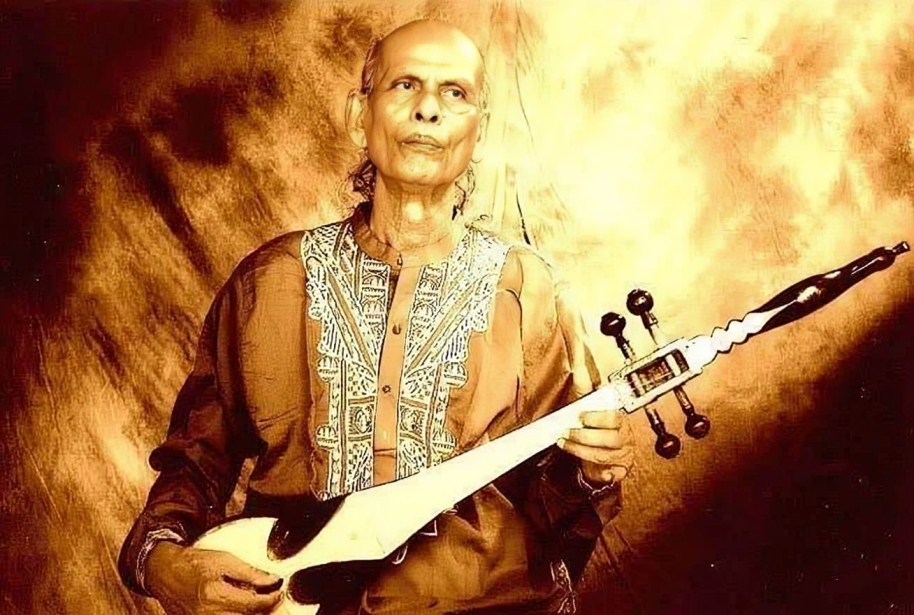
In 50 or 100 years’ time, when future generations attempt to understand this maestro, we will have left behind virtually nothing beyond a few hundred written songs to help them explore his wisdom, the blood and sweat behind his compositions, his struggles against poverty, or the rationale underlying his Baul philosophy. His diction, the expression in his eyes, his signature manner of strumming the ektara, and the visual recordings of him articulating his philosophy in the dialect of the Surma-Kalni basin were never properly documented by any institutional camera.
International and Regional Context: How the World Cherishes Its Legends
Looking at the developed world—or even across our border at India—reveals how a nation and its corporate institutions enshrine their cultural icons and guardians of melody in their hearts and archives. When comparing India’s institutional and private archival initiatives with our own state of cultural poverty, one hangs one’s head in shame:
1. Ford Foundation and International Archival Grants (South Asia)
The international development agency, the Ford Foundation, played a revolutionary role in preserving folk music, Baul traditions, and oral heritage in India from the 1980s onwards. By funding India’s Archives and Research Centre for Ethnomusicology (ARCE), they digitised thousands of hours of rare folk music, artist interviews, and field recordings. The Ford Foundation also supported Komal Kothari’s Rupayan Sansthan in preserving the tunes of Rajasthan’s Langa and Manganiyar musicians, ensuring those marginal artists are preserved on the global stage today. Yet, despite possessing a maestro of Shah Abdul Karim’s stature in Bangladesh, we failed to initiate any joint venture to draw the attention of the Ford Foundation or other international trusts to institutionally document his life and work.
2. ITC Sangeet Research Academy (ITC SRA, Kolkata)
ITC SRA in Kolkata represents a unique model of Corporate Social Responsibility (CSR) and cultural preservation. Established in 1977 by ITC Limited—a conglomerate operating in cigarettes and hotels—the academy invested tens of millions of rupees to sustain India’s ancient guru-shishya (master-disciple) tradition and build a comprehensive digital archive of classical masters. Thousands of hours of rare classical ragas, masterclasses, and extensive in-depth interviews with gurus are preserved in its library. Masters such as Ustad Badrul Hasan or Pandit Nigamananda found not only financial security there, but had every breath of their artistry recorded for posterity.
3. ARCE and the American Institute of Indian Studies
Located in Gurugram, India, the Archives and Research Centre for Ethnomusicology (ARCE) houses over 50,000 hours of field recordings of folk music and traditional performances. Field interviews and songs of artists from the most remote corners of India have been scientifically catalogued and preserved there, accessible to researchers worldwide.
4. Bob Dylan Center and the Smithsonian Institution (USA)
To preserve the life and work of the American folk and rock bard Bob Dylan, the ‘Bob Dylan Center’ was established in Tulsa, Oklahoma. It houses over 100,000 rare items, including Dylan’s handwritten draft notebooks, thousands of hours of unreleased studio audio, personal sketches, and hundreds of hours of extensive interviews. Furthermore, the Smithsonian Institution in the United States records the voices and biographical chronicles of every folk artist at state expense.
5. BBC Sound Archive and Lok Virsa (Pakistan)
In the United Kingdom, the BBC Permanent Archive and the British Library Sound Archive preserve every moment of The Beatles or John Lennon—down to informal rehearsal audio and casual interviews. For John Lennon alone, the BBC archives hold hundreds of hours of audio-visual interviews. Meanwhile, Pakistan’s ‘Lok Virsa’ in Islamabad stands as a world-class national museum and repository for folk culture. Master tapes containing hundreds of hours of interviews, rehearsal footage, and rare live performances of artists like Nusrat Fateh Ali Khan or Reshma are meticulously digitised and preserved there.
Yet in our country, despite having an international-standard musical wizard like Shah Abdul Karim, we possess no high-definition master tapes of his authentic voice, nor any world-class, long-form documentary biography or institutional archive.
Karim Exploited for Commercial Gain, Yet Valued at Zero
Shah Abdul Karim’s compositions—such as “Gari Chale Na” (The Car Won’t Move), “Keno Pirit Baraili Re Bondu” (Why Did You Kindle This Love, My Friend?), “Age Ki Shundor Din Kataitam” (What Wonderful Days We Used to Spend), “Bonde Maya Lagaiche” (The Beloved Has Bound Me in Love), or “Bosonto Botase” (In the Spring Breeze)—have supplied the commercial fuel for millions of pounds’ worth of business through modern fusion and rock bands. Many remix artists have achieved stardom, wealth, and international acclaim by singing his songs, while media houses have reaped vast profits.
Yet, as the original creator struggled against poverty, old age, the grief of losing his wife, and various ailments in Dirai, Sunamganj, how many sponsors, corporate houses, or cultural guardians stepped forward to stand by his side? Very few can truthfully claim today to have established a permanent framework to support Shah Abdul Karim during his lifetime, to transcribe and preserve his songs accurately with musical notations, or to pay him regular royalties. In his lifetime, he received only a handful of modest government grants or personal assistance from a few devotees—a deeply humiliating state of affairs for an artist of international calibre.
A Severe Famine of Appreciation: No Future Legends Will Be Born
When a nation fails to properly value and appreciate its living geniuses, its cultural decline becomes inevitable. In a society where a figure like Shah Abdul Karim fights poverty his entire life, spends his final years in neglect, and dies without leaving behind even a ten-hour interview or a digital archive, the new generation will no longer feel inspired to dedicate their lives to the pursuit of folk music or philosophy.
We are living through an artificial era where earned talent is unappreciated, while cheap popularity is pampered. Due to this severe famine of appreciation, foundational talent is evaporating from our midst. Amidst the din of autotune and borrowed cultural aggression, we may never again find another ‘Shah Abdul Karim’ or ‘Lalon’. We have failed to cultivate a fertile cultural soil capable of giving birth to legends; instead, we have created a barren landscape built on neglect and oblivion.
The Path to Institutional Redemption from Our Regret
Shah Abdul Karim departed from us in 2009. Yet, if we remain idle even after all these years, history will never forgive us. Moving beyond mere verbal remorse, we must immediately undertake several urgent institutional steps:
1. Establishment of the ‘Shah Abdul Karim National Digital Archive’
A joint initiative between public and private trusts must be launched to build an open, world-class digital platform. Scattered audio-visual footage held by individuals, researchers, or television channels must be restored, upscaled, and digitised using Artificial Intelligence (AI) technologies.
2. Formation of a Trust Modelled on the Ford Foundation or ITC SRA
Our country’s major corporate groups (such as Square, PRAN-RFL, BRAC, or the banking sector) must step forward. A permanent trust should be established on the model of ITC SRA, allocating dedicated funds for research into Baul music and Shah Abdul Karim’s philosophy.
3. An Oral History Documentation Drive
High-definition video recordings must be made immediately of the elderly disciples, companions, musicians, and village elders still living in Ujandhol, Dirai, and Sunamganj, systematically documenting Shah Abdul Karim’s life story.
4. International Digitisation Funding
Applications should be made to the Ford Foundation, UNESCO, or the Smithsonian Institution for Intangible Cultural Heritage grants to take legal and scientific measures to preserve and disseminate Karim Shah’s heritage worldwide.
5. Enforcement of Royalty Laws and Copyright Protection
Distortions of his melodies and lyrics during commercial use must be legally halted, and a structured mechanism must ensure that a fair share of royalties earned from his songs reaches his successors and a dedicated Baul welfare fund.
We do not possess the capacity to repay the mountain of debt we owe to Shah Abdul Karim. We satisfied our souls by singing his tunes, yet we failed to accord the creator his rightful place of honour. Where the world meticulously digitises its minor folk artists in letters of gold, we allowed a master wizard to vanish into the shadows of neglect.
Let us, today, acknowledge our cultural bankruptcy. Shah Abdul Karim’s songs are not mere entertainment; they are the national identity card of our Bengali soul and Baul philosophy. If we fail to preserve this towering figure in documented archives, future historians evaluating our art and culture will mark our generation as an ungrateful and blind nation. To escape that historical curse, we must throw ourselves today into the monumental task of immortalising the memory and music of Karim Shah.
—
Sufi Faruq Ibne Abubakar
![Pandit Bhimsen Joshi Bhimsen Gururaj Joshi Indian Classical Vocalist Kirana Gharana 23 Aaj Muraliya Shyam Bajaye – Lyrics [ Yaman Bandish ]](https://musicgoln.com/wp-content/uploads/2025/04/Pandit-Bhimsen-Joshi-Bhimsen-Gururaj-Joshi-Indian-Classical-Vocalist-Kirana-Gharana-23-1024x1024.png "Aaj Muraliya Shyam Bajaye – Lyrics [ Yaman Bandish ] 5")