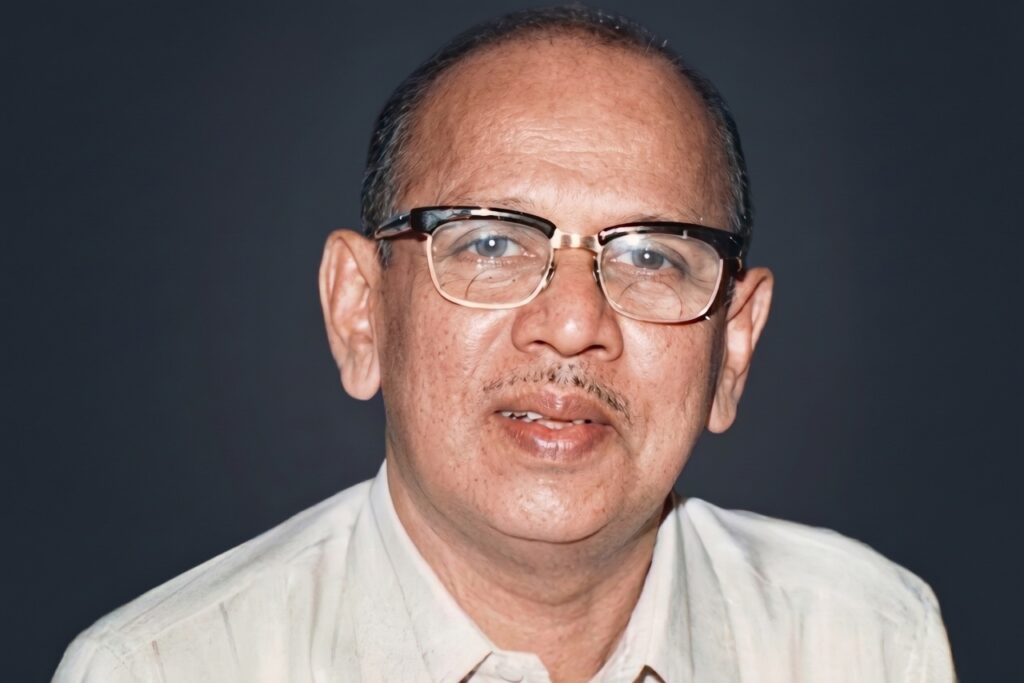
In the middle of the twentieth century, as Bengali semi-classical and popular music (modern songs, Nazrul Geeti, and film soundtracks) attained new heights of romanticism, psychological depth, and melodic refinement, Satinath Mukhopadhyay (1923–1992) stood as one of its foremost architects. From the 1940s through to the 1980s, he carved out an enduring place in the hearts of Bengali listeners through his distinctive vocal style, effortless lyricism, and singular melodic compositions.
He was widely acclaimed as the ‘Magician of Bittersweet Vocals’. Few artists in Bengali music possessed his unique capacity to express heartbreak, romance, and the quiet melancholy of life through classical artistry. His creations represented a exquisite fusion of rigorous classical grammar, the subtle embellishments of Bengali ghazals, and melodies that resonated deeply with the human soul.
Satinath Mukhopadhyay at a Glance
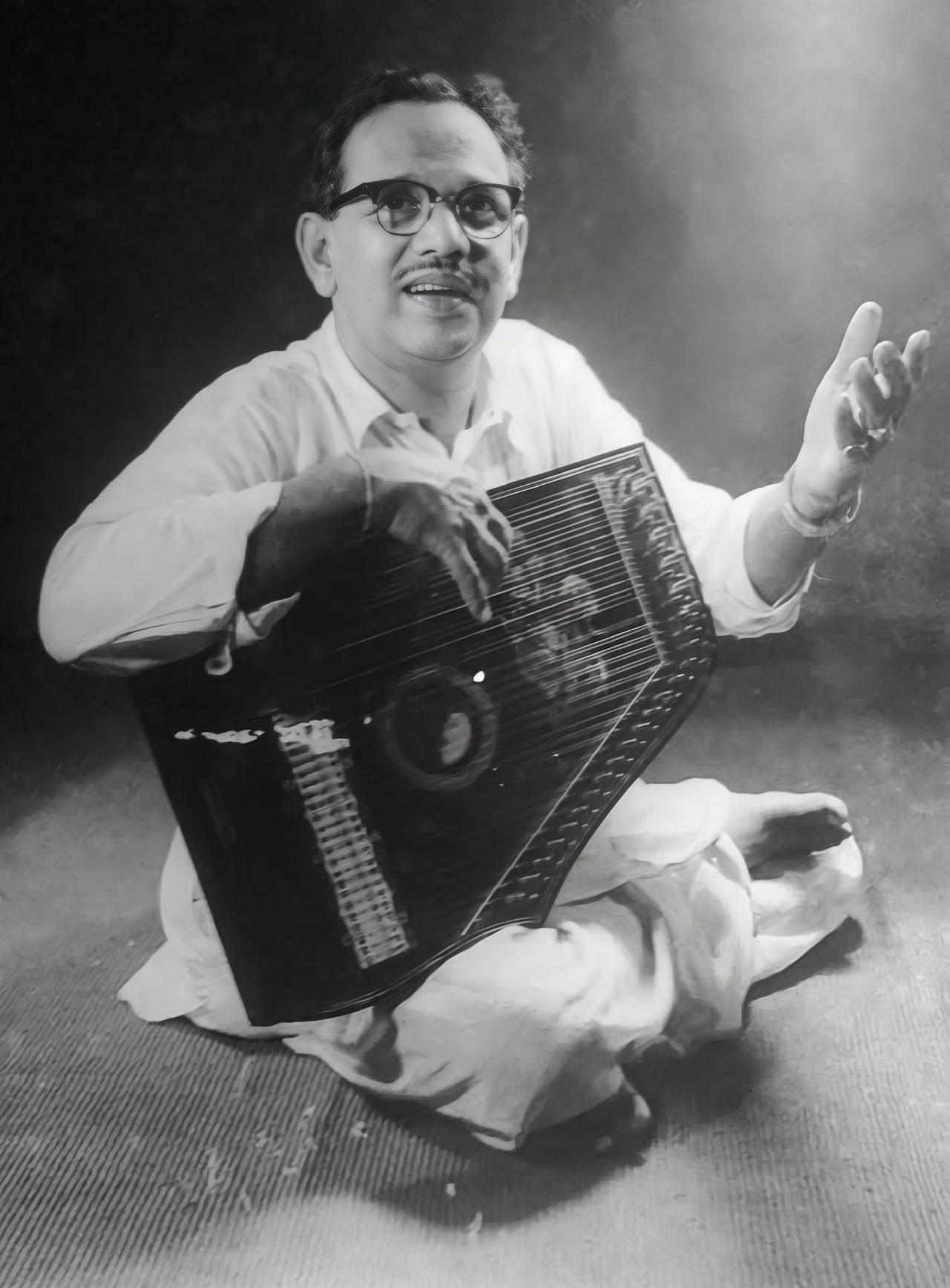
Table of Contents
Early Life and Ancestral Roots
[Ancestral Abode: Chinsurah, Hooghly] ──► [Birth: Lucknow (1923)]
                                              │
                                              ▼
                     [Upbringing & Graduation (B.A.) in Chinsurah]
                                              │
                                              ▼
                    [Arrival in Kolkata for M.A. Studies]
                                              │
                                              ▼
        [Full Immersion in Music & Discipleship under Pandit Chinmoy Lahiri]
Musical Heritage
Education
Classical Music Training and Early Career
Discipleship under Pandit Chinmoy Lahiri
- Dhrupad and Dhamar: He mastered the unyielding structural authority of classical ragas.
- Tappa and Thumri: He acquired the delicate nuances of meend, khatka, and intricate ornamentation in vocal delivery.
- Ghazal and Raga-based Music: Influenced by his birth in Lucknow and his guru’s tutelage, the temperament of North Indian ghazals and the depth of classical ragas blended seamlessly into his singing.
Balancing Civil Service and Musical Sadhana
Musical Debut: Nazrul Geeti and the Historic Ten-Year Hiatus
1942: The First Gramophone Record
“Bhul Kore Jodi Bhalobese Thaki” (If I Have Loved You by Mistake)
+-----------------------------------------------------------------------------------+
|                        Satinath's Initial Recording Journey                       |
+-----------------------------------------------------------------------------------+
|  • 1942: Debut Release       --> Nazrul Geeti "Bhul Kore Jodi Bhalobese Thaki"    |
|  • 1942–1952: The Hiatus     --> 10 years of silence, private practice & creation|
|  • 1952: Triumphant Comeback --> "Ami Chole Gele Pashaner Buke Likho Na Amar Naam"|
+-----------------------------------------------------------------------------------+
A Decade of Silence and Triumphant Return
- “Ami Chole Gele Pashaner Buke Likho Na Amar Naam” (When I am Gone, Do Not Inscribe My Name on Stone)
- “E Jibone Jeno Aaj Kichhu Bhalo Lage Na” (Nothing Seems Pleasing in This Life Today)
Spontaneous Lyricist and Composer: Tunes on Cigarette Packets
Melodies and Lyrics on Cigarette Packets
                  +-----------------------------------+
                  | Satinath's Spontaneous Creativity |
                  +-----------------------------------+
                                    │
         +--------------------------+--------------------------+
         │                                                     │
         ▼                                                     ▼
[Inspiration strikes while driving/in chats]  [Drafted on the back of cigarette packets]
         │                                                     │
         +--------------------------+--------------------------+
                                    │
                                    ▼
              [Timeless Classics: 'Jibone Jodi Deep', 'Ekhono Akashe Chand']
- Created Under the Moonlight: While driving on a moonlit night, lyrics and a melody suddenly came to him. Pulling over, he scribbled the words on the inside of a matchbox and cigarette packet, creating the timeless classic: “Ekhono Akashe Chand Oi Jege Achhe” (The Moon Still Awakes in Yonder Sky).
- Other Self-Composed Gems: Songs such as “Jibone Jodi Deep Jwalate Nahi Paro”, “Moromiya Tumi”, and “O Akash Pradeep Jwelo Na” were similarly born out of these unprompted, pure creative moments.
Master of Nazrul Geeti and Bengali Ghazals
- A Historic Recording: According to music historians, Satinath Mukhopadhyay was among the earliest male vocalists to record Nazrul’s iconic festive song “O Mon Romjaner Oi Rojar Sheshe Elo Khushir Eid”, which achieved immense popularity in his voice.
- Celebrated Nazrul Geeti Renditions:
- “Tumi Sundor Tai Cheye Thaki”
- “Poro Poro Parsee Poshak”
- “Door Deepbasini”
- “Ke Door Bone Udasi Bashi Bajay”
Personal Life: Utpala Sen and a Union of Melodies
                  +-----------------------------------+
                  |   Satinath Mukhopadhyay & Utpala  |
                  |     (A Harmonious Life & Union)   |
                  +-----------------------------------+
                                    │
         +--------------------------+--------------------------+
         │                                                     │
         ▼                                                     ▼
[Personal Solace & Mutual Respect]           [Duets & Joint Music Direction]
         │                                                     │
         +--------------------------+--------------------------+
                                    │
                                    ▼
               [Unforgettable Duets & Shared Musical Legacy]
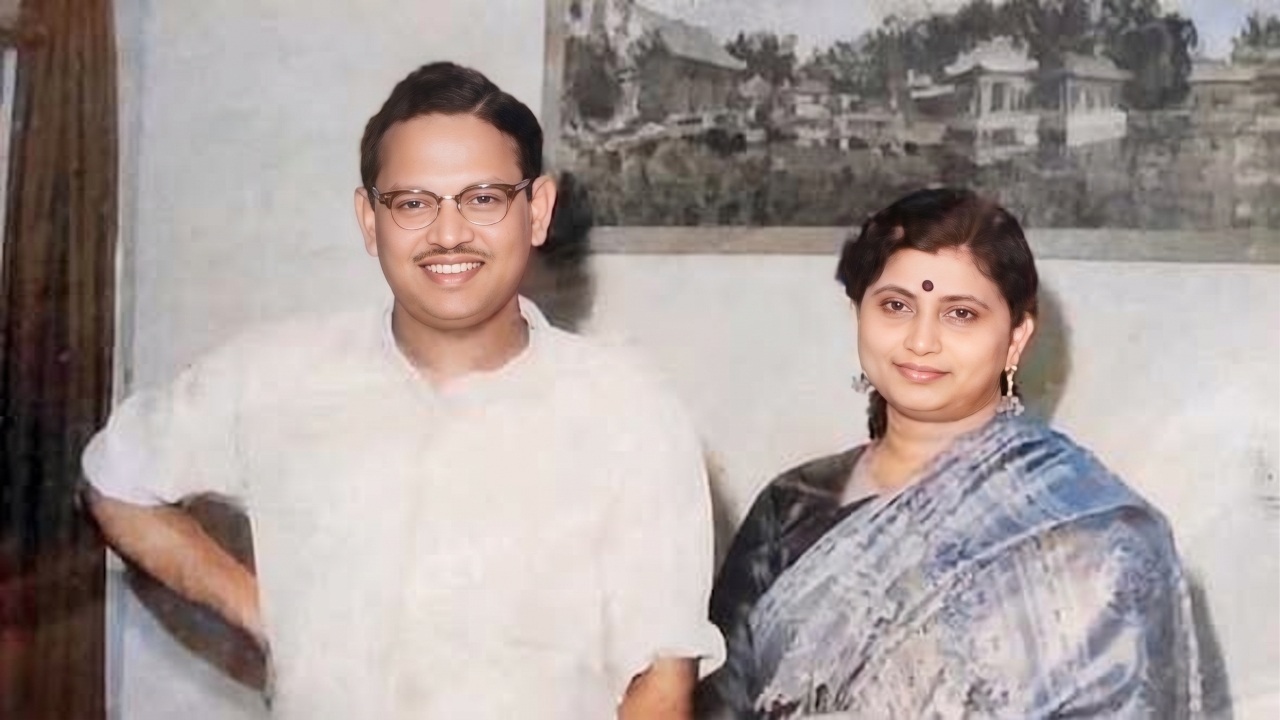
Meeting Utpala Sen
Marriage in 1968
Joint Musical Journey
Bengali Cinema: Music Direction and Film Scores
Notable Film Scores
- Louhakapat (1957): His soundtrack for this film adaptation of Jorasandha’s famous novel received widespread critical acclaim.
- Manmoyee Girls’ School (1958): He brought a lighthearted, sweet charm to the score of this popular comedy.
- Jagriti (1959): Demonstrated his versatility in scoring social dramas.
- Maa and Shes Parichoy: Blended classical and modern arrangements to match poignant narrative arcs.
Collaborations with Eminent Artists
Selected Catalogue of Timeless Compositions
| Song Title | Role / Genre | Primary Artist | Lyricist / Composer |
| Pashaner Buke Likho Na Amar Naam | Semi-Classical Modern (Melancholic) | Satinath Mukhopadhyay | Shyamal Gupta / Satinath Mukhopadhyay |
| Jibone Jodi Deep Jwalate Nahi Paro | Modern Romantic | Satinath Mukhopadhyay | Satinath Mukhopadhyay / Satinath |
| Akash Eta Meghla | Modern Classic | Utpala Sen | Pabitra Mitra / Satinath Mukhopadhyay |
| Ekhono Akashe Chand Oi Jege Achhe | Nocturne Modern | Satinath Mukhopadhyay | Satinath Mukhopadhyay / Satinath |
| O Akash Pradeep Jwelo Na | Devotional / Modern | Satinath Mukhopadhyay | Satinath Mukhopadhyay / Satinath |
| Moromiya Tumi | Romantic Expressive | Satinath Mukhopadhyay | Satinath Mukhopadhyay / Satinath |
| Jani Ekdin Amar E Jibon | Philosophical Modern | Satinath Mukhopadhyay | Shyamal Gupta / Satinath Mukhopadhyay |
| Tumi Sundor Tai Cheye Thaki | Nazrul Geeti | Satinath Mukhopadhyay | Kazi Nazrul Islam / Kazi Nazrul Islam |
| Koto Na Hajar Phool | Modern Light | Satinath Mukhopadhyay | Shyamal Gupta / Satinath Mukhopadhyay |
| Hay Borosha | Seasonal Light Classical | Satinath Mukhopadhyay | Satinath Mukhopadhyay / Satinath |
| Bondhu Hoy Oneke | Social / Romantic | Satinath Mukhopadhyay | Traditional / Satinath Mukhopadhyay |
| Palai Palai Palai Re | Light Modern | Satinath Mukhopadhyay | Satinath Mukhopadhyay / Satinath |
Analysis of Vocal Style and Musical Aesthetics
1. ‘Bittersweet’ Vocal Texture
2. Application of Classical Ragas
- Raga Piloo and Khambaj: For romantic and bittersweet themes.
- Raga Shivranjani and Bhairavi: For yearning and introspective moods.
- Raga Yaman and Bhupali: To evoke twilight and evening atmospheres.
3. Diction and Poetic Clarity
Passing and Enduring Legacy
References
- Sen, Utpala (1998). Surer Bhubone Satinath O Ami (Satinath and I in the Realm of Melody). Prokash Bhaban, Kolkata.
- Ghosh, Shankha (1995). Bangla Ganer Swarnayug O Tar Srostara (The Golden Age of Bengali Songs and Its Creators). Ananda Publishers, Kolkata.
- Akashvani Kolkata Archives: Interviews and Musical Features of Satinath Mukhopadhyay (1960–1980).
- Gramophone Company of India (HMV/RPG): Official Discography Catalogue of Satinath Mukhopadhyay.