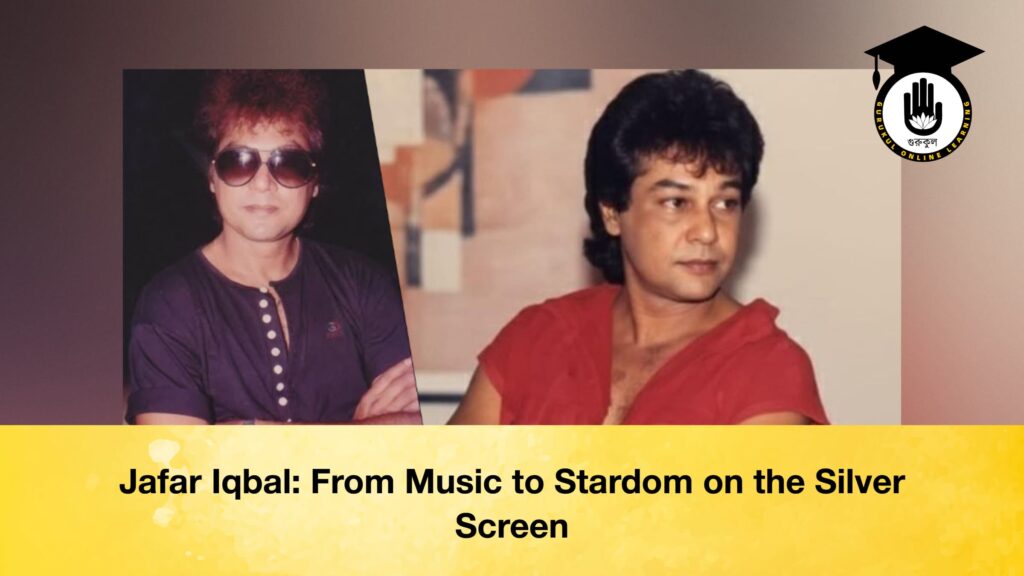
Jafar Iqbal remains a distinctive figure in the history of Bangladeshi popular culture, remembered not only for his work as a film actor but also for his contribution to music. He began his journey on the musical stage before becoming one of the most recognisable and stylish leading men of the 1970s and 1980s. His appearance, fashion sense, screen presence and romantic image made him particularly popular among young audiences of the era.
Born in Gulshan, Dhaka, in 1950, Jafar Iqbal grew up in a family closely connected with music. His elder brother Anwar Parvez was a noted composer and music director, while his younger sister Shahnaz Rahmatullah became one of Bangladesh’s celebrated singers. Growing up surrounded by music gave Jafar Iqbal an early exposure to the creative world and helped shape his interest in singing.
In 1966, he entered the music scene by forming the band Rambling Stones. He was not merely a vocalist; he was also a skilled guitarist. His involvement in music gradually brought him into contact with people working in the film industry. Through his association with composer Alauddin Ali, he also became involved in creating background music for films. These experiences helped establish a bridge between his musical career and his eventual transition to acting.
Jafar Iqbal entered the film industry before Bangladesh’s independence. In 1970, he appeared as a leading actor in the film Apon Por. His career, however, was interrupted by the Liberation War in 1971, in which he actively participated. After independence, he returned to the film industry and resumed his acting career.
His breakthrough in popularity came with the 1975 film Mastan. From then on, he became a familiar face on the country’s cinema screens. His appeal was not confined to conventional romantic roles. Over the course of his career, he portrayed a range of characters, including romantic young men, rebellious figures and individuals struggling with frustration, hardship and personal conflicts.
What distinguished Jafar Iqbal was his individual style of performance. His mannerisms, dialogue delivery and screen presence gave his characters a recognisable identity. At a time when cinema was a major source of entertainment for young people, his confident appearance and modern persona helped him develop a strong following.
Music remained an important part of his identity even after he established himself as an actor. Several songs associated with his screen performances became popular, including ‘Hoy Jodi Bodnam Hok Aro’, ‘Sukhe Theko O Amar Nandini’ and ‘Tumi Amar Jibon’. His dual identity as a singer and actor therefore remained central to his appeal. Audiences could connect with him both through his performances on screen and through music.
His influence extended beyond cinema and music. During the 1970s and 1980s, his clothes, hairstyle and overall appearance contributed to his image as a style icon. His fashion-conscious presentation was notably different from the more traditional image associated with many leading actors of the period. For a generation of young people, Jafar Iqbal represented a modern and fashionable form of stardom.
Over a long acting career, he reportedly appeared in around 150 films as a leading actor. His journey from the music stage to mainstream cinema was therefore more than a change of profession. It brought together two areas of popular entertainment and helped establish him as a performer with a distinct place in Bangladesh’s cultural history.
Jafar Iqbal is no longer alive, but his work continues to evoke memories of a particular era in Bangladeshi cinema. His songs, films and unmistakable style remain part of the cultural memory of audiences who grew up with his work. From the guitar and music stage to the centre of the silver screen, his career reflected the changing face of popular entertainment in Bangladesh and left behind a legacy that continues to be remembered.