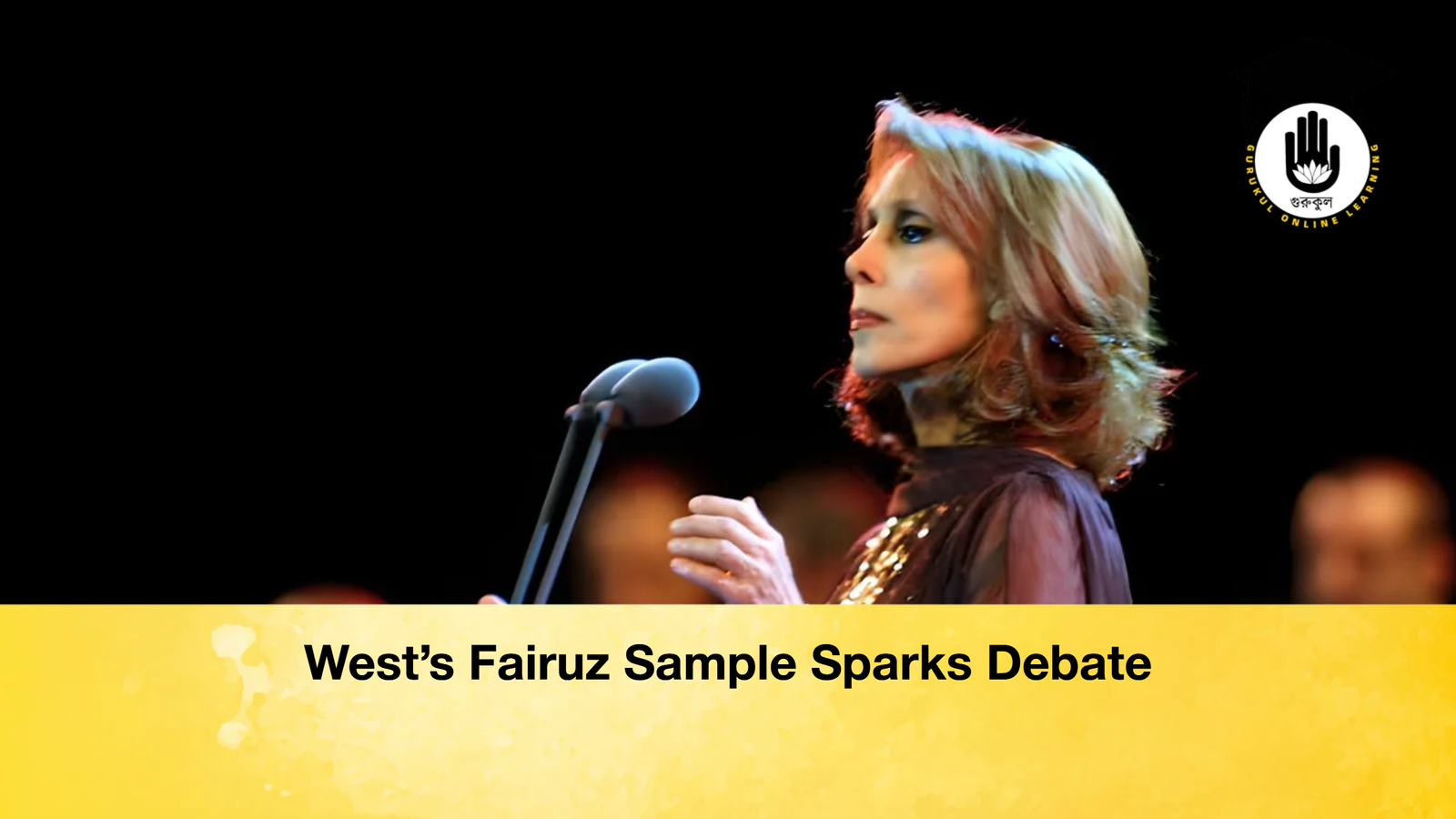
American rapper and producer Kanye West has once again drawn global attention with the release of his long-anticipated twelfth studio album Bully, unveiling the new single “All the Love”. Released on Friday, the track has quickly become a focal point of discussion not only for its sonic experimentation but also for its culturally significant use of sampling.
At the heart of the song lies a reinterpretation of Lebanese musical icon Fairuz’s 1963 classic “Fayek Alaya”. The original composition, created by the Rahbani Brothers, forms part of a wider theatrical tradition that blends narrative storytelling with music. The piece is widely associated with themes of childhood memory, longing, and nostalgia, and holds a revered place in Arab musical heritage.
In “All the Love”, Fairuz’s vocals are transformed through modern production techniques overseen by West’s long-time collaborator and talkbox pioneer Andrew Troutman. The production deconstructs the original recording, reshaping it into a layered, gospel-tinged soundscape that blends distortion, ambient textures, and choral influences. Critics have described the result as both experimental and emotionally charged, highlighting its capacity to reframe a historically rooted melody within a contemporary Western production context.
The release of Bully itself has followed a turbulent path. First announced in September 2024, the album has experienced repeated delays, evolving through several preview versions circulated on social media platforms. Alongside its shifting release schedule, West has continued to attract controversy, including renewed scrutiny over past antisemitic remarks, later followed by a full-page public apology.
Fairuz, born in Beirut in 1935, is widely regarded as one of the most influential cultural figures in the Arab world. Her voice is often described as more than artistic expression, symbolising collective memory, national identity, and emotional continuity across generations. As a result, any contemporary use of her work tends to generate significant cultural and academic debate, particularly regarding issues of ownership, reinterpretation, and artistic respect.
In recent years, Fairuz’s catalogue has increasingly been sampled by international artists seeking to bridge Eastern and Western musical traditions. This growing trend reflects a broader shift in global pop production, where archival recordings are frequently recontextualised within modern genres such as hip-hop, electronic music, and alternative pop.
Notable uses of Fairuz samples in contemporary music
| Artist | Song Title | Fairuz Original Sampled | Year |
|---|---|---|---|
| Kanye West | All the Love | Fayek Alaya | 2026 |
| Macklemore | Hinds Hall | Ana La Habibi | 2024 |
| Drake | Iceman | Wahdoun | 2025 |
| Madonna | Erotica | Yel Yom Wolika | 1992 |
Music critics argue that the continued reinterpretation of Fairuz’s work represents more than simple sampling practice. Instead, it is increasingly viewed as a cultural bridge between Eastern musical heritage and Western experimental production. In this context, West’s “All the Love” is seen as both a continuation of this trend and a contentious artistic statement, reinforcing his reputation for pushing boundaries while provoking debate.
As Bully continues to circulate globally, “All the Love” stands out as one of its most discussed tracks—illustrating how historical sound archives are being reshaped within the evolving language of contemporary music.