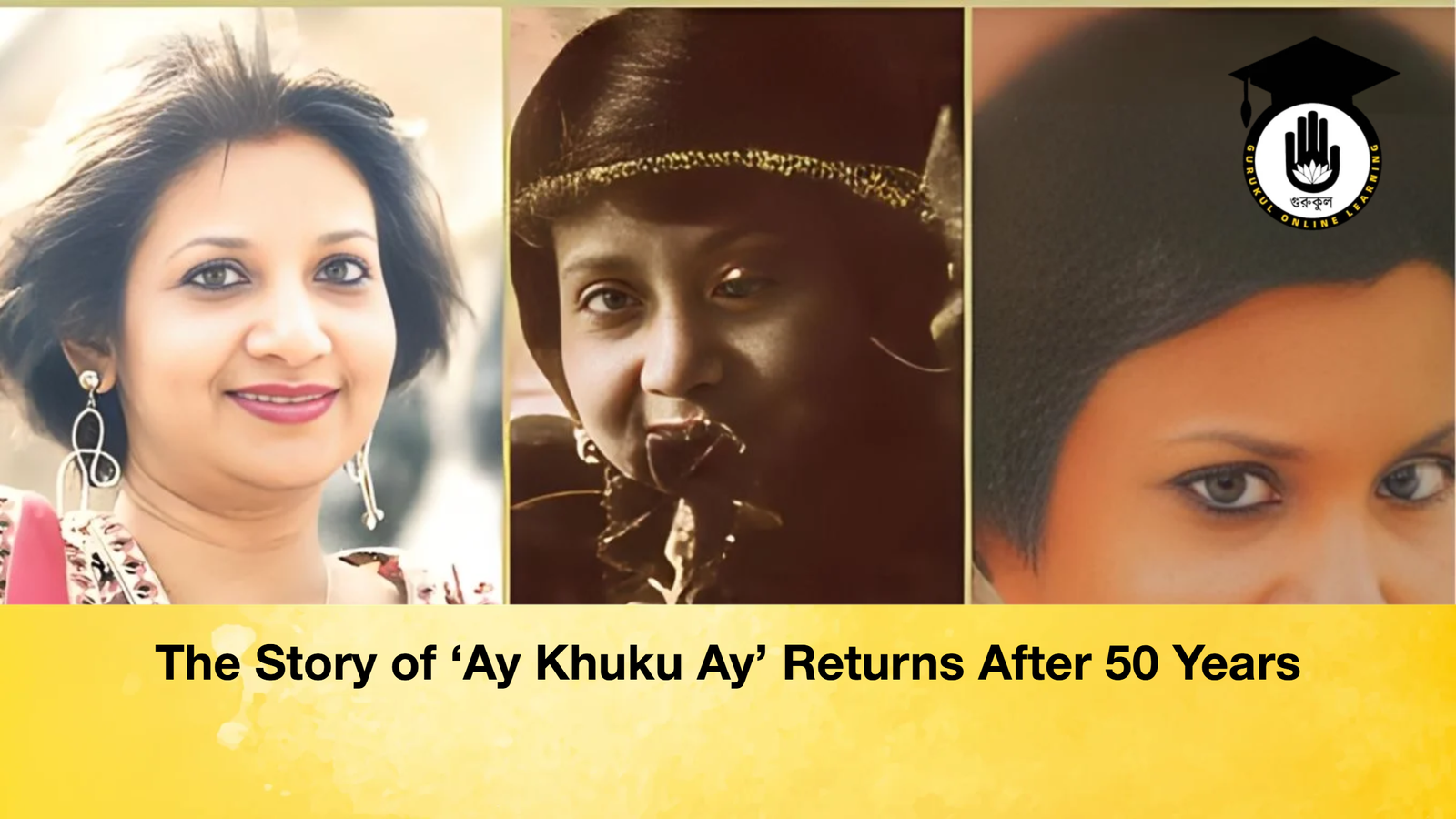
It has been half a century since the iconic song Aay Khuku Aay was recorded in 1976. Featuring the legendary Hemanta Mukhopadhyay alongside a fresh new voice, the song gradually found its way into households across Bengal. Its reach eventually extended beyond India, with the song later being featured in the Bangladeshi film The Father. This year marks the 50th anniversary of the timeless melody.
The voice behind the song, Srabanti Majumdar, celebrated her birthday on 3 January. To mark the song’s golden jubilee, Masum Apu connected with her over WhatsApp for a nostalgic conversation.
From the Isle of Man, where she now resides, Srabanti’s familiar, sweet voice echoed over the phone: “Hello, this is Srabanti… calling from Bangladesh? How wonderful to hear from you!” That voice, once heard on vinyl records and cassettes, remains a source of nostalgia in today’s digital era—available on YouTube and Facebook. Even her renditions of jingles for products such as Boroline cream and hair oils transformed mundane advertisements into musical delights. Her voice became inseparable from the cultural fabric of Bengal.
Reflecting on the making of Aay Khuku Aay, Srabanti recalled: “Pulak Bandyopadhyay wrote the lyrics, and V. Balsara composed the tune. Many think this was primarily Hemanta-da’s song, but it was actually for my album. When Pulak-da first showed me the song, I read it multiple times with tears in my eyes. I said, ‘I will sing this with Hemanta-da.’ He was delighted. Together with Pulak-da and Balsara, we presented it to Hemanta-da, who immediately approved, even before the tune was finalised.”
The song, once overlooked, gradually won over audiences. “Even two years after its release, few wanted to listen to it. I began performing it solo on stage, and slowly, everyone only wanted Aay Khuku Aay,” Srabanti said. Its emotional resonance intensified when used in The Father, evoking tears among listeners as it captured the tender bond between father and child.
Despite her classical music training under Sudhir Bandyopadhyay, Srabanti gravitated towards modern songs of Hemanta, Shyamal Mitra, and Kishore Kumar, as well as English pop, breaking conventions of her era. Early jingles—recorded secretly at home auditions—showcased her unique voice, earning her multiple recording opportunities with HMV.
Even after relocating to Douglas on the Isle of Man 25 years ago, Srabanti’s Bengali remains fluent, and her connection to Bengal endures. She reminisces fondly about collaborations with Bangladeshi artists such as Ali Zaker, Asaduzzaman Noor, Fakir Alamgir, and Runa Laila. Despite living abroad, her performances in Dhaka and Chittagong remain etched in memory.
Key Milestones of Aay Khuku Aay
| Year | Event | Notes |
|---|---|---|
| 1976 | Song recorded | Vocals by Srabanti Majumdar & Hemanta Mukhopadhyay |
| 1978 | Song gains popularity | Became audience favourite after live performances |
| 2000s | Featured in The Father | Reintroduced to Bangladeshi audiences |
| 2026 | 50th anniversary | Celebrated by the singer and fans worldwide |
From tender jingles to unforgettable songs, Srabanti Majumdar’s voice has left an indelible mark on Bengali music. Even decades later, Aay Khuku Aay continues to bridge generations, carrying the warmth of memory, nostalgia, and enduring artistry across borders.