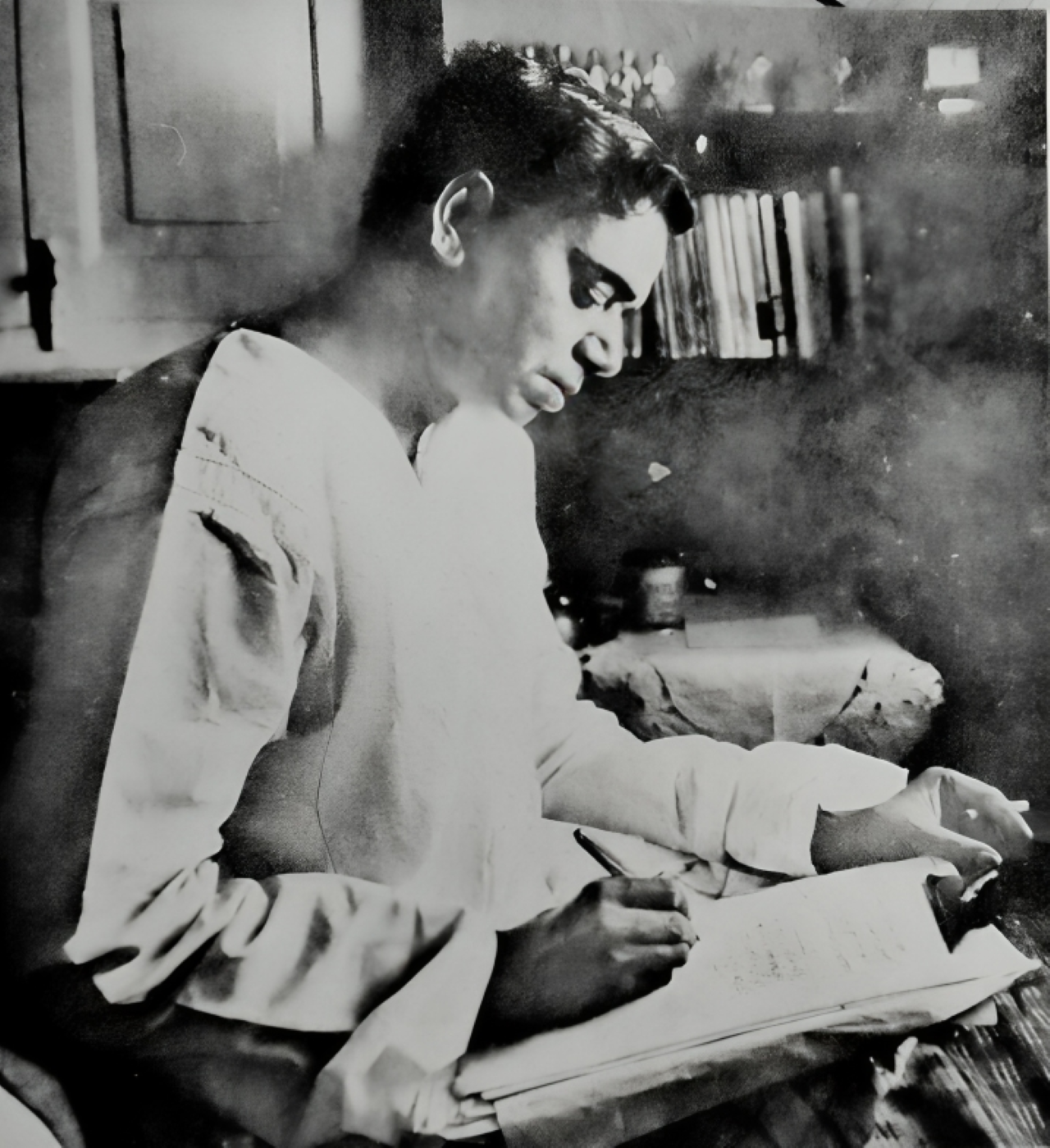
On this day, 30 August 1923, a poet was born who would go on to give Indian cinema one of its greatest treasures — words that touched hearts, spoke truth to power, celebrated love, and reflected the very rhythm of life.
Shailendra, born Shankardas Kesarilal, wasn’t merely a lyricist; he was the voice of emotion, the bard of simplicity, and the poet of human experience.
Even a century after his birth, his songs remain as fresh and meaningful as the day they were written. His verses built bridges — between dreams and reality, between despair and hope, between the rich and the poor.
Today, Music Gurukul, GOLN, pays heartfelt tribute to the man who made poetry sing and cinema feel real.
Table of Contents
Early Life and Inspiration
Shailendra was born in the small town of Rawalpindi (then in undivided India, now in Pakistan) and grew up in Mathura, Uttar Pradesh. Though trained as an engineer and later an employee in the Indian Railways, he carried in his heart the restless fire of a poet.
The India of his youth was drenched in political and social change — the independence movement, the poverty of the common man, the promise of a new dawn. These themes would go on to define his creative journey.
He began writing Hindi poetry infused with the ideals of equality and compassion. His performances at Progressive Writers’ Association meetings caught attention — and eventually, one of his admirers, Raj Kapoor, would change his destiny forever.
The Golden Partnership: Shailendra and Raj Kapoor
The story of how Shailendra entered films is already a part of film folklore. Raj Kapoor once heard him recite a poem at a cultural function. Moved by his words, Kapoor requested him to write for his film Aag (1948). At first, Shailendra — being a man of principle — refused, believing that his poetry was not meant for commercial cinema.
But fate intervened. When Shailendra’s personal circumstances grew difficult, he approached Raj Kapoor, who welcomed him warmly. His first song, “Patli kamar hai, tirchhi nazar hai” in Barsaat (1949), made people notice his fresh style. Yet it was Awara (1951) and Shri 420 (1955) that sealed his legacy forever.
His words gave Raj Kapoor’s screen persona — the idealistic everyman — a lyrical soul.
Songs like “Awara Hoon”, “Mera Joota Hai Japani”, and “Pyar Hua Ikrar Hua” reflected the social optimism of post-Independence India while keeping the emotions deeply personal and universal.
Themes That Defined His Art
What made Shailendra’s lyrics so eternal was not just their beauty, but their truth. He was not writing for glamour or fame — he was writing to express the human condition.
- Simplicity as Strength:
He believed poetry should be understood by everyone. His words often carried profound ideas in the simplest language. - Social Awareness:
He remained grounded in socialist ideals, giving voice to the struggles of the poor and the aspirations of the downtrodden. - Romance with Realism:
Unlike overblown sentimentality, Shailendra’s love songs were tender, honest, and sensitive. - Philosophy in Melody:
Every line carried a whisper of wisdom — about life, equality, pain, and purpose.
Collaborations that Shaped Indian Cinema
Shailendra’s partnership with composers Shankar–Jaikishan remains one of the defining collaborations in Bollywood history. Together, they created soundtracks that became cultural milestones for generations.
His lyrics for films like Barsaat, Awara, Shree 420, Chori Chori, Jis Desh Mein Ganga Behti Hai, and Sangam elevated Hindi film songs into poetic masterpieces.
He also worked with other legends like Salil Chowdhury, Sachin Dev Burman, and Ravi, adapting his poetic style with astonishing flexibility. Each song bore his emotional fingerprint — gentle yet profound.
The Man Behind the Words
Those who knew Shailendra described him as warm, humble, and deeply introspective. His home in Bombay was a meeting ground for artists, poets, and political thinkers. Even after fame embraced him, he lived simply, with a deep concern for justice and human dignity.
He produced one film, Teesri Kasam (1966), based on a story by Phanishwar Nath ‘Renu’ — a tale that mirrored Shailendra’s own artistic ethos: honesty, idealism, and emotional truth. The film, though underappreciated initially, is now considered a classic — a perfect reflection of his soul.
It was, tragically, his last gift to cinema. Shailendra passed away in 1966, at the age of 43 — far too soon, leaving behind a treasure of songs that would live forever.
His Legacy Lives On
Nearly six decades after his passing, Shailendra’s words still echo across India — in radio shows, concerts, and film retrospectives. Generations who never saw him yet feel his presence every time they hear his lyrics.
He wrote of joys that were innocent, sorrows that were humane, and dreams that were shared. He could paint the landscape of a poor man’s heart and the expanse of a lover’s hope in just a few lines.
His art reminds us that a song is not just something to be heard — it’s something to be felt, lived, and inherited.
A Message from Music Gurukul, GOLN
At Music Gurukul, we remember Shailendra not only as a great lyricist but as a teacher of empathy through art.
His songs are lessons in how to love, how to hope, and how to remain human in a world that often forgets kindness.
Today, on his 101st birth anniversary, we bow to his enduring spirit.
His poetry continues to illuminate the path of Indian music — a reminder that the richest melodies are born from the humblest hearts.
Epilogue: The Timelessness of His Words
Shailendra’s life may have ended too soon, but his words have no expiration. Every time a melody carries his verse, he lives again — in every hopeful lover, in every dreamer walking under a monsoon sky, in every soul that still believes the world can be a better place.
“He wrote not just for films, but for life itself.”
Happy Birthday, Shailendra —
Your pen still sings.
Your spirit still walks with the people.
And your poetry still reminds India to dream.
A heartfelt tribute from Music Gurukul (GOLN) — preserving the light of Indian music, one timeless word at a time.