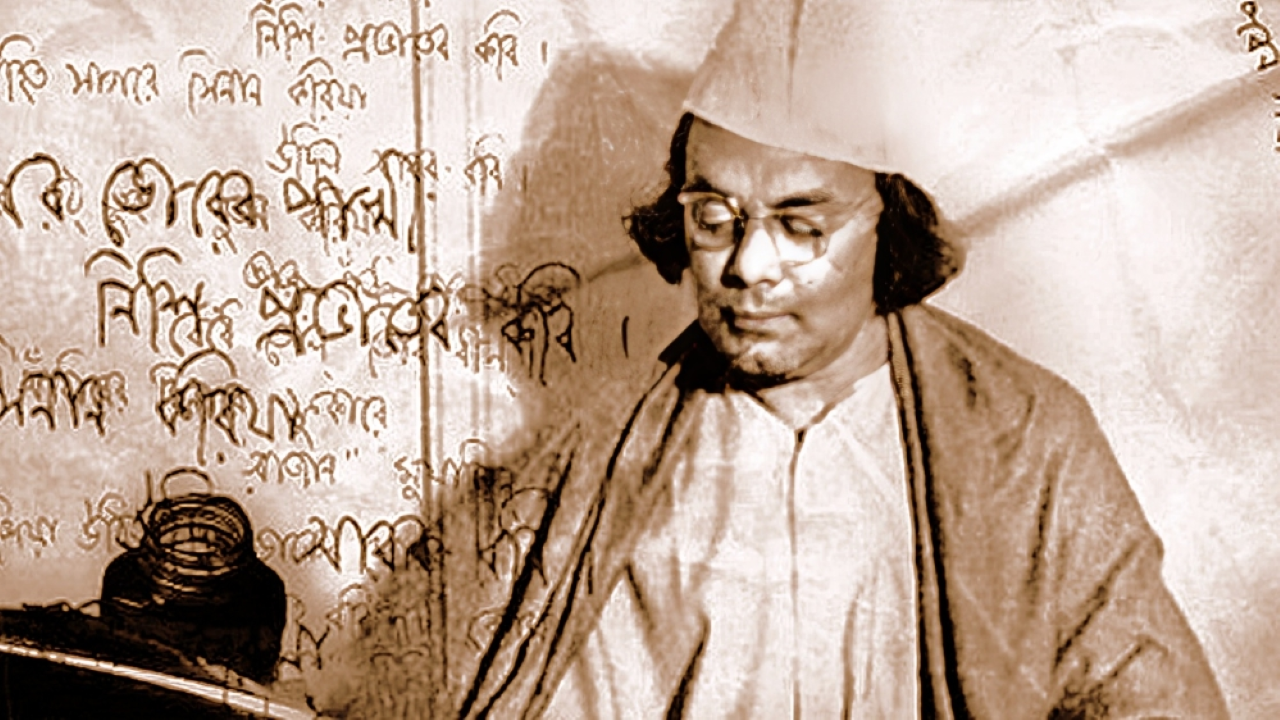
In the 1930s, across the cultural and commercial landscape of undivided India, Kazi Nazrul Islam was far more than a rebel poet or a composer; he was the most expensive and influential ‘brand’ in the music industry. In the terminology of the modern market economy, he was what we would call a ‘Highest-Paid Celebrity’—a status he held firmly with the Gramophone Company, famously known as HMV (His Master’s Voice). Considering the economic context of 1930, the value of currency, and his social significance, Nazrul’s creativity was not just an aesthetic triumph but the primary engine of a massive commercial empire. A song by him guaranteed profit, and his name on a record served as a royal seal of quality.
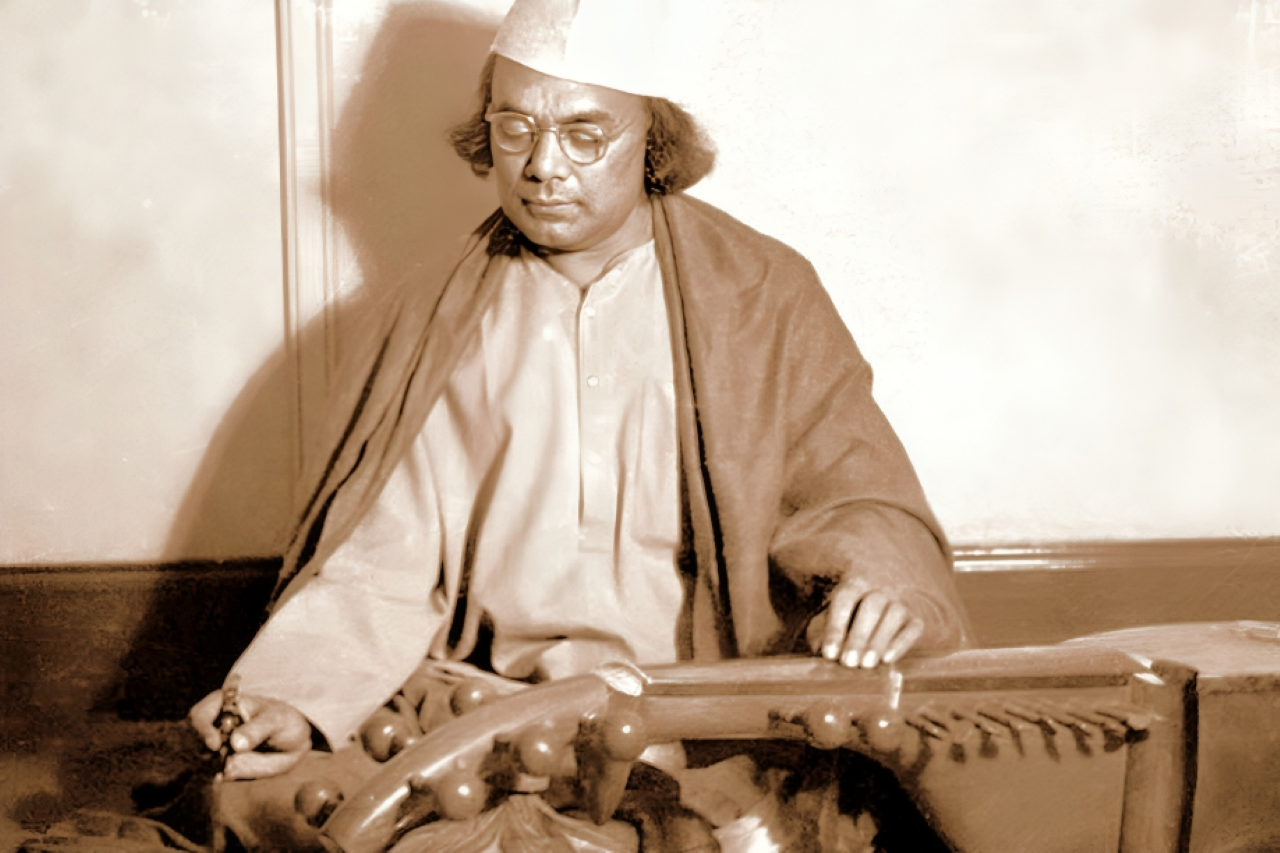
Table of Contents
The HMV Era and the ‘Chief Trainer’
Nazrul’s commercial dominance centered around the British retail giant HMV. When he formally joined HMV in 1928, it sparked an unprecedented revolution in the gramophone record industry. The HMV authorities realised that Nazrul’s multifaceted genius—his ability to simultaneously serve as a lyricist, composer, and instructor—could transform their business. He was appointed as the ‘Chief Trainer’. His role involved penning new lyrics, composing tunes, and training emerging vocalists. The remuneration and perks Nazrul received for this position were beyond the imagination of even the highest-ranking government officials of that era.
The Economic Valuation: 1930 vs Present Day
In the early 1930s, Nazrul’s monthly salary was approximately 500 Rupees. While this figure might seem modest today, its true significance is revealed when compared to the gold prices of that time. In 1930, the average price of one bhari (approx. 11.66 grams) of gold was a mere 18 to 20 Rupees. This means Nazrul could purchase nearly 25 bharis of gold with a single month’s salary. At 2026 market rates, the value of 25 bharis of gold is roughly 3.1 to 3.2 million BDT (approx. £20,000 – £21,000). No other literary figure or musician in India at the time received such a vast, regular salary from a single institution.
Beyond his base salary, Nazrul earned even more through royalties on record sales. On top of this, he received a permanent ‘retainer fee’ on the condition of providing a specific number of songs each month. In total, his monthly earnings equated to what an average artist might earn in a lifetime. To put this in perspective, an average singer at the time received only 10 to 25 Rupees per recorded song or monthly salary.
The “Hit Machine” and Professional Grandeur
HMV did not just provide Nazrul with wealth; they granted him immense freedom and royal status. A specially furnished room was reserved for him at HMV’s massive factory in Dum Dum, Kolkata, and at their office on 3 Middleton Street. It was from here that he directed his creative endeavours. HMV, a staunchly commercial British institution, would always smilingly tolerate Nazrul’s eccentricities, his late arrivals at the office, or his sudden requests for cash advances. The sole reason for this leniency was Nazrul’s creative output. He was a ‘Hit Machine’, producing an average of 30 to 40 songs a month. It was often observed that while a recording was underway in the studio, Nazrul would be sitting in the corridor, instantaneously composing the lyrics and melody. A single Islamic Ghazal or a Shyama Sangeet (devotional songs to Goddess Kali) composed by him would break sales records within moments.
Universal Appeal and Market Catalyst
The greatest strength of the ‘Nazrul Brand’ was its universality. He simultaneously captured the hearts of the Hindu community with his Shyama Sangeet and brought gramophones into Muslim households with songs like ‘O Mon Romzaner Oi Rozar Sheshe’. When Nazrul’s Islamic songs were recorded in the voice of Abbasuddin Ahmed in 1932, the Muslim society of India—which had previously shunned music—began purchasing gramophones en masse. Nazrul’s music was the primary catalyst for HMV’s business growth. Even HMV’s budget label, ‘Zonophone’, saw its sales multiply simply because Nazrul’s name was associated with it. He was the architect behind the popularity of legendary artists such as K.L. Saigal, Indubala, Angurbala, and Juthika Roy.
Dominance in Cinema and Radio
Nazrul was also in high demand within the film industry. For directing music in films like Dhruva, Patalpuri, or Vidyapati, he charged fees higher than any other music director in Bombay or Kolkata. He didn’t just provide tunes; he composed music that captured the specific mood of characters and scenes. This professionalism and his ability to work at high speeds made him the most expensive musical personality in India.
Additionally, he earned about 100 to 150 Rupees a month as a consultant and regular programmer for Akashvani (Indian State Radio). He was also paid special honorariums for appearing at various Jalsas (musical gatherings) or events.
The 100-Crore Legacy
Calculating Nazrul’s income in a modern economic context, his average monthly earnings from various sources (creative work and royalties alone) would be equivalent to approximately 11 million BDT (£72,000) today. This brings his annual income to over 130 million BDT (£860,000). During the most active decade of his creative life (1932–1942), his total earnings exceeded 1 billion BDT (100 Crore) in today’s value. This data proves that in undivided India, Kazi Nazrul Islam was not just a poet; he was a unique, commercially successful ‘Music Brand’.
This ‘Brand Value’ was not limited to money; it was the pinnacle of cultural influence. The British government frequently confiscated his records due to their rebellious nature, yet HMV never let go of Nazrul. They knew that without his name, it was impossible to capture the lion’s share of the Indian market. While Rabindranath Tagore’s music was largely confined to a specific social class, Nazrul’s music reached the homes of common farmers, labourers, and the middle class. His Ghazals, Bhajans, Kirtans, and modern songs transformed the Gramophone Company into a trusted household name.
The First Modern Celebrity
Kazi Nazrul Islam was the first modern celebrity in Indian music history. He proved that a creative artist does not have to live in poverty but can become the master of a market system through talent and hard work. His salary of 500 Rupees and the ability to buy 25 bharis of gold was a landmark of the Golden Age of Bengali music, where Nazrul, the magician of melody and word, reigned as the undisputed emperor. Had the union between HMV and Nazrul not occurred, the modern transformation of Indian music might have been delayed by decades.
The Indifferent Emperor: Generosity and Final Days
Despite earning such vast sums, Nazrul’s personal life was devoid of luxury or the desire to hoard wealth. He was essentially an ‘Indifferent Emperor’ for whom the value of art far outweighed that of money. A significant portion of his earnings was spent on the long-term and expensive medical treatment of his wife, Pramila Devi. Beyond that, he possessed an indomitable spirit of charity. For Nazrul, having money meant distributing it among struggling artists, friends, or the needy. No one seeking help ever left his door empty-handed.
He never believed in saving for the future or making profitable investments. He preferred to be immersed in the creativity of tunes and lyrics rather than navigating the complexities of commercial contracts with publishers or gramophone companies. Many institutions took advantage of this simplicity, depriving him financially. Starting from 1939, family tragedies and his wife’s paralysis shattered his long-standing financial stability. Despite earning millions throughout his life, his habit of giving with both hands and his lack of financial planning left him in a dire crisis in his final years.
After the Poet became silent (lost his speech) in 1942, his family spent several years in extreme financial hardship. Later, through the efforts of fans, well-wishers, and the ‘Nazrul Cure Committee’, some funds were raised. Although the governments of India and the then-Pakistan later provided a small pension, it was woefully inadequate compared to the massive medical expenses for him and his family. Nazrul could have easily lived a life of royal splendour with what he earned; instead, he chose the path of love and sacrifice. Thus, the ‘Multi-millionaire Superstar’ Nazrul remains in the hearts of Bengalis as an eternally destitute yet immortal rebel soul.