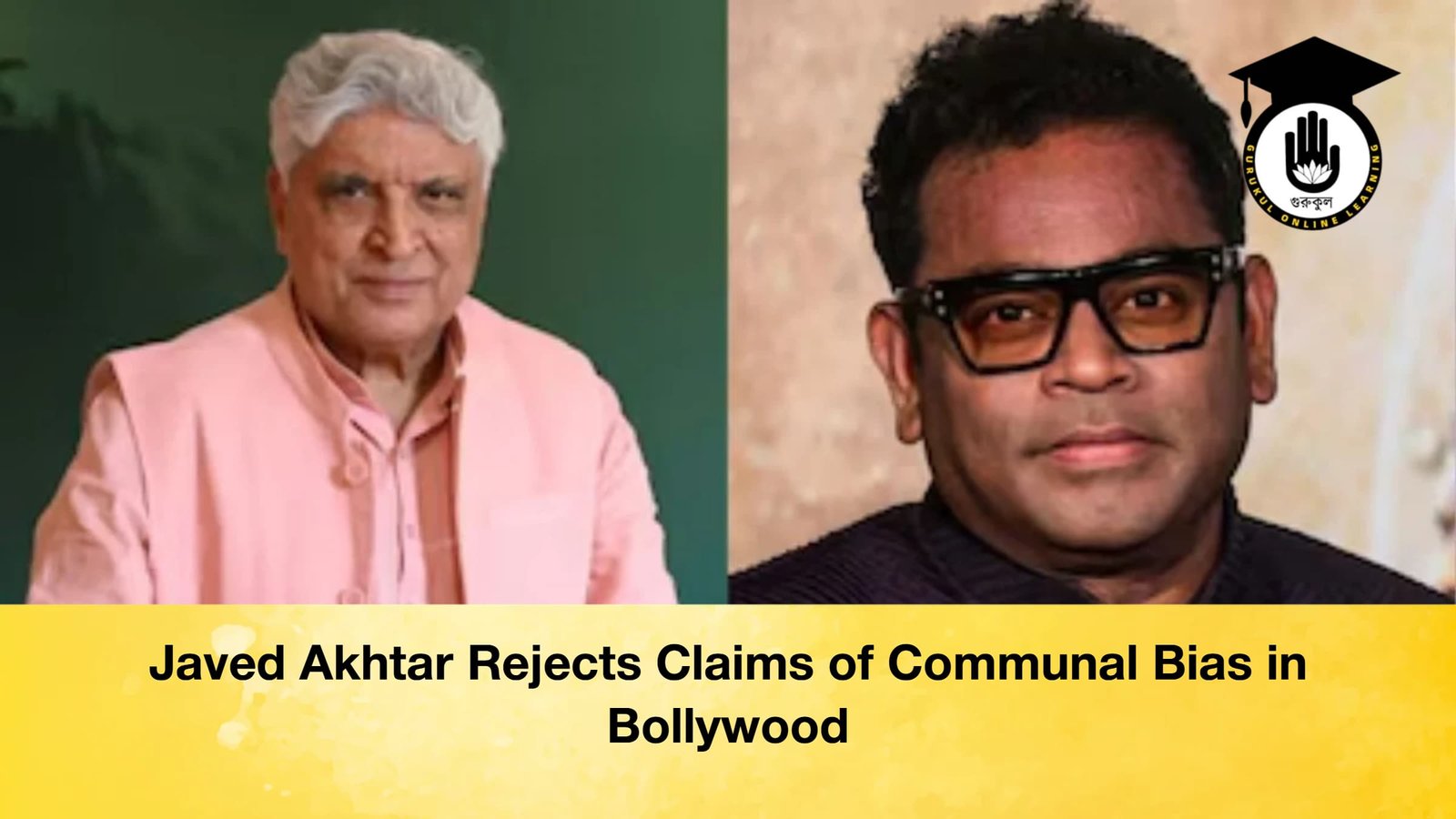
In a firm rebuttal to recent remarks made by the Oscar-winning composer A.R. Rahman, veteran lyricist and screenwriter Javed Akhtar has dismissed the notion that “communal elements” are behind the composer’s declining workload in the Hindi film industry. Speaking to the media on Thursday, 22 January 2026, Akhtar insisted that the perceived distance between Rahman and Mumbai-based filmmakers is a byproduct of the composer’s global success rather than any religious or social prejudice.
Table of Contents
The Spark of Controversy
The discussion was triggered by a candid interview Rahman gave to the BBC Asian Network, in which he reflected on the changing power structures within the industry. Rahman suggested that he had heard through “Chinese whispers” that a “communal thing” might be the reason for his reduced number of Bollywood projects. He lamented that non-creative executives now hold the power to decide who composes for a film, often bypassing established masters for a team of multiple composers.
Akhtar, a longtime collaborator of Rahman, was quick to defend the industry’s secular traditions. “I have never felt this way,” he remarked. “I meet people here in Mumbai every day, and they hold immense respect for him.”
Fact Check: The Rahman-Akhtar Collaboration Legacy
| Film Title | Year | Role | Musical Impact |
| Lagaan | 2001 | Lyrics: Akhtar / Music: Rahman | Academy Award Nomination |
| Zubeidaa | 2001 | Lyrics: Akhtar / Music: Rahman | Critically acclaimed period score |
| Swades | 2004 | Lyrics: Akhtar / Music: Rahman | Patriotic & Folk-fusion classic |
| Jodhaa Akbar | 2008 | Lyrics: Akhtar / Music: Rahman | Epic Sufi-influenced soundtrack |
The “Awe Factor”: A Barrier to Collaboration
According to Akhtar, the real barrier is not communalism, but rather Rahman’s status as a global icon. He argued that the composer’s international schedule—filled with Western projects and massive stadium tours—creates an impression of unavailability.
“People may think that he has become very busy in the West… that his shows are very big and he spends a lot of time on them. So, they assume he may not be available for us,” Akhtar explained. He further noted that Rahman’s stature is so intimidating that smaller producers often hesitate to approach him, fearing they cannot afford his time or his genius. “Rahman is such a big man. Even a small producer is afraid to go to him,” he added.
A Call for Direct Communication
Dismissing the “Chinese whispers” that Rahman alluded to, Akhtar urged filmmakers to be proactive. He expressed confidence that the composer remains open to Hindi cinema and that any perceived snub is merely a misunderstanding born of distance. “I don’t think there is any communal element in this. Why don’t you see him? He will definitely come,” Akhtar concluded.
While the debate over shifting power dynamics in Bollywood continues, Akhtar’s intervention serves as a staunch defence of Mumbai’s creative fraternity, framing the issue as a logistical gap caused by Rahman’s unparalleled international fame.