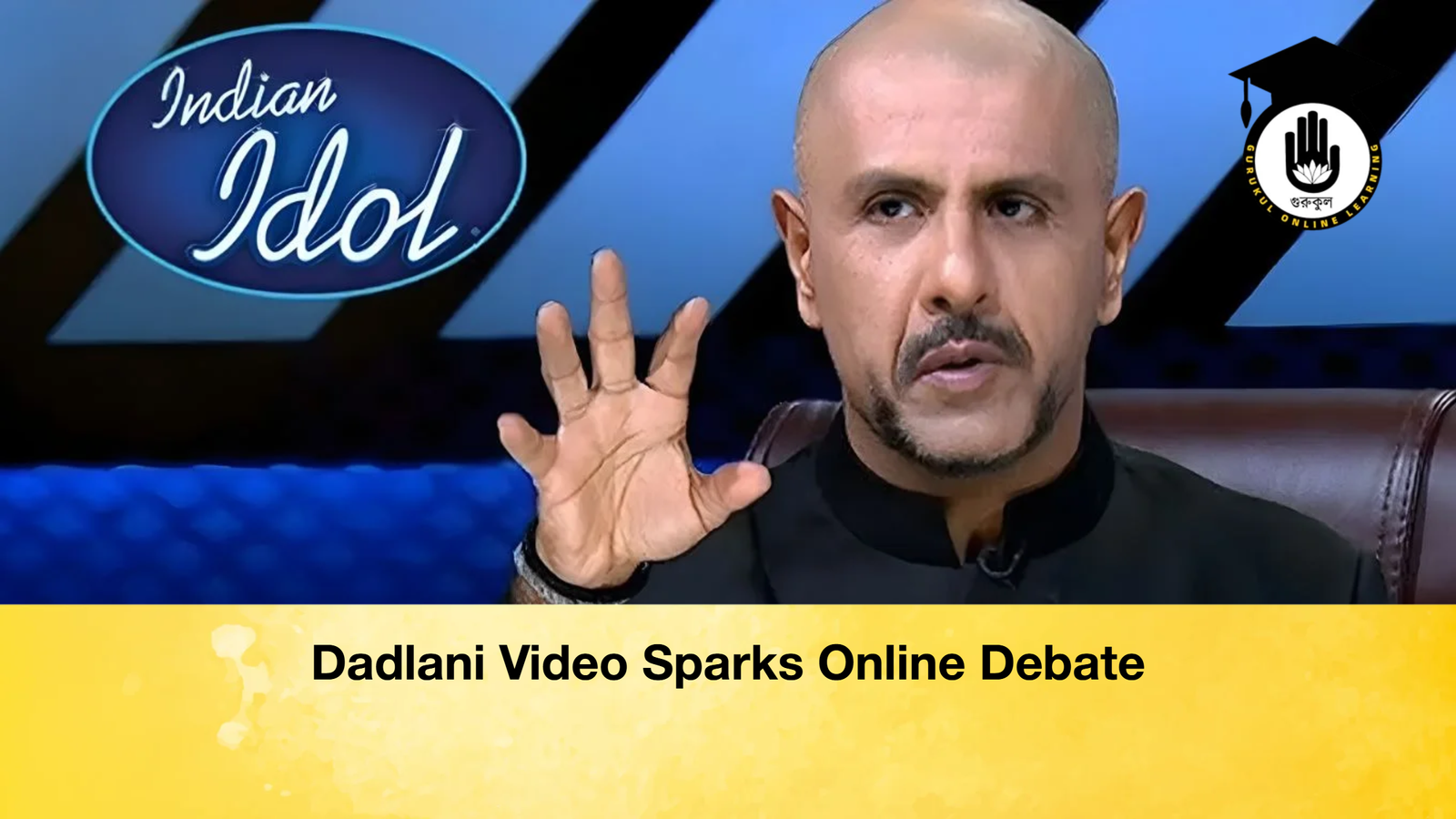
A recently circulated video featuring Indian music composer and television reality show judge Vishal Dadlani has triggered widespread controversy on social media platforms. The footage, reportedly recorded in London, shows him in a cordial and apparently routine conversation with Pakistani journalist Safina Khan. Although the interaction appears informal and courteous, its rapid spread online has ignited a polarised debate that quickly escalated beyond the realm of entertainment into politically charged discourse.
Soon after the video emerged, social media users began offering sharply divided interpretations. One section of users viewed the exchange as a simple and harmless moment of professional courtesy between two individuals. However, another segment framed it within the broader and historically sensitive context of India–Pakistan relations, arguing that such interactions carry symbolic implications given the longstanding diplomatic tensions between the two countries.
Criticism intensified when some users alleged that Safina Khan had previously expressed views perceived as critical of India, further fuelling the controversy. On this basis, a section of online commentators called for accountability measures against Dadlani, including demands for his removal from the popular television programme Indian Idol. Others went further, advocating for a boycott of his professional work altogether.
In contrast, many users defended the music director, emphasising that the interaction was purely personal and devoid of any political intent. They argued that overinterpretation of casual encounters contributes to unnecessary hostility and undermines the principle of individual expression. This group also criticised what they described as the “weaponisation” of social media discourse, where brief and context-free clips are often used to construct larger political narratives.
At present, neither Dadlani nor the television network associated with Indian Idol has issued any official statement regarding the incident. Nevertheless, online discussions continue to intensify, with growing pressure from certain groups urging the broadcasters to clarify their position.
A summary of the prevailing online responses is presented below:
| Category of Response | Core Argument | Online Stance |
|---|---|---|
| Strongly Critical | Calls for boycott and removal | National sentiment and security concerns |
| Moderate Viewpoint | Seeks clarification and context | Neutral investigation and fact-checking |
| Supportive Response | Defends personal freedom | Emphasis on free expression and private interaction |
Analysts suggest that the reaction reflects a recurring pattern in digitally connected societies, where high-profile figures are often scrutinised through politically sensitive lenses. Given the historically tense relationship between India and Pakistan, even routine interactions can rapidly acquire symbolic significance and provoke emotional responses.
Experts further note that the speed of information dissemination in the digital era frequently amplifies such controversies. Short video clips, often lacking full context, can quickly shape public perception and escalate into broader ideological debates. As a result, personal encounters are increasingly being interpreted through nationalistic frameworks, intensifying polarisation online.
Overall, what appears to have been a brief and ordinary exchange in a public setting has evolved into a significant online controversy, illustrating once again how swiftly social media narratives can transform isolated moments into widespread political and cultural debates.