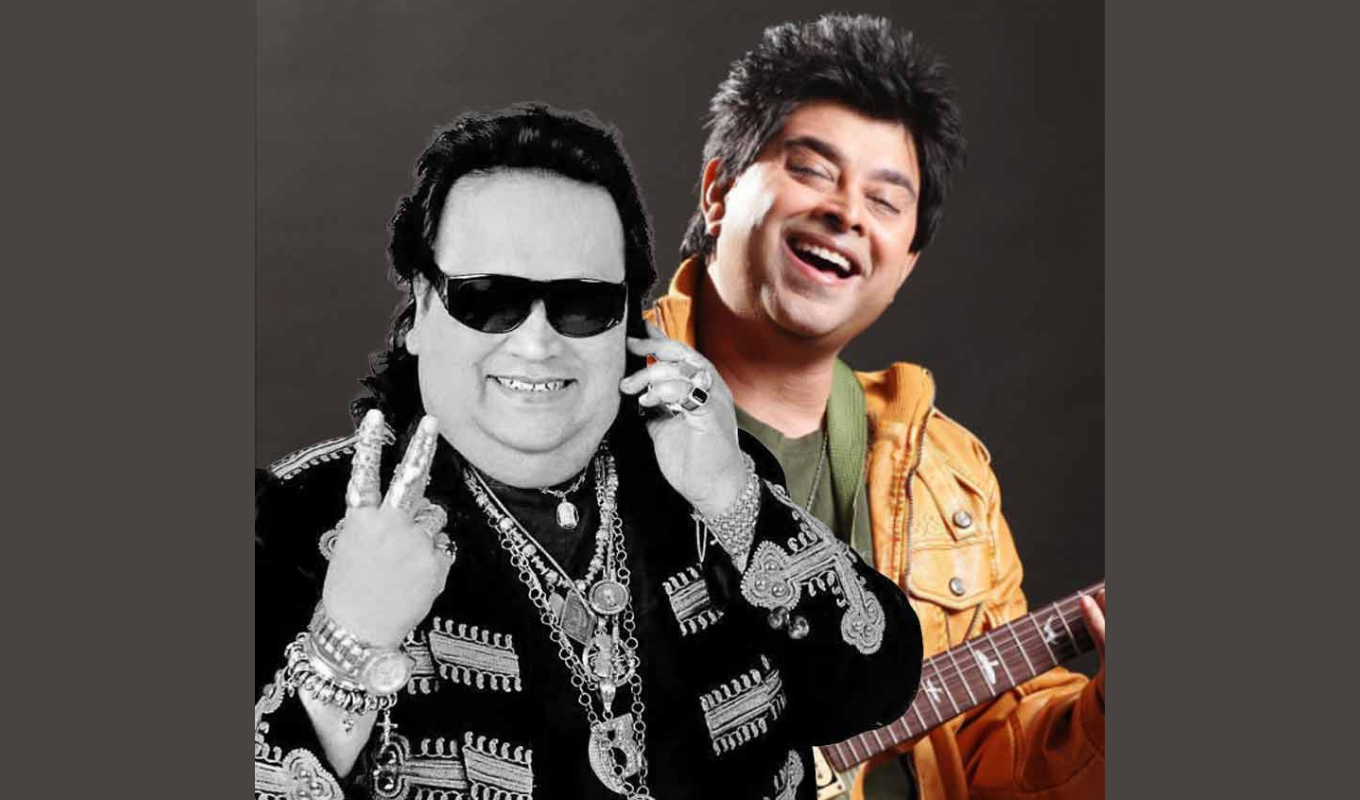
Today marks the birthday of the legendary Bappi Lahiri, a day that holds special significance for me as well. There was a unique bond between us, one that I still feel deeply. He had immense affection for me, and I learned a lot by listening to his music from a young age. On the other hand, he would often call me to share his thoughts after listening to my songs. One of my tracks, “Muskurane Ki Waja”, especially the Antara (the second verse), had caught his attention.
I still marvel at the vastness of Bappi Da’s musical range. On one hand, he created dance anthems like “Disco Dancer” and “Dance Dance”, while on the other, he composed melodic ballads like “Aamar Gurudakshina” and “Tokhon Tomar Ekhush Bochhor”. It’s hard to imagine that the same person could create such diverse music.
One of Bappi Da’s timeless creations was “Chiradinei Tumi Je Amar”. Later, I had the privilege of becoming the music director for the film of the same name. As soon as I took on this responsibility, I called Bappi Da and asked for his blessings, seeking courage for the task. He simply told me, “Just focus and do your best.” That advice meant the world to me. “Chiradinei Tumi Je Amar” remains a song that will never fade, and whenever I see Bumbada (Prosenjit Chatterjee), that song immediately comes to mind.
Bappi Da had a deep fondness for the songs “Batashe Gungun” and “Jhirijhiri” from Chiradinei Tumi Je Amar. Even his wife, Chitrani Lahiri, called me to express her appreciation for the tracks. We’ve always been like family. How many times have Bappi Da and Chitrani invited me and my wife, Chandrani, over for a meal of fish and rice? We’ve shared so many wonderful moments together, and we continue to be like family.
Recently, there was a special tribute episode on Sa Re Ga Ma Pa dedicated to Bappi Da. I called Chitrani and shared my emotions with her. It still brings tears to my eyes.
Bappi Da did so much for the music world. The unique sounds of orchestra and disco that we now associate with his name were introduced to us through his artistry. He created songs that spanned the full spectrum of music—from the romantic “Yaad Aa Raha Hai” to the spiritual “Aji Ae Prabhate”. His vast musical range is evident in everything he created, and it is this very approach that inspired me. Following his example, I was able to write songs as varied as “Bhaj Gauranga” and “Hamari Adhuri Kahani”, and take on the challenge of blending different musical styles.
Bappi Da wasn’t just a composer; he had profound knowledge of rhythm and percussion. He played the tabla beautifully. Those with a strong sense of rhythm will always create great music, and Bappi Da was no exception. As a vocalist, he was unparalleled. Many singers have recorded songs under my direction, but the moment Bappi Da stepped up to the mic, the atmosphere would change instantly. His voice had a magical quality that could transform the entire recording session.
Along with his musical talent, Bappi Da was a remarkable person. He had an incredible ability to make everyone feel welcome and cherished. He was a truly warm-hearted individual. Despite living in Mumbai, he was deeply rooted in his Bengali identity. Bengali food was always on the menu at his home, and he had a keen appreciation for good food—his love for fish was well-known. This is yet another lesson I learned from him. Even in Mumbai, our house often echoed with Rabindra Sangeet, and books were always in abundance. And of course, Bengali dishes like Alu Posto and Macher Jhol were always a part of the spread.
Bappi Lahiri’s contribution to the music world remains immeasurable, and his influence continues to inspire generations of musicians, including myself.