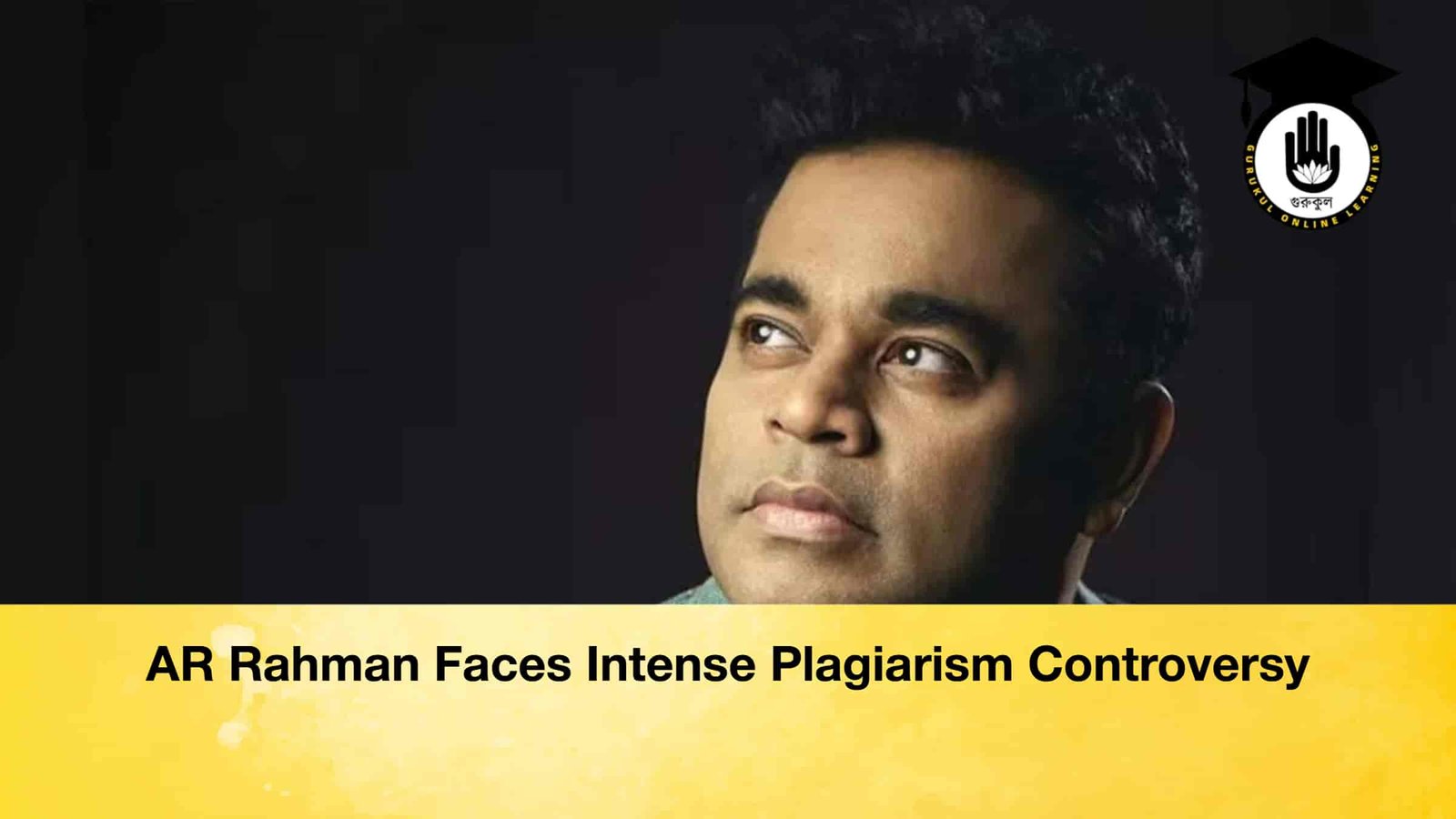
A storm of controversy has recently engulfed India’s entertainment industry, centring on the acclaimed composer and Oscar-winning musician A.R. Rahman. What began as social media speculation has now escalated into a formal legal challenge, raising significant questions about originality, intellectual property, and artistic ethics in Indian music.
The legal action has been initiated by Ustad Faiz Wasifuddin Sagar, a revered figure in India’s classical music sphere. He has filed a petition in the Supreme Court of India, alleging that a portion of his composition Shiv Stuti was used without permission in the song Veer Raja Veer from the blockbuster film Ponniyin Selvan 2, composed by Rahman.
During the preliminary hearing, the bench, headed by Chief Justice and Justice Jaymaly Bagchi, emphasised the need to establish clear authorship. Justice Bagchi remarked:
“We need to investigate who the original composer is. Singing a song does not automatically confer authorship. It must be demonstrated whether the same melody existed prior to this work.”
Rahman’s legal counsel responded to the allegations, stating:
“Our client does not claim rights over others’ work. However, when he creates, he asserts his original contributions.”
The court’s initial proceedings have focused on verifying the validity of the allegations and the necessity of concrete evidence. A subsequent hearing has been scheduled for 20 February 2026, which will likely delve deeper into the musical comparisons and expert testimonies.
Key details of the case are summarised in the table below:
| Subject | Details |
|---|---|
| Accused | A.R. Rahman |
| Plaintiff | Ustad Faiz Wasifuddin Sagar |
| Allegation | Plagiarism (use of Shiv Stuti segment) |
| Song in Question | Veer Raja Veer (Ponniyin Selvan 2) |
| Court | Supreme Court of India |
| Judges | Chief Justice & Justice Jaymaly Bagchi |
| Next Hearing | 20 February 2026 |
| Current Status | Investigation ongoing; controversy intensifying |
The case has reignited cultural and social discourse across India, with debates over artistic originality, ethical boundaries, and the legal protection of creative works. Experts suggest that the outcome could set a precedent for intellectual property disputes in Indian music, clarifying the standards for authorship recognition in both classical and contemporary compositions.
Beyond the courtroom, the controversy has sparked wider discussions on the responsibilities of artists, the preservation of cultural heritage, and the ethical dimensions of creative expression. Music enthusiasts, fellow composers, and the general public are now watching closely, anticipating the Supreme Court’s next ruling and the potential implications for A.R. Rahman’s illustrious career.