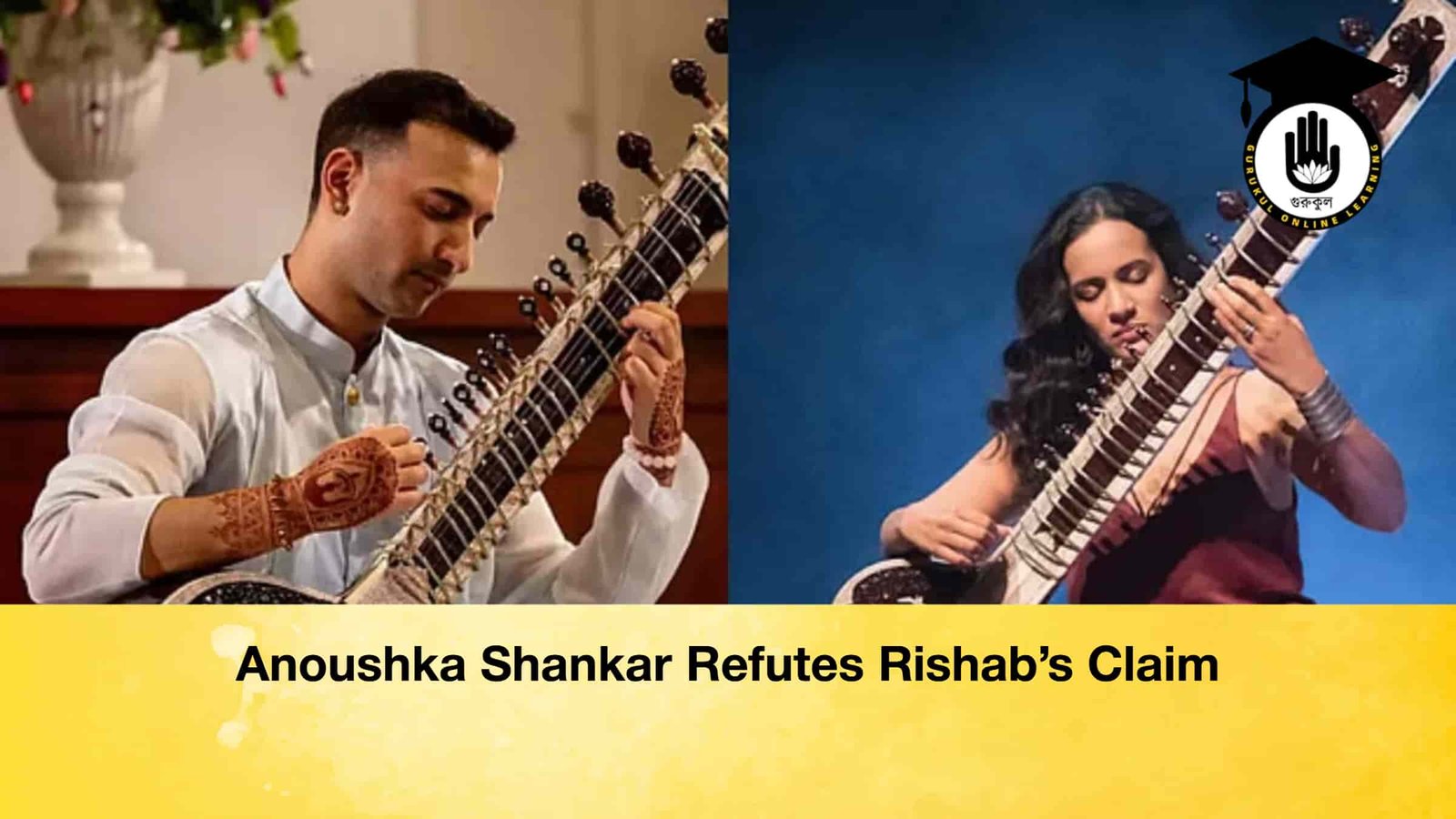
A public dispute has emerged within the Indian classical music fraternity after the young sitarist Rishab Rikhiram repeatedly described himself as the “last and youngest disciple” of the late maestro Ravi Shankar. The claim, frequently reiterated during concerts and in viral social media reels, has now been firmly rejected by Ravi Shankar’s daughter, the internationally acclaimed sitarist Anoushka Shankar.
During a recent tour of India, Anoushka Shankar addressed the matter in an interview, clarifying that Rishab Rikhiram never received formal or sustained talim (systematic training) from her father. According to her account, Rishab studied under Parimal Sadaphal, a close and trusted disciple of Ravi Shankar. While she acknowledged that Rishab may have had limited exposure to her father—possibly observing or informally learning certain dhuns (light classical compositions)—she stated that such interactions do not constitute formal discipleship within the rigorous guru–shishya parampara tradition.
The distinction is not trivial. In Hindustani classical music, lineage and pedagogy are foundational to artistic identity. Formal discipleship implies years of immersive training, personal mentorship, and artistic shaping under a recognised guru. By contrast, occasional guidance or proximity to a master does not confer the same status. Anoushka’s clarification underscores this nuanced but critical difference.
Ravi Shankar, widely regarded as one of the most influential figures in 20th-century Indian classical music, was instrumental in elevating the sitar to global prominence. His collaborations with Western musicians and extensive international touring introduced raga-based performance to new audiences across Europe and North America. Today, Anoushka Shankar continues that legacy, having received multiple Grammy nominations and performing regularly on leading international stages.
Rishab Rikhiram’s own background is closely intertwined with the musical world. His father, Sanjay Rikhiram Sharma, belongs to a renowned Delhi-based family of instrument makers with longstanding professional ties to the Shankar family. Anoushka noted that Rishab grew up within their extended social and artistic circle, enjoying warmth and familiarity, which may have contributed to public perceptions of a closer pedagogical bond.
The key individuals and their respective roles are summarised below:
| Name | Identity | Role/Relationship |
|---|---|---|
| Ravi Shankar | Legendary sitar maestro | Claimed by Rishab as guru; not his formal teacher, per Anoushka |
| Anoushka Shankar | International sitarist | Daughter of Ravi Shankar; refuted the claim |
| Rishab Rikhiram | Young sitarist | Student of Parimal Sadaphal |
| Parimal Sadaphal | Sitarist | Disciple of Ravi Shankar; Rishab’s teacher |
| Sanjay Rikhiram Sharma | Instrument maker | Rishab’s father |
During her India tour, Anoushka Shankar performed six concerts across major cities including Delhi, Mumbai and Kolkata. She described her concluding performance in Kolkata as “dreamlike”, noting the presence of popular vocalist Arijit Singh as a guest artist, which added a distinct contemporary dimension to the evening.
More broadly, the episode has reignited discussion about artistic lineage, authenticity and transparency within the classical music ecosystem. In a tradition where heritage and mentorship are deeply revered, public claims regarding discipleship carry significant cultural and professional weight.