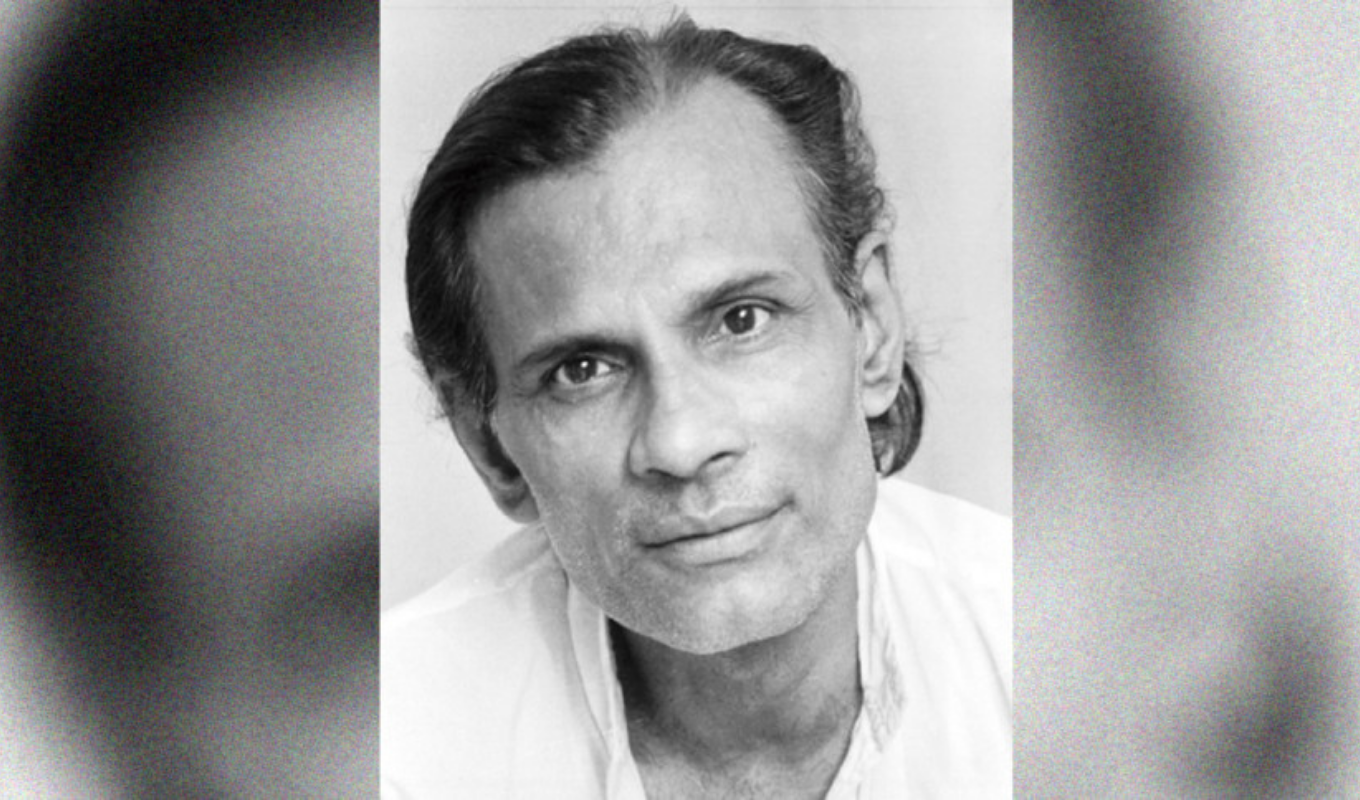
Much of the golden age of Bangla music owes its brilliance to the words crafted by Gauriprasanna Majumdar. For more than five decades, his lyrics shaped the emotional landscape of Bangla songs—pieces that gained a life beyond melody, resonating deeply within listeners’ hearts across generations.
Two of his works—Coffee House-er Sei Adda Ta and Muche Jaowa Dinguli—secured places among the greatest Bangla songs ever recorded. A student of English literature, he translated Kalidasa’s Meghaduta into English, showcasing his literary sophistication early on.
His first major break arrived through Agnipariksha (1954). The songs he crafted—delicate, poetic and emotionally layered—established him as a fresh voice. With encouragement from Sachin Dev Barman, he continued to write unforgettable pieces, including the hauntingly expressive ‘Banshi Shune Ar Kaj Nai’.
His partnership with Nachiketa Ghosh created some of the most enduring works in Bangla music. Whether romantic, melancholy or philosophical, his lyrics carried emotional clarity and imaginative depth.
He worked with almost every major composer of his time—Hemanta Mukherjee, Kishore Kumar, Rahul Dev Burman and Bappi Lahiri. Songs such as ‘Ei Path Jodi Na Shesh Hoy’, ‘Je Banshi Venge Gechhe’ and ‘Sedino Akashe Chhilo Koto Tara’ stand as proof of his poetic gift. The last of these was born from a quiet moment on a beach, after watching flowers fall gently from trees—an image that awakened a flood of memories and birthed an entire song.
In films like Antony Firingee and Chirodiner, his lyrical versatility reached new heights. Songs such as ‘Ami Yamini Tumi Shashi He’ and ‘Manush Khun Hole Pore’ reflect emotional nuance and social awareness, defining him as both poet and commentator.
His contribution to Bangladesh’s Liberation War remains unforgettable. In a moment of urgency, he wrote ‘Shono Ekti Mujiborer Theke’ on a cigarette packet—an act that symbolised the fusion of art and historic struggle. At the end of his life, while suffering from cancer, he wrote Coffee House-er Sei Adda Ta, completing the final lines before leaving for treatment. The song has since become a cultural milestone.
Born on 5 December 1925 in Gopalnagar, Pabna, Gauriprasanna Majumdar remains an enduring presence in Bangla music, his words echoing across time.