
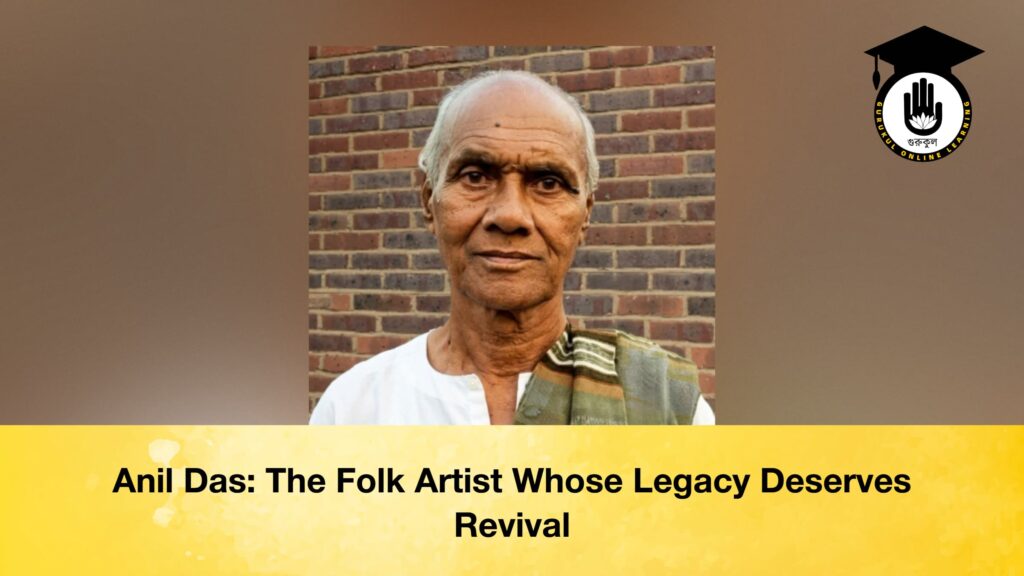
The evocative folk song Hari Din To Gelo, Shondhya Holo, Par Koro Amare expresses the anguish of passing time, the vulnerability of human existence and a heartfelt plea for deliverance at life’s twilight. Written by the celebrated Bengali folk poet and songwriter Kangal Harinath Majumdar, the song has endured as a poignant part of Bengal’s musical heritage.
Among those who helped bring its emotional power to audiences was Anil Kumar Das, a gifted actor and vocalist whose contributions to folk music, stage drama and traditional jatra pala theatre remain worthy of recognition. Yet, despite a career spanning several decades, Das has gradually slipped from public memory. His life story reflects the dedication of countless regional artists whose work has helped preserve Bengal’s cultural traditions without bringing them lasting fame or financial security.
Table of Contents
A theatrical performance that opened a new door
In 1961, a performance of the jatra pala Palashir Pore was staged at the historic Mohini Mills Auditorium in Kushtia. Among the spectators was Debi Prasad Chakraborty, popularly known as Kanu Babu, a director of Mohini Mills.
Anil Kumar Das, already familiar to cultural circles in Kumarkhali, played an important character in the production. His performance impressed Chakraborty, who subsequently arranged a job for him at the mill.
The opportunity proved significant. From 1961 to 1972, Das worked at Mohini Mills while continuing to pursue his passion for the performing arts. Although employment provided him with a means of earning a living, his commitment to theatre and music remained undiminished.
He continued to appear in stage plays and jatra pala productions, gradually establishing himself as a vocalist as well. His particular interest in the songs of Kangal Harinath Majumdar would eventually become one of the defining features of his artistic career.
Das’s experience illustrates the circumstances of many traditional performers, who have had to balance paid employment with their dedication to the arts. For him, performing was more than a pastime. It was a lifelong commitment that connected him to the cultural life of his community.
Preserving Kangal Harinath’s musical heritage
One of Das’s most notable contributions was his interpretation of songs by Kangal Harinath Majumdar, a prominent figure in Bengal’s folk and devotional musical traditions.
In 2008, Das appeared on Bangladesh Television (BTV) for the first time in the programme Adi Okritrim, where he performed Harinath’s song Shunyo Ghore Ekti Kamal Achhe Ki Shundor. The broadcast introduced his rendition of the traditional composition to a wider television audience.
On 20 July 2010, he performed another of Harinath’s best-known songs, Hari Din To Gelo, Shondhya Holo, Par Koro Amare, during a special BTV programme marking the songwriter’s birth anniversary.
The song’s enduring appeal lies in its reflection on the passage of time and the uncertainty of life. Its plea for deliverance carries spiritual undertones, while its emotional simplicity allows listeners from different generations to connect with its message.
Das’s performance helped renew attention to a composition deeply rooted in Bengal’s folk tradition. His work also demonstrated the importance of individual singers in preserving musical heritage. Songs passed down through generations can lose visibility as tastes change and established performance traditions weaken. Television appearances by artists familiar with such repertoires can help bring these works to new audiences.
For Das, singing Harinath’s compositions was not simply a matter of performance. It was also a way of sustaining a musical tradition that deserved a place in the wider cultural consciousness.
Hundreds of performances across Bangladesh
Das’s artistic achievements extended well beyond folk music. He was an active member of Parimal Theatre in Kushtia and the Rupali Cultural Association in Kumarkhali, participating in cultural activities over many years.
Throughout his career, he performed in more than 200 jatra pala productions and over 300 stage plays in different parts of Bangladesh. These figures reflect the scale of his involvement in live theatre and the sustained effort required to build such an extensive body of work.
Traditional jatra pala occupies an important place in Bengali folk culture. Combining dramatic dialogue, music, expressive acting and storytelling, it has long provided entertainment for rural communities while conveying historical, religious and social narratives.
Performers in this tradition often need to master several disciplines. They must interpret characters convincingly, deliver dialogue with dramatic force and, in many productions, contribute to the musical elements of the performance. Das’s experience in both theatre and singing made him particularly suited to this demanding environment.
His participation in hundreds of productions also placed him within a wider network of performers, theatre organisers and cultural groups that sustained live entertainment across the country. Much of this work depended on the commitment of artists who continued performing despite limited resources and uncertain financial returns.
In 1969, Das spent a year working as an assistant to the renowned music director Subal Das. The experience further reflected his involvement in the musical side of the performing arts.
Together, his work in theatre, jatra pala and folk music established him as a versatile performer whose contribution was rooted in practice, persistence and a deep attachment to Bengali culture.
Childhood hardship and the beginnings of an artistic life
Anil Kumar Das was born in 1936 in the Adivasi settlement of Kazipara, within Kumarkhali municipality in Kushtia.
His early years were marked by hardship. He lost his father during childhood, and financial difficulties prevented him from continuing his formal education beyond Class Eight at Kumarkhali JN Secondary School.
His limited educational opportunities, however, did not prevent him from developing his artistic abilities. His journey into the performing arts began during his adolescence, when he appeared in the jatra pala Shri Krishna Jamuna.
That early experience set the course for a career that would continue for decades. He gradually gained experience on stage, taking on different characters and refining his abilities through repeated performances.
For artists working in traditional theatre, practical experience and participation in local productions have often been central to developing their craft. Formal qualifications may be limited, but dedication, observation and the ability to connect with audiences can create opportunities for growth.
Das’s life demonstrated how artistic talent can flourish despite difficult personal circumstances. His career also highlights the role of local cultural organisations in providing opportunities to performers who might otherwise remain outside established artistic institutions.
Family life and a continuing connection with music
Away from the stage, Das lived in his home in Kumarkhali’s Adivasi settlement with his wife, Jyotsna Das, and their son, Shyamal Das.
He also had three daughters, Trishna Das, Krishna Das and Shantana Das, all of whom are married. His youngest daughter’s husband, Prabir Kumar Das, is a regular tabla player for Bangladesh Betar and teaches tabla at Chhayanaut, a prominent institution dedicated to music and cultural education.
The family’s connection to music provides another glimpse into the cultural environment surrounding Das. His professional life was closely tied to the traditions of local theatre and folk performance, while his family connections also reflected an association with the wider musical community.
Although he spent much of his career performing in regional venues, his appearances on national television gave his work a broader platform. That combination of local cultural involvement and national exposure formed an important part of his artistic journey.
A working life alongside an enduring artistic commitment
From 1978 to 2003, Das was employed by Kumarkhali Municipality. His municipal service provided a livelihood, but it did not sever his ties with the performing arts.
He remained involved in cultural activities and continued to be associated with the traditions that had shaped his life since adolescence. His career demonstrated that a commitment to the arts does not always depend on full-time professional employment. For many regional performers, cultural work continues alongside the responsibilities of earning a living.
In recognition of his longstanding contribution, Kumarkhali Theatre awarded him a medal in 2011. The honour acknowledged his years of work in theatre and his dedication to the cultural life of the area.
Despite this recognition, Das faced financial difficulties in his later years. He received a regular allowance from the Ministry of Cultural Affairs, according to the account of his life, but financial hardship remained part of his experience.
His circumstances reflect a broader challenge facing traditional performers. Artists may devote decades to sustaining cultural practices, yet the work does not necessarily provide long-term financial security. Public recognition can also be uneven, particularly for performers whose careers are rooted in local communities rather than the commercial entertainment industry.
The lives of such artists underline the value of sustained support for veteran performers, as well as the importance of documenting their work before personal histories and performance traditions are lost.
Remembering an artist whose work outlived him
Anil Kumar Das died at his home in Kumarkhali’s Adivasi settlement on 21 October 2015.
His death marked the end of a life devoted to acting, singing and the preservation of traditional performance. Yet the body of work he left behind remains significant: hundreds of stage productions, years of involvement with cultural organisations and memorable interpretations of songs by Kangal Harinath Majumdar.
The gradual fading of his name from public memory is a reminder that cultural history is not shaped solely by nationally celebrated performers. It also depends on artists who work in local theatres, travel to perform for different audiences and keep traditional songs alive through repeated interpretation.
Das belonged to this often overlooked group. His career helped sustain forms of performance that have long been integral to Bengali cultural life. His work deserves to be remembered not only because of its scale, but also because of the commitment it represents.
Preserving his legacy would involve more than commemorating his death anniversary. Recording the recollections of fellow performers and family members, documenting his stage career, preserving available recordings and introducing his work to younger audiences could help restore his place in the region’s cultural history.
Such efforts would also benefit the wider traditions he represented. Folk music and theatre are living cultural practices, sustained through performance, teaching and transmission between generations. When the contributions of individual artists are forgotten, valuable knowledge about these traditions can disappear with them.
A tribute to a forgotten talent
The words of Hari Din To Gelo, Shondhya Holo, Par Koro Amare carry a particular poignancy when remembered in connection with Das. The song speaks of time passing and the longing to cross over to the other shore. In his voice, it became a powerful expression of a tradition that continues to resonate with listeners.
Das has been gone for more than a decade, but his artistic journey remains a testament to perseverance and devotion. He pursued his passion through personal hardship, maintained his connection with the stage while holding regular employment and helped bring the songs of Kangal Harinath to television audiences.
His story also reminds us that the value of an artist cannot be measured solely by fame or financial success. The cultural significance of a performer lies partly in the experiences they create for audiences and the traditions they help carry forward.
On the anniversary of his death, Anil Kumar Das deserves to be remembered with respect and gratitude. His life was woven into the fabric of Bengali folk music and theatre, and his contribution merits renewed attention from cultural institutions, researchers and future generations.
May the songs he sang continue to touch listeners, and may the characters he portrayed live on in the memories of those who witnessed his performances. The curtain has fallen on his life, but the cultural legacy he helped build should not be lost to time.
Tribute to Anil Kumar Das: a dedicated artist whose voice and performances deserve to endure.