Remembering Shibdas Bandyopadhyay: The Unsung Master of Bengali Lyrics
খবরওয়ালা ডেস্ক
প্রকাশ: ৮ই আগস্ট ২০২৬, ৮:৫৭ পিএম
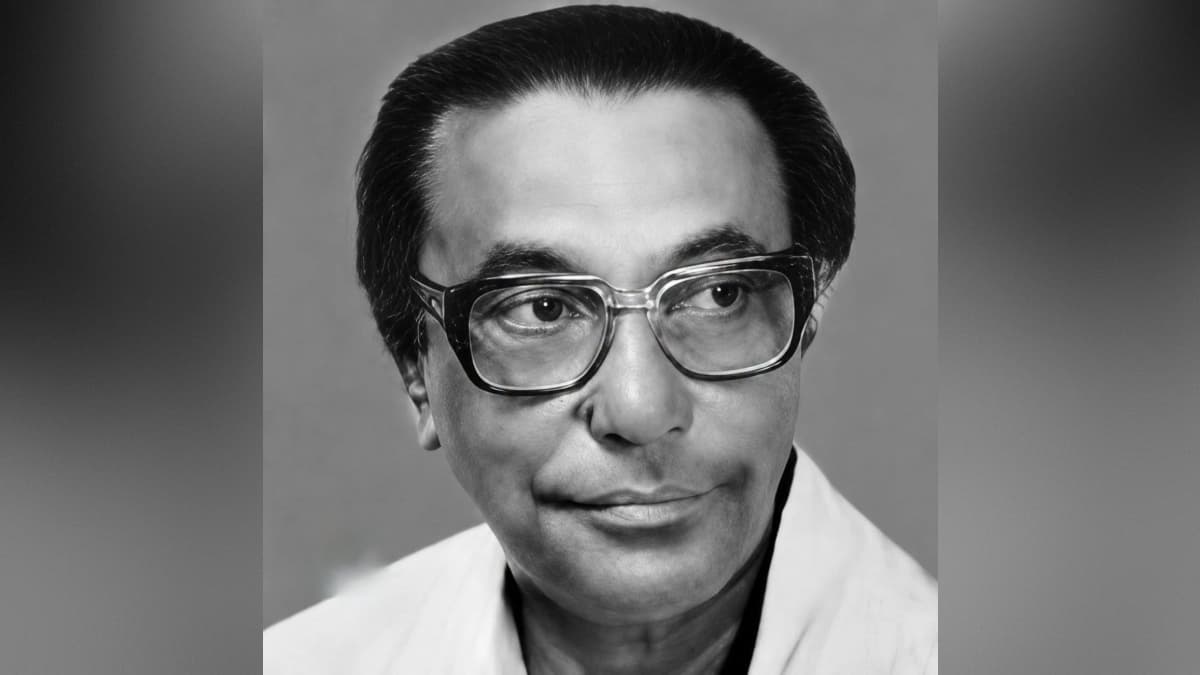
In the rich tapestry of Bengali music, certain names fade quietly into the background while their creations continue to resonate deeply within the public consciousness. Melodies that touch the soul, lyrics that evoke powerful emotions, and songs that pass seamlessly across generations often outlive the very individuals who penned them. Shibdas Bandyopadhyay remains one of the most remarkable yet profoundly overlooked poet-lyricists in the history of Bengali culture.
Born in Khulna on 27 December 1932, Shibdas experienced an early life shaped by the quiet rhythms of undivided Bengal. His father, Sachindranath Bandyopadhyay, served as a police officer, while his mother, Radharani Devi, was a courageous woman actively involved in the Swadeshi movement. However, the historic Partition of 1947 dramatically altered the trajectory of his life. Fleeing severe communal unrest and leaving behind their familial home and belongings, the family sought refuge in Kolkata.
Relocating to South Kolkata, Shibdas found shelter at the residence of his elder sister, the notable author and photographer Shibani Chatterjee. Despite the intense hardships of displacement and financial vulnerability, his academic drive remained unyielding. He successfully completed his graduation from Asutosh College and later accepted a modest teaching position at Khanpur School to support himself. Yet, amidst the daily struggle for survival, a profound literary passion was quietly taking root inside him.
Encouraged by his sister Shibani, his writing found a natural outlet in premier literary periodicals of the era, including Anandabazar Patrika’s Robibasoriyo, Desh, and Basumati. The socio-political upheaval across Bengal through the 1940s and 1960s heavily influenced his artistic perspective. His introduction to the cultural circle Kranti Shilpi Sangha, fostered by renowned composer Aparesh Lahiri, marked his formal entry into lyricism. A subsequent meeting with eminent poet and filmmaker Premendra Mitra at a literary gathering opened doors for him to become an enlisted lyricist with All India Radio, initiating a prolific and luminous journey in Bengali music.
Throughout his illustrious career, Bandyopadhyay collaborated with some of the most iconic vocalists of the subcontinent, including Manna Dey, Kishore Kumar, Lata Mangeshkar, Bhupen Hazarika, Sandhya Mukherjee, Runa Laila, and Ila Basu. His gifted pen produced timeless masterpieces that remain foundational pillars of modern Bengali music:
- “Aami Ek Jajabor” (I Am a Nomad)
- “Manush Manusher Jonyo” (Humanity is for Humanity)
- “Dola He Dola”
- “Bistirno Du Pare”
- “Sobar Hridoye Rabindranath, Chetonay Nazrul”
Among these, “Manush Manusher Jonyo” stands as an immortal anthem of humanism, continuing to stir hearts across generations. Driven by a deep empathy for the liberation struggle of Bangladesh, he also wrote the poignant masterpiece “Gonga Amar Ma, Padda Amar Ma” (The Ganges is My Mother, The Padma is My Mother), which was memorably immortalised by the legendary Bhupen Hazarika, binding the cultural ties of both Bengals.
Despite his monumental contributions, his later years were marked by a tragic paradox of immense popularity matched by institutional neglect and harsh financial struggle. The master craftsman who gave a voice to millions often lived in relative obscurity, battling severe economic hardship until his peaceful passing on 8 August 2009.
Though physical existence is transient, artistic legacies endure. Whenever the unforgettable lines of “Manush Manusher Jonyo, Jibon Jiboner Jonyo” float through the air, they serve as an eternal reminder of Bandyopadhyay’s profound philosophy. In recognition of his enduring literary footprint, the Kolkata Municipal Corporation installed a bust of the late lyricist in Ward No. 112, inaugurated by his nephew and former state minister Partha Chatterjee. While modest compared to the profound debt owed to his genius, this tribute ensures that the name of Shibdas Bandyopadhyay remains forever intertwined with the golden heritage of Bengali song.




মন্তব্য