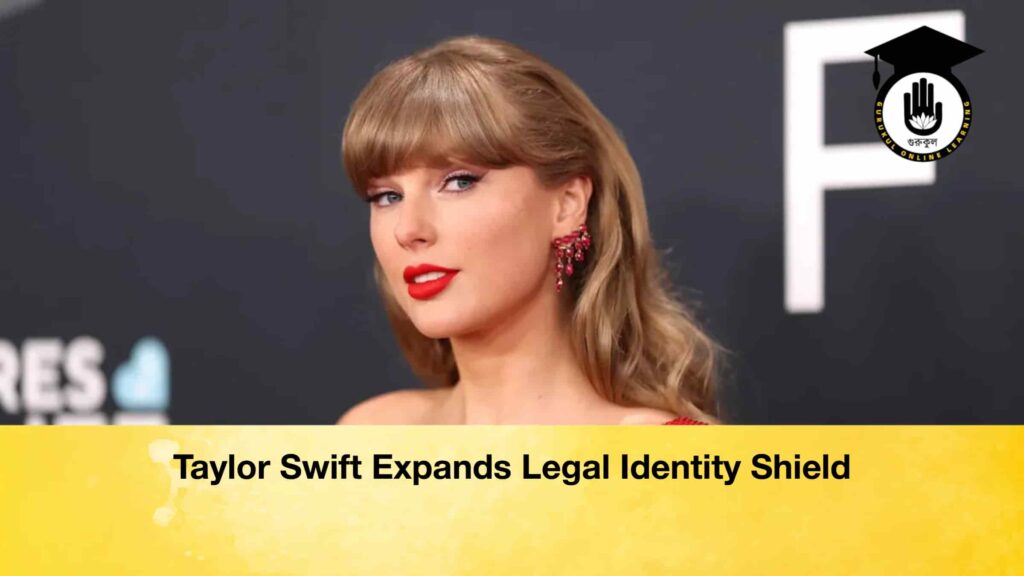
The increasing sophistication of artificial intelligence has intensified global concerns over the unauthorised replication of public figures’ voices, images and identities. Against this backdrop, Taylor Swift has taken further legal steps to strengthen protection over her personal brand and recognisable attributes.
According to reporting by Variety, Swift’s rights management company, TAS Rights Management, submitted three separate trademark applications to the United States Patent and Trademark Office on 24 April. The filings are designed to extend legal control over both vocal phrases and a distinctive stage visual closely associated with the artist.
Two of the applications relate to voice-based identifiers frequently attributed to Swift in public and media contexts. These include the expressions “Hey, it’s Taylor Swift” and “Hey, it’s Taylor”. The third application concerns a visual trademark depicting Swift performing on stage with a pink guitar while wearing a glittering outfit, a stylised image widely associated with her live performances.
Legal observers have noted that the move reflects growing industry anxiety over generative artificial intelligence systems capable of producing realistic synthetic voices and deepfake imagery without consent. Such technologies have significantly lowered the barrier to impersonating public figures at scale.
Overview of Trademark Filings
| Type of Protection | Description | Filing Date | Applicant |
|---|---|---|---|
| Voice Mark | “Hey, it’s Taylor Swift” | 24 April | TAS Rights Management |
| Voice Mark | “Hey, it’s Taylor” | 24 April | TAS Rights Management |
| Visual Mark | Stage performance with pink guitar | 24 April | TAS Rights Management |
Although conventional trademark law was not originally developed to regulate complete human identity, it can be used in conjunction with “right of publicity” legislation. Such laws are intended to prevent the commercial exploitation of an individual’s name, likeness or persona without permission.
In the United States, enforcement of these rights varies by state. Jurisdictions such as California and New York provide relatively strong statutory protections, but trademarks offer an additional advantage because they are enforceable at the federal level, allowing for nationwide legal action.
Swift has previously been impacted by artificial intelligence misuse, including digitally manipulated images and unauthorised content circulating online. During the 2024 United States election period, misleading AI-generated visuals falsely implied political alignment involving Donald Trump, raising wider concerns about misinformation and reputational harm.
The entertainment industry has seen similar protective strategies adopted by other high-profile figures. Actor Matthew McConaughey has also secured trademark protections over aspects of his vocal identity, reflecting a broader shift towards pre-emptive legal defence against synthetic media replication.
As artificial intelligence continues to evolve rapidly, legal professionals anticipate a growing wave of intellectual property filings aimed at safeguarding personal identity. The intersection of trademark law, publicity rights and emerging AI technologies is expected to become an increasingly significant area of legal and regulatory development in the coming years.