
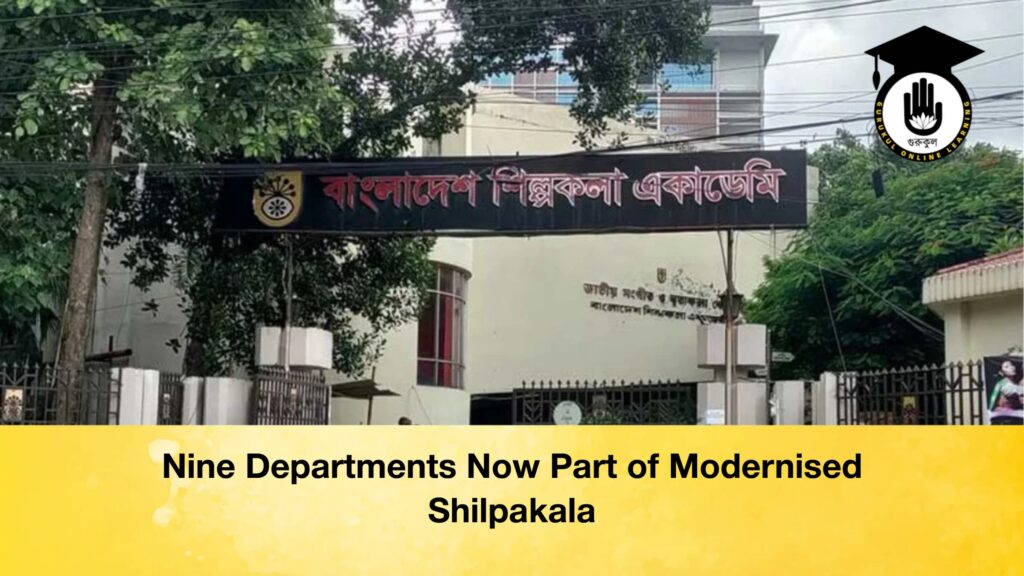
The Bangladesh Shilpakala Academy is poised for a new era of institutional excellence following the Advisory Council’s approval of the “Bangladesh Shilpakala Academy (Revised) Ordinance 2025.” Ratified during a high-stakes session on 8 January 2026, under the chairmanship of Chief Adviser Professor Muhammad Yunus, the legislation represents the most significant administrative overhaul of the Academy in recent decades. The reforms aim to transition the institution from a traditional administrative body into a proactive, multidisciplinary cultural engine.
Expanding the Creative Horizon
The centrepiece of the revised ordinance is the strategic expansion of the Academy’s departments, which have been increased from six to nine. This move is a direct response to the evolving nature of the arts, where digital mediums and visual storytelling now command equal importance to the stage. By elevating Film and Photography to independent departments, the government has provided these sectors with the institutional autonomy required for high-level research, archival preservation, and international collaboration.
Furthermore, the introduction of the New Media, Cultural Branding, and Festivals wings indicates a shift toward “Soft Power” diplomacy. These departments will focus on how Bangladeshi culture is packaged and presented to the global community, ensuring that local heritage becomes a viable international brand.
Table: The New Departmental Hierarchy of Shilpakala Academy
| Department | Strategic Mandate | Institutional Innovation |
| Administration & Finance | Resource management & governance | Streamlined digital accounting |
| Music, Fine Arts & Theatre | Classical and traditional arts | Traditional preservation |
| Film | Cinematographic research & development | Independent status for cinema |
| Photography | Visual arts and documentation | Dedicated archival support |
| Dance & Performing Arts | Choreography and folk traditions | Integrated performance arts |
| Cultural Branding | National image and production | Focus on “Brand Bangladesh” |
| Research & New Media | Academic study and digital arts | Inclusion of AI and VR art forms |
Radical Inclusivity in Leadership
The 2025 Ordinance goes beyond structural changes, targeting the very heart of the Academy’s governance. The newly constituted Executive Council has been designed to reflect the pluralistic identity of Bangladesh. Previously, representation was restricted to just three sectors; the new rules mandate the inclusion of eight distinguished representatives from eight specific artistic disciplines.
To ensure that the Academy is not dominated by any single region, the law now dictates a strict “one representative per administrative division” rule. Furthermore, the council will now feature:
Ethnic Minority Representation: Ensuring the voices of small ethnic groups are integral to cultural policy.
Journalistic Oversight: The inclusion of a national daily editor to foster transparency.
This democratic approach to cultural leadership is expected to decentralise art, taking it beyond the capital and into the rural heartlands, while ensuring that the Academy’s decision-making process is as multifaceted as the art it seeks to promote.