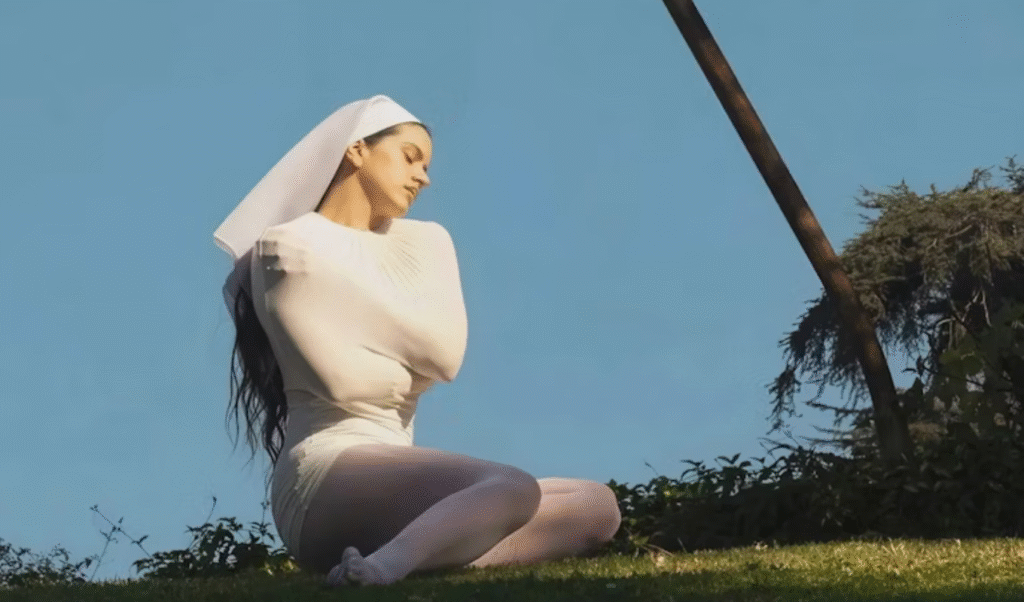
Spanish singer-songwriter Rosalía’s eagerly awaited album LUX has received widespread praise from both critics and fans. This highly innovative work merges a range of storytelling traditions, cultural references, and languages, creating a rich, layered listening experience that reveals new depth with each play.
LUX explores timeless themes – love, betrayal, abandonment – alongside spiritual and divine motifs. The result is a pop album with both substance and edge. Critics have been quick to debate whether the album should be classified as pop or classical, but this binary distinction misses the true essence of the work.
While the album’s operatic, orchestral, and symphonic flourishes are undeniable, they do not make LUX classical in the traditional sense, just as driving a sports car does not make one an F1 driver. What LUX truly demonstrates is Rosalía’s impeccable attention to detail, technical prowess, and the fluidity with which she blends musical styles. Much of this expertise was developed over nine years of intensive training at the esteemed Escola Superior de Música de Catalunya in Barcelona.
The video for LUX’s debut single, Berghain, exemplifies Rosalía’s striking visual and narrative flair. Combining high fashion with urban grit, it recalls films such as The Cook, The Thief, His Wife and Her Lover (1989) and The Devil Wears Prada (2006). In the video, Rosalía engages in everyday activities like ironing or visiting the doctor – yet these mundane tasks unfold in grand, almost surreal, orchestral settings. This juxtaposition of the everyday and the extraordinary is a hallmark of her work with director Nicolás Méndez.
Méndez has spoken about the influence of Rosalía’s sister, Pili, in shaping the project. Rosalía has also reflected on a tense conversation with her sister during the making of Motomami, which pushed her to reconsider the emotional depth of her music and its underlying messages.
Another key feature of LUX is its multilingualism. The album features songs in 14 different languages, including Catalan, Mandarin, Ukrainian, and English. These varied languages serve to support one of the album’s most compelling themes: sainthood as a multifaceted storytelling device.
Drawing inspiration from female saints across different traditions – from Judeo-Christian to Islam, Hinduism, and Taoism – Rosalía explores the tension between earthly struggles and spiritual transcendence. Through these figures, she elevates personal and collective hardships to a divine level, offering a framework for storytelling that is both universal and deeply human.
Rosalía is no stranger to literary adaptations. Her 2018 hit Malamente, from the album El Mal Querer, combined flamenco with contemporary R&B and hip-hop, while drawing from the 13th-century Occitan romance Flamenca. In the tale, the eponymous noblewoman is trapped by her jealous husband, but she secretly orchestrates a romance with a knight, outwitting her captor. Rosalía’s fusion of this medieval narrative with modern musical styles underscores her commitment to storytelling as an artistic core of her work.
Rosalía the Troubadour
At the heart of Rosalía’s artistry is the tradition of the troubadour. These poet-musicians, including women known as trobairitz, were among the first to compose songs of courtly love in vernacular languages. As expert in medieval texts, E. Jane Burns, has noted, these love songs often served as “an expression of female resistance to marital, moral, and legal constraints”. This historical perspective reframes Rosalía’s lyrics as not just expressions of devotion, but as acts of agency and defiance – themes that resonate deeply in her music.
While some may argue that LUX should be considered a classical work, particularly in the run-up to awards season, it is more accurate to say that the album draws on classical traditions – in its music, its literary references, and its visual influences – while remaining grounded in popular culture.
It is crucial to remember that flamenco – a highly disciplined folk tradition – is the foundation of Rosalía’s work, both emotionally and technically. Literary references and saintly imagery enrich the narrative, but the core of her artistry remains in her flamenco roots.
Rosalía’s ability to blend sound, story, and spectacle into a cohesive whole exemplifies the very best of what popular music can achieve: a meeting place where tradition and innovation converge, and where the personal becomes universal. It’s no surprise that Madonna has called her a “true visionary”.